Building a Whole-School Program That Actually Sticks: Lessons from WAB
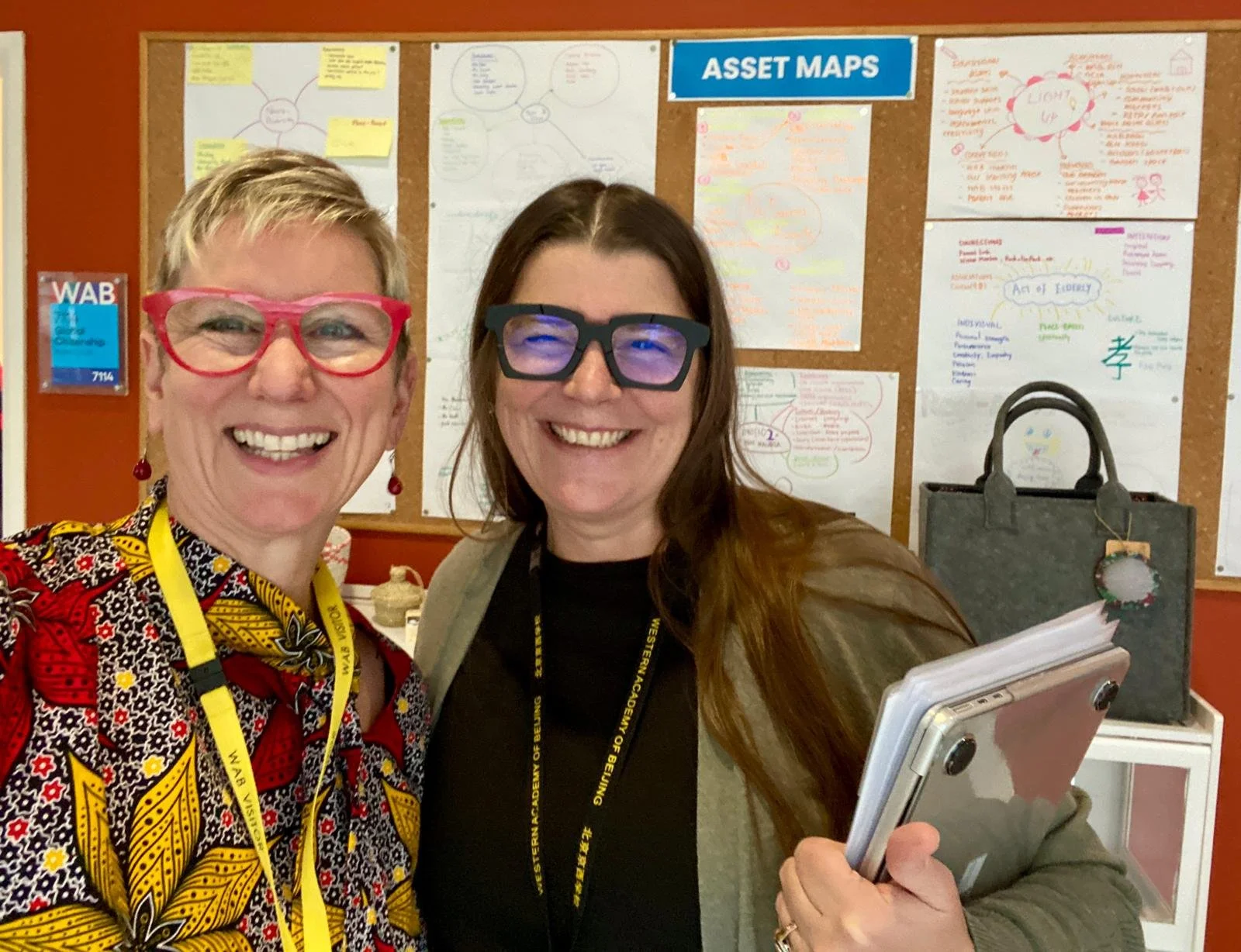
Collaborating with Angie and the WAB team, and witnessing what they’re all building in the realm of active local and global citizenship, is such a joy.
I have had the privilege of collaborating with Angie and the WAB team since 2022 as a supporter and coach, and as a PD facilitator on-site and in virtual spaces. Every engagement I have with leaders, members of the team, and Angie (through our fabulous coaching calls) is positive, generative, and inspiring. This team is being intentional about building and nurturing a thoughtful, impactful, reciprocal community engagement program, and this post captures ideas and inspiration for an all-school program at any school interested in this deep, resonant work.
When Angie Monaghan Crouch joined the Western Academy of Beijing (WAB) in 2020 as an IB Individuals and Societies teacher, there was no Global Citizenship Coordinator at the school. WAB has a wonderful foundation of community engagement, innovation, and service, and over the years, this has led to many examples of stellar local/global citizenship. However, in 2020, this was still happening in a more informal, ad hoc way.
Fast forward five years:
Angie is now the all-school Global Citizenship (GC) Coordinator
The GC Coordinator leads an all-school GC program with 24 long-term reciprocal community partners
There is a school-wide action framework, a curriculum for Global Citizenship in Action (GCiA), and windows in the timetable for intentional community engagement
There is a robust GC storytelling blog to capture and celebrate the stories of what is happening across the school
Culture-building at WAB for local and global citizenship has meaningfully shifted the language people use, the mindsets they nurture, and a common understanding of what it means to care for learners, communities, and the planet
The GC Coordinator heads up an all-school plan for transforming WAB into a regenerative campus
This is not a story about a single inspired initiative. It is a story about building a durable and sustainable all-school program that activates the school’s mission and vision. As such, there are many ideas and tips that you can take from the WAB journey to apply to the design and growth of your own school’s program.
It started with a definition
In 2022, WAB conducted a school-wide strategic visioning process led by students and supported by the WAB Director of Innovation. Students, teachers, parents, leaders, board members and alumni came together to identify priorities in a workshop led by Inspire Citizens. Two themes from the previous vision were reinforced: innovation and well-being. And two new themes emerged: belonging and environmental sustainability. The process was recognized with the ISC Global Award for student-led strategic visioning, and it set the conditions for what came next.
The following year, as Angie stepped into a part-time CAS coordinator role, the school engaged in its IB, New England Association of Schools and Colleges (NEASC) and Council of International Schools (CIS) accreditation cycles. The CIS pre-visiting team made one pointed recommendation: get clear on what global citizenship actually means at your school. Schools often define global citizenship or community engagement differently depending on context. Some emphasize environmental competencies while others focus on leadership or civic engagement, and WAB needed its own grounded definition.
So Angie convened a group. Middle and high school students and teachers gathered, worked through the school's founding documents, its core values and mission, and examined how other schools and organizations framed the concept of authentic global citizenship. From that process, a definition emerged. It went out to broader stakeholders for feedback and was refined again. Then Angie brought it to one of WAB's twice-yearly cultural forums, where a student-teacher-parent panel explored what global citizenship actually looks like in practice at the school.
The WAB definition of authentic global citizenship is this: At WAB, we believe that we are all global citizens and our decisions today impact future generations. A successful global citizen is aware of and seeks to understand pressing global issues, furthers social justice, respects and engages with diverse cultures and identities, lives in harmony with nature, and recognizes a responsibility to take action in local and global contexts.
The process of establishing this definition, organic and time-consuming as it was, mattered. It meant the definition belonged to the whole WAB community.
Making it real: partners, systems, and the slow work of culture change
Once the definition was in place, Angie turned to the practical work of creating a cohesive all-school program, imagining what authentic local and global citizenship actually looks like in the school's day-to-day life. What she found was a patchwork of practices and experiences throughout the program. Community partnerships were happening organically, driven by individual teachers. Student-led action was happening in a variety of clubs and contexts, although fundraising was often the “go-to” for action involving community partners. And the word "charity" surfaced frequently in conversations about student action; there was even a parent group called “Charity Link.”
She started building a vetting system for community partners with a structured set of questions that helped the school identify organizations that shared its values, were not money-first in their expectations, and were genuinely interested in learning alongside students. That list eventually became the basis for a memorandum of understanding (MOU) with each partner, making the relationship's purpose clear to both parties from the beginning. The vetted WAB community partner list now sits at 24 organizations. It has grown and shifted as relationships have evolved.
Then Angie’s role expanded from high school/CAS to a whole-school mandate, and this opened up more time to design collaborative, multi-division and interdisciplinary aspects of global citizenship across the school.
“We invited a variety of educators and community stakeholders to join our cohort in your ‘Reciprocal Community Partnerships’ course,” Angie remembers. “This had a big impact on shifting our collective language and understanding of the program. I rarely hear the word ‘charity’ now, and because a parent leader took the course and was nudged by the school leadership, the ‘Charity Link’ group changed its name to ‘C.A.R.E. Link’ where C stands for ‘collaborate for compassion’, A stands for ‘act through innovative fundraising’, R stands for ‘reach those in need’ and E for ‘empower our community’. This is the kind of culture shift that takes time.”
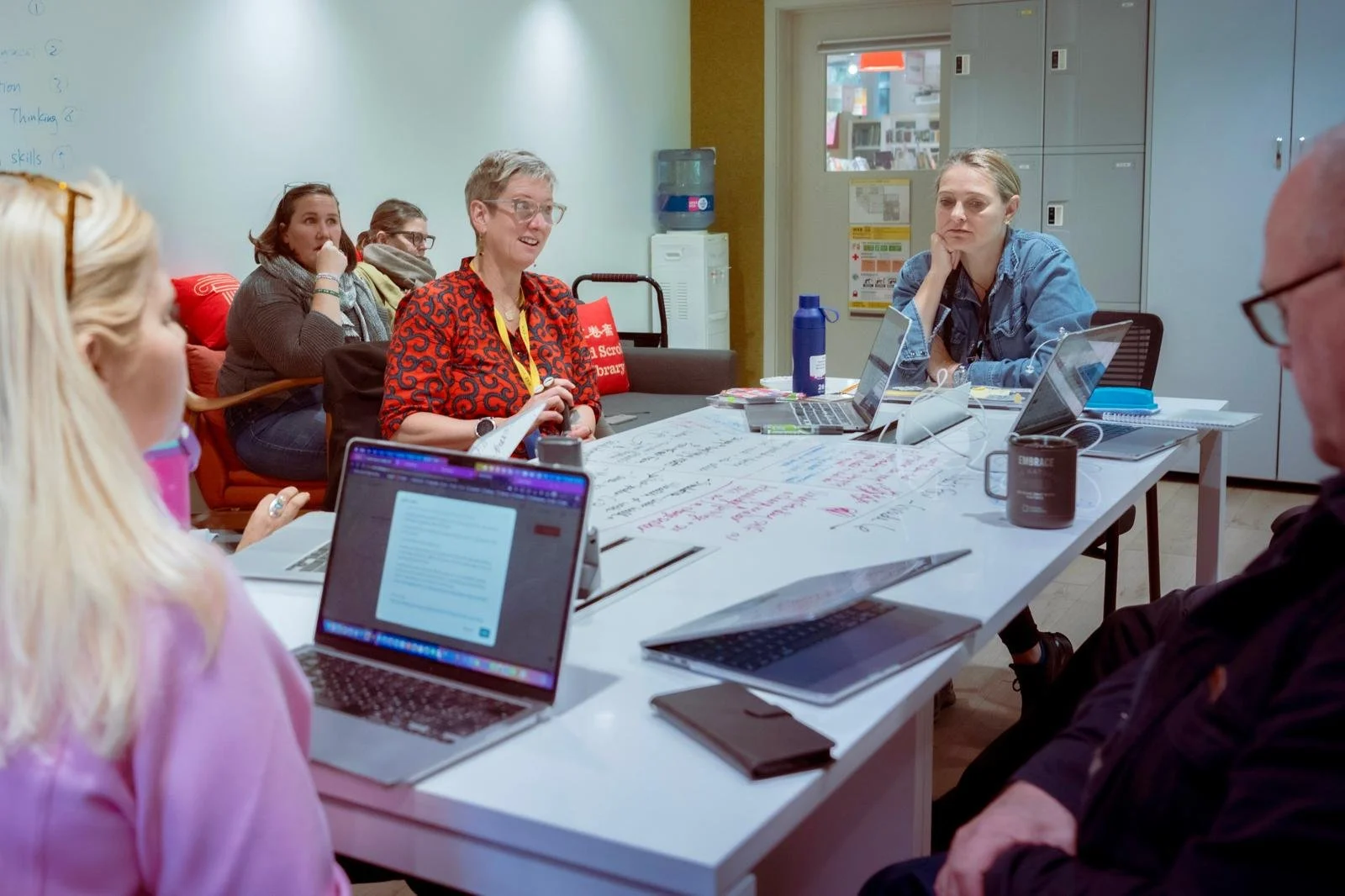
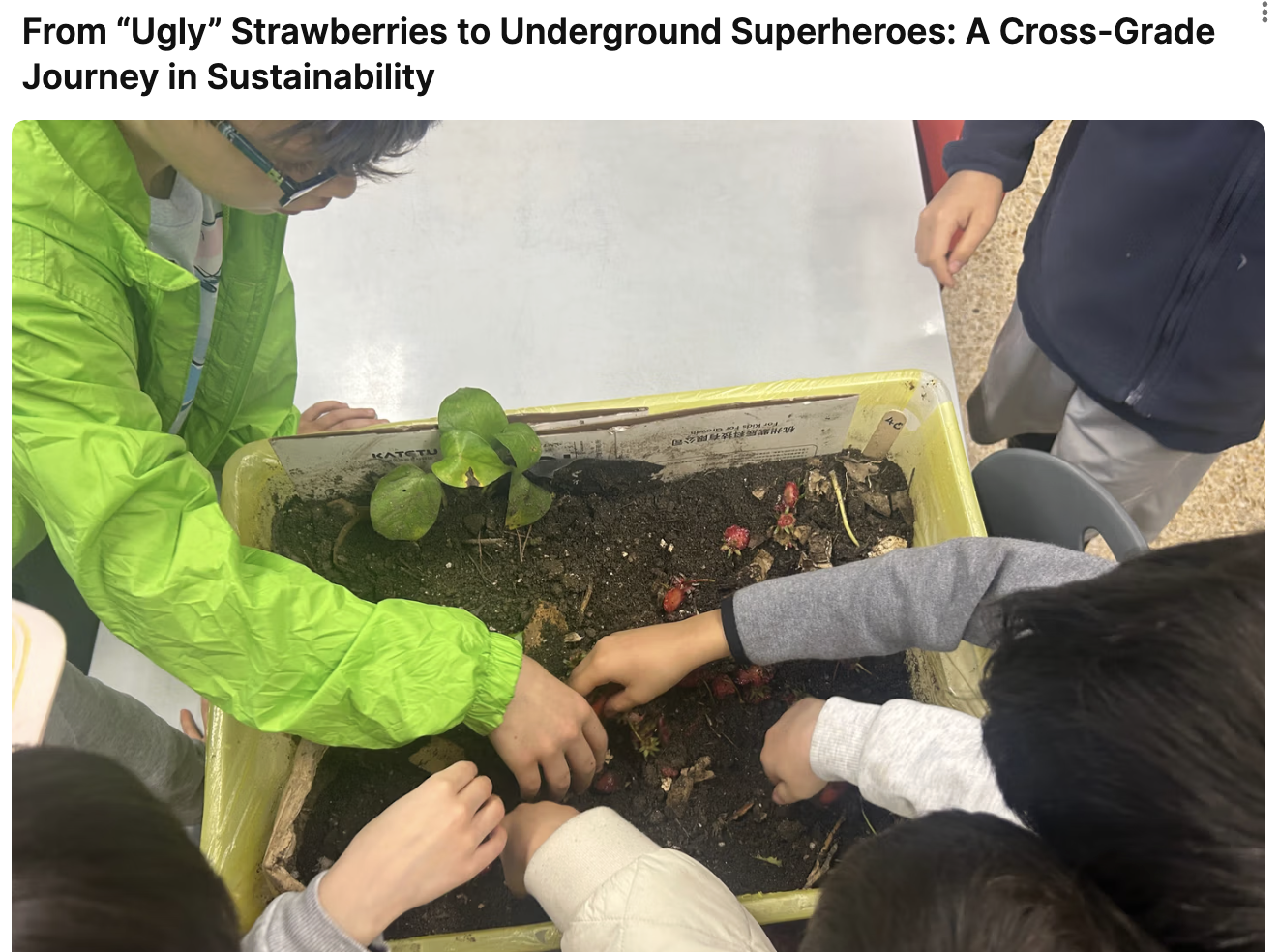
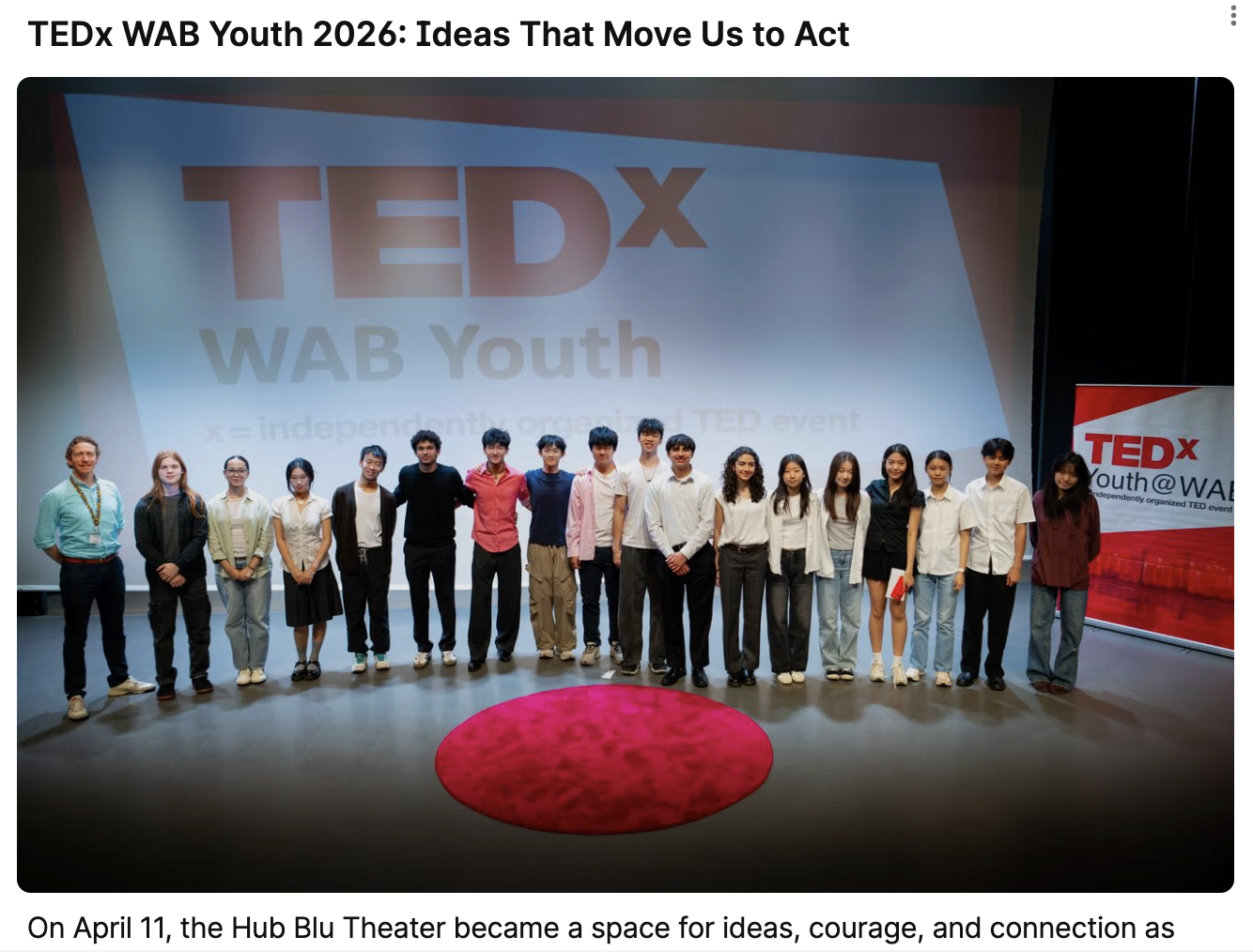
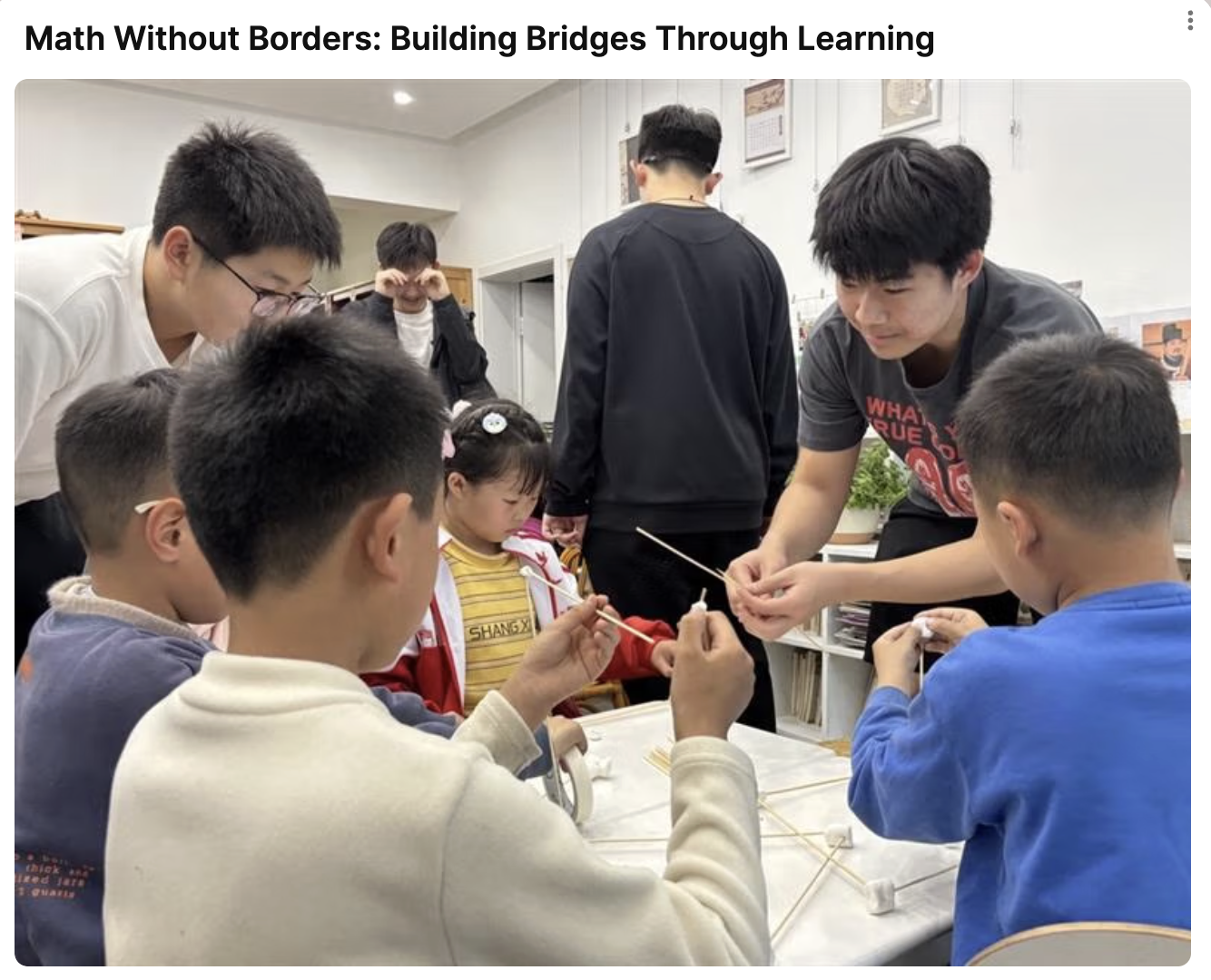
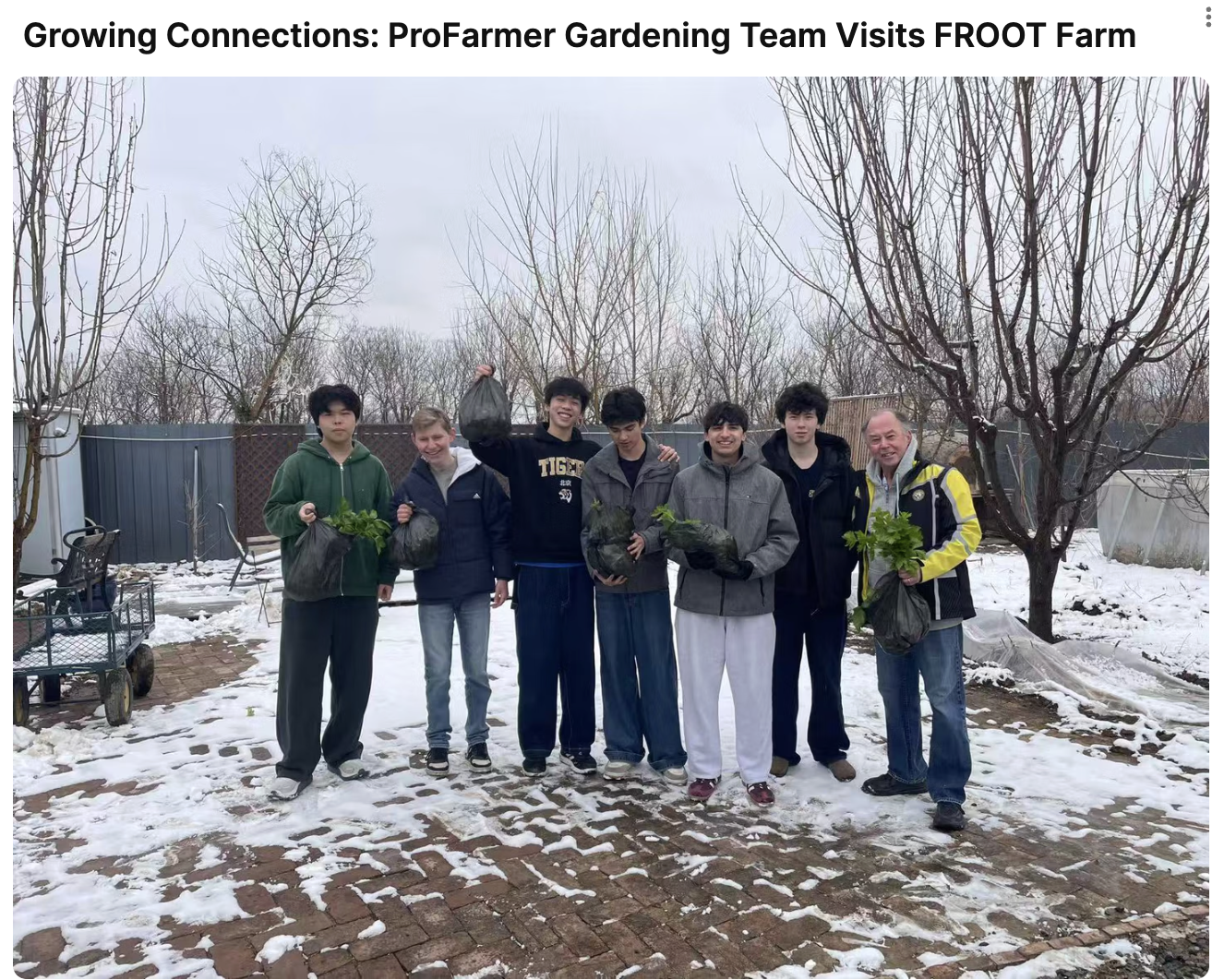
Below: Photos with WAB leaders, educators, and students doing the work of designing meaningful and authentic local/global citizenship experiences (with some examples from the WAB GC blog).
The importance of time and structures
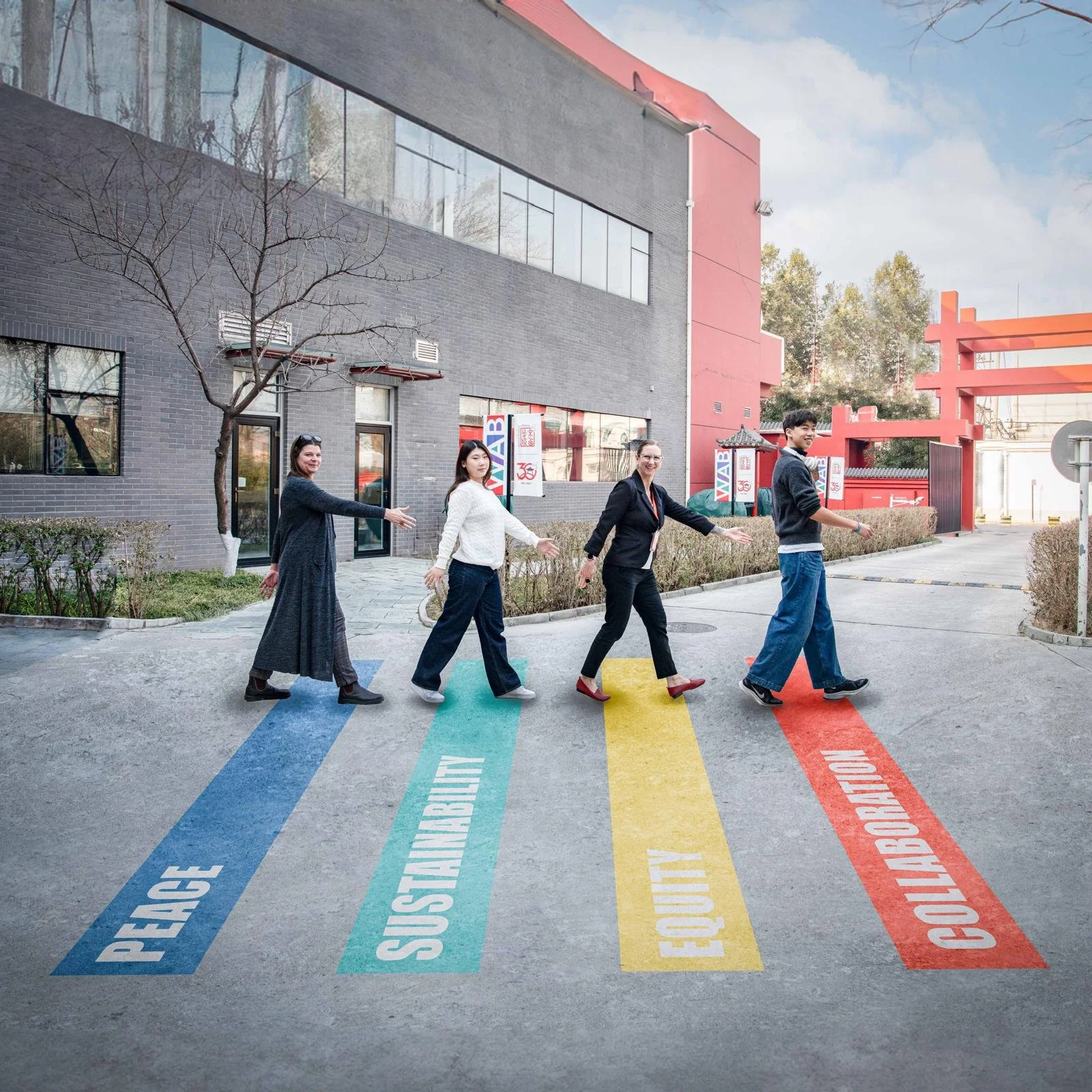
One of the clearest signals a school can send about what it values is through what is prioritized in the timetable or daily schedule. At WAB, Angie and the leadership team have worked steadily to embed global citizenship into the formal structure of the school day, not as an add-on or an after-school option, but as something that happens during school time, alongside everything else that has academic and intrinsic value.
This matters for a straightforward reason: deeper community engagement takes preparation. When a group of students visits a local school or community organization, they need grounding and preparation before they walk in the door. Thus, in 2025/26, Angie spearheaded a Global Citizenship in Action (GCiA) block for high school students where teams engaged in thoughtful inquiry and investigation related to their community partners, intentional planning and co-design with partners, and action that was rooted in context, purpose, and reciprocity.
“If we want students to move from transactional action to something more transformative, we have to make time for it,” says Angie. “When that time appears in the schedule, it sends a message to everyone that this is valued equally alongside everything else we do.”
Next year, the GCiA program will be refined further, with grade 9 and 10 students grouped to work with community partners in a way that supports the MYP Personal Project, and with grade 11 and 12 students in groups that align with the community engagement aims of the CAS (Creativity, Activity, Service) program. Middle school students will begin their GCiA journey, too.
WAB also has programmatic elements called Day X and Day 9 that allow for cross-divisional community engagement (with high school students guiding younger learners in action connected to specific themes and partners through an Action Buddies program), and for flex time focused on local and global citizenship.
For teachers, there has also been an ongoing track focused on global citizenship that educators can choose each year in their Collaboration for Impact (C4I) professional growth teams. Teachers have had the opportunity to take courses like “Rethinking Global Citizenship and Community Engagement with a Critical Lens” (a course I facilitate with Rebecca Gillman), “Reciprocal Community Partnerships” (a course I facilitate with Shei Ascencio), and my newest course, “Learning with Purpose: Authentic Global Citizenship and Community Engagement”.
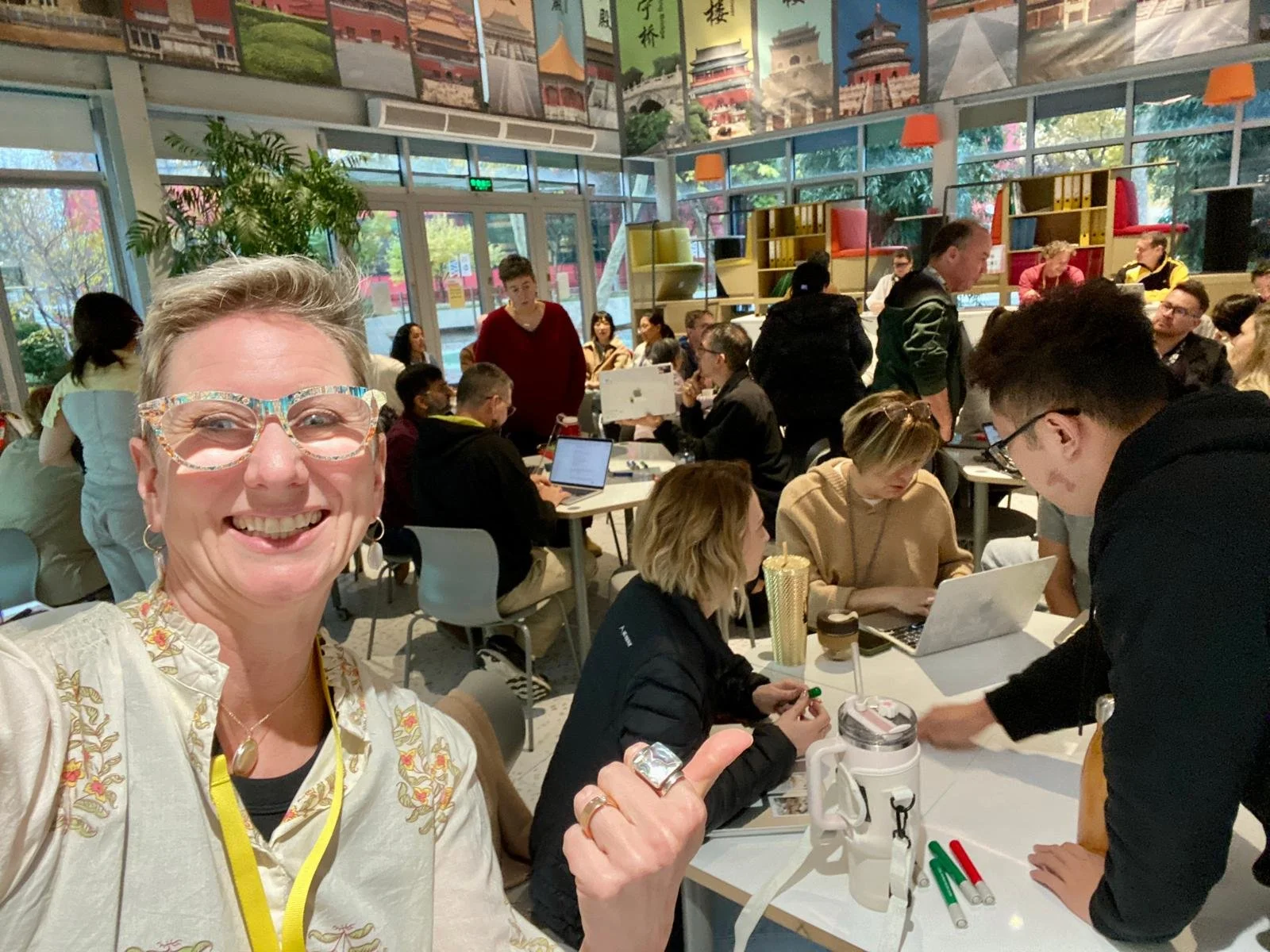
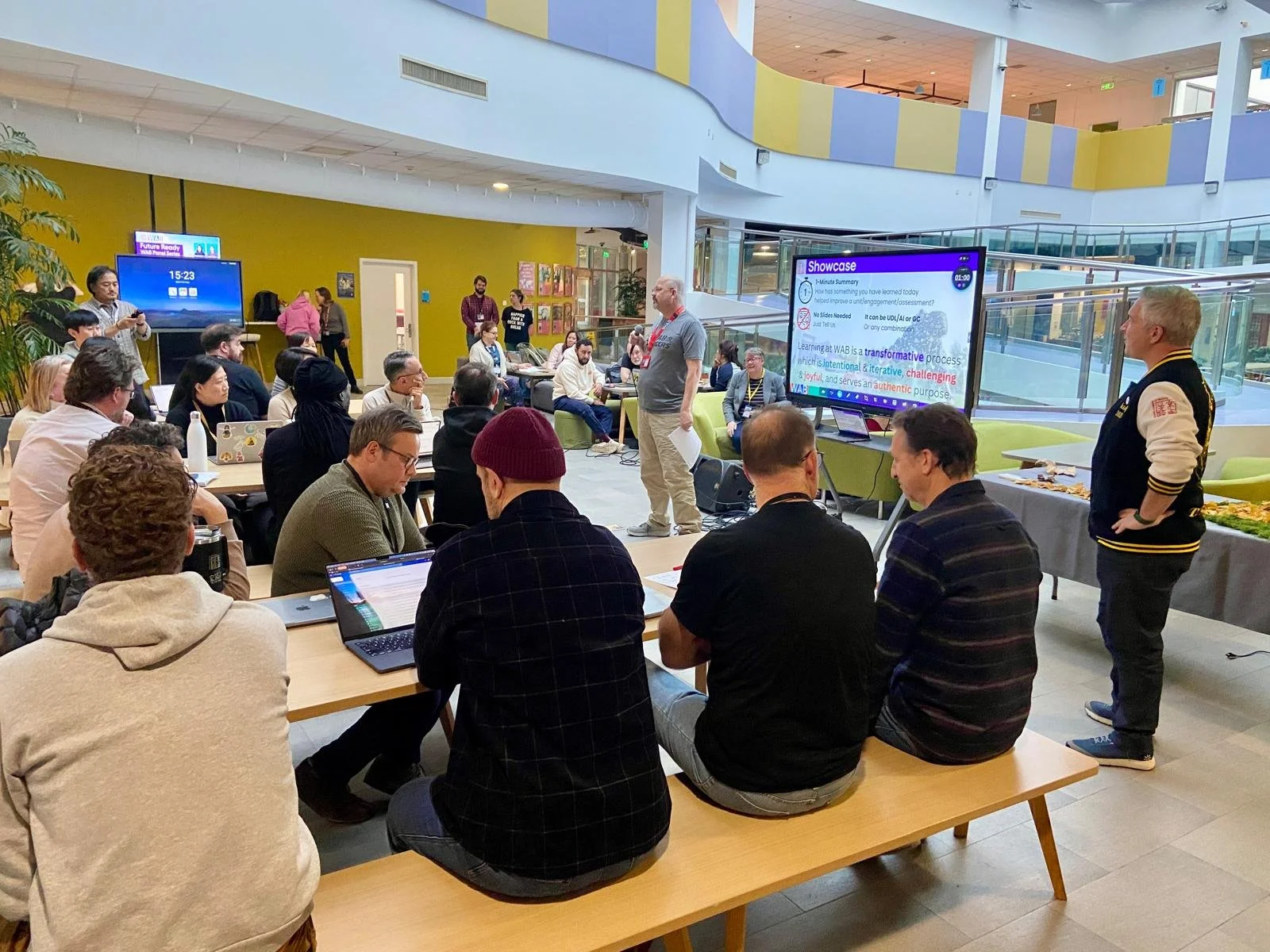
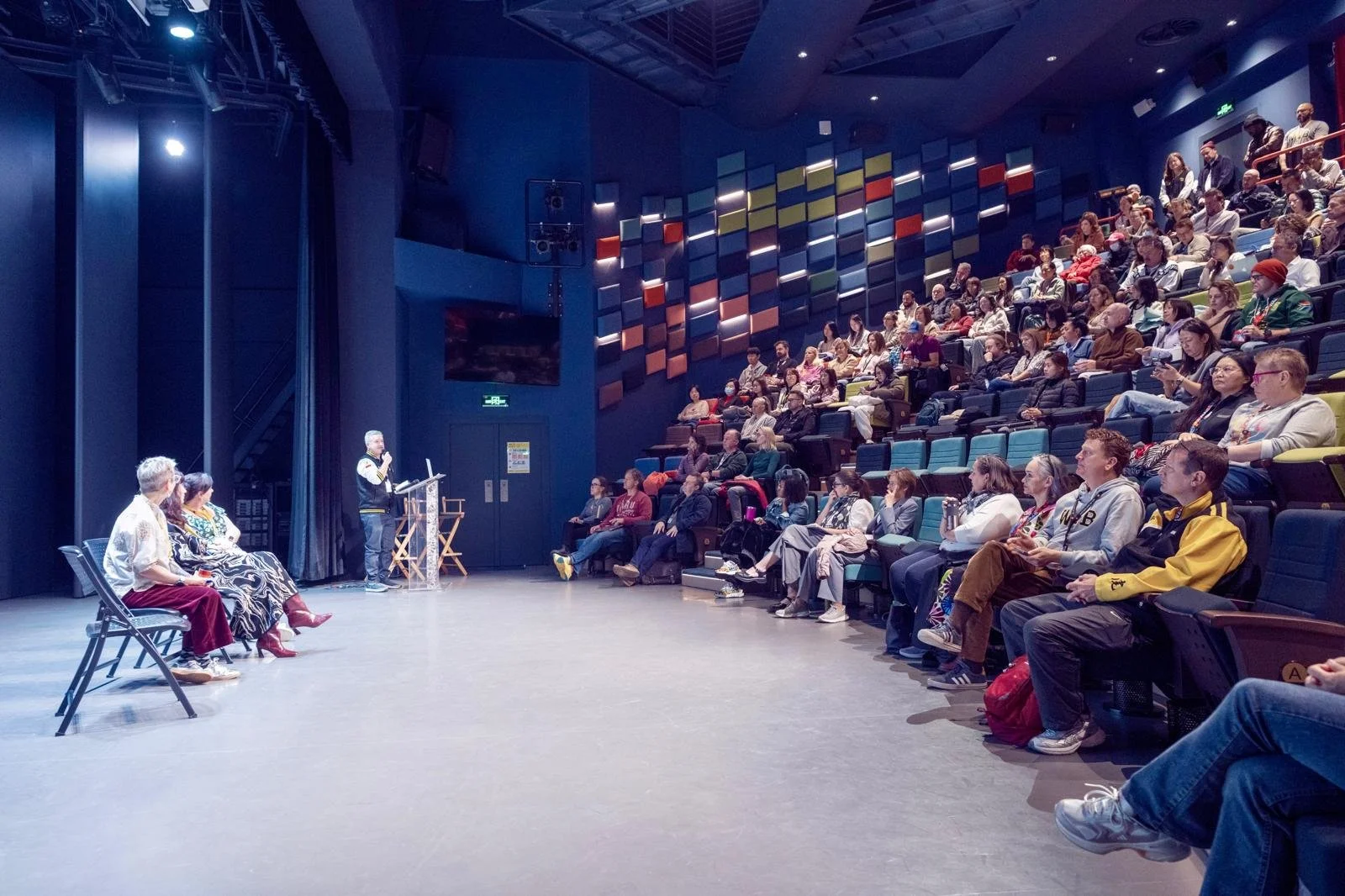
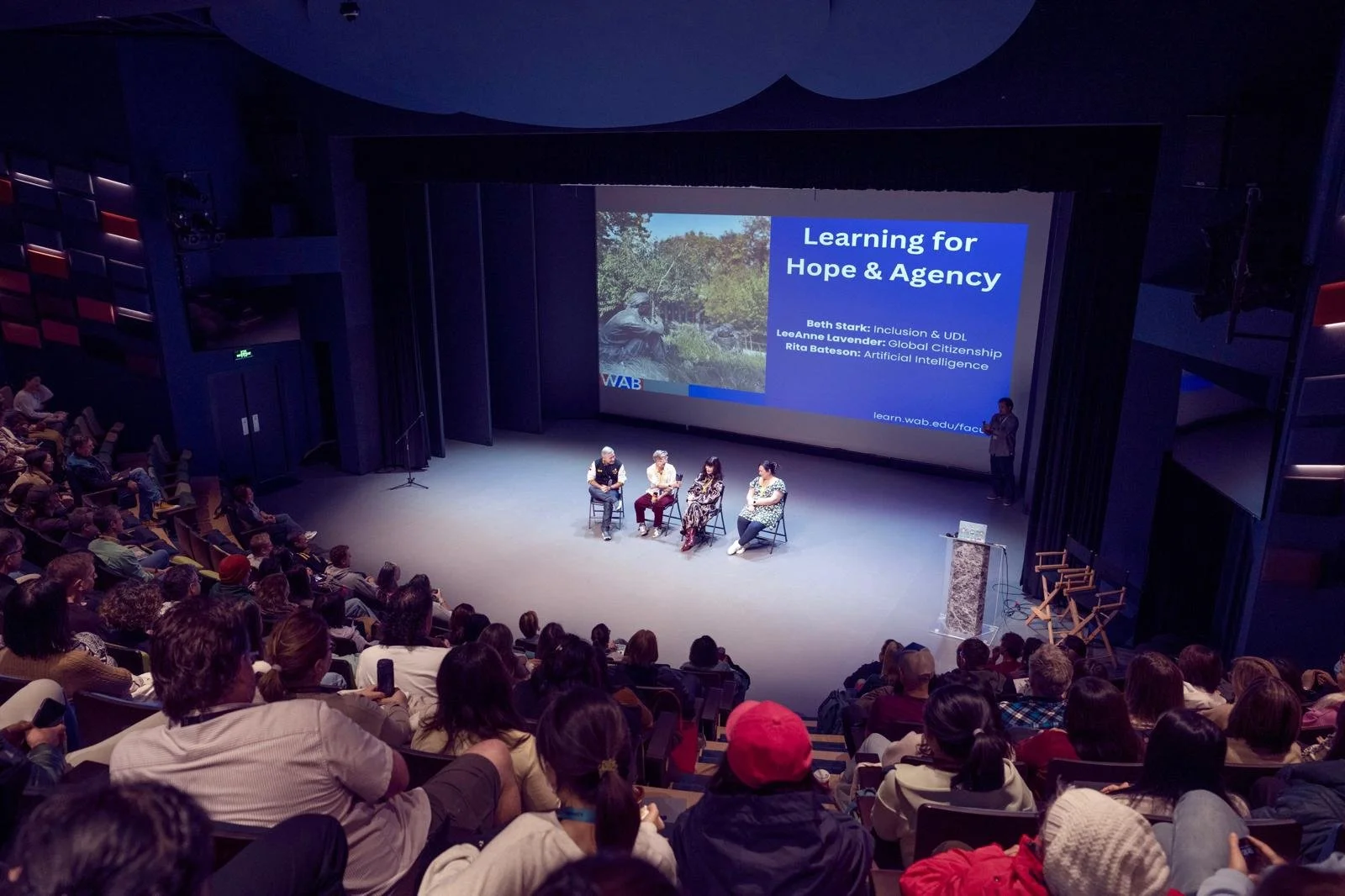
As well, I have had the opportunity to work on-site with WAB educators over three years to build capacity for approaching curriculum and community partnerships with an active local/global citizenship lens. In the fall of 2025, Director of Innovation in Learning and Teaching Stephen Taylor and Head of Educational Technology Kevin Crouch co-designed an innovative and creative PD week where three consultants were on campus, and there was intentionality in creating intersections between global citizenship (led by me), inclusion (with Beth Stark), and the use of AI (with Rita Bateson). The week ended with a “PD Punk Festival” where teams experienced spotlight workshops in all three strands and then applied their top takeaways to a specific unit or assessment. It was brilliant!
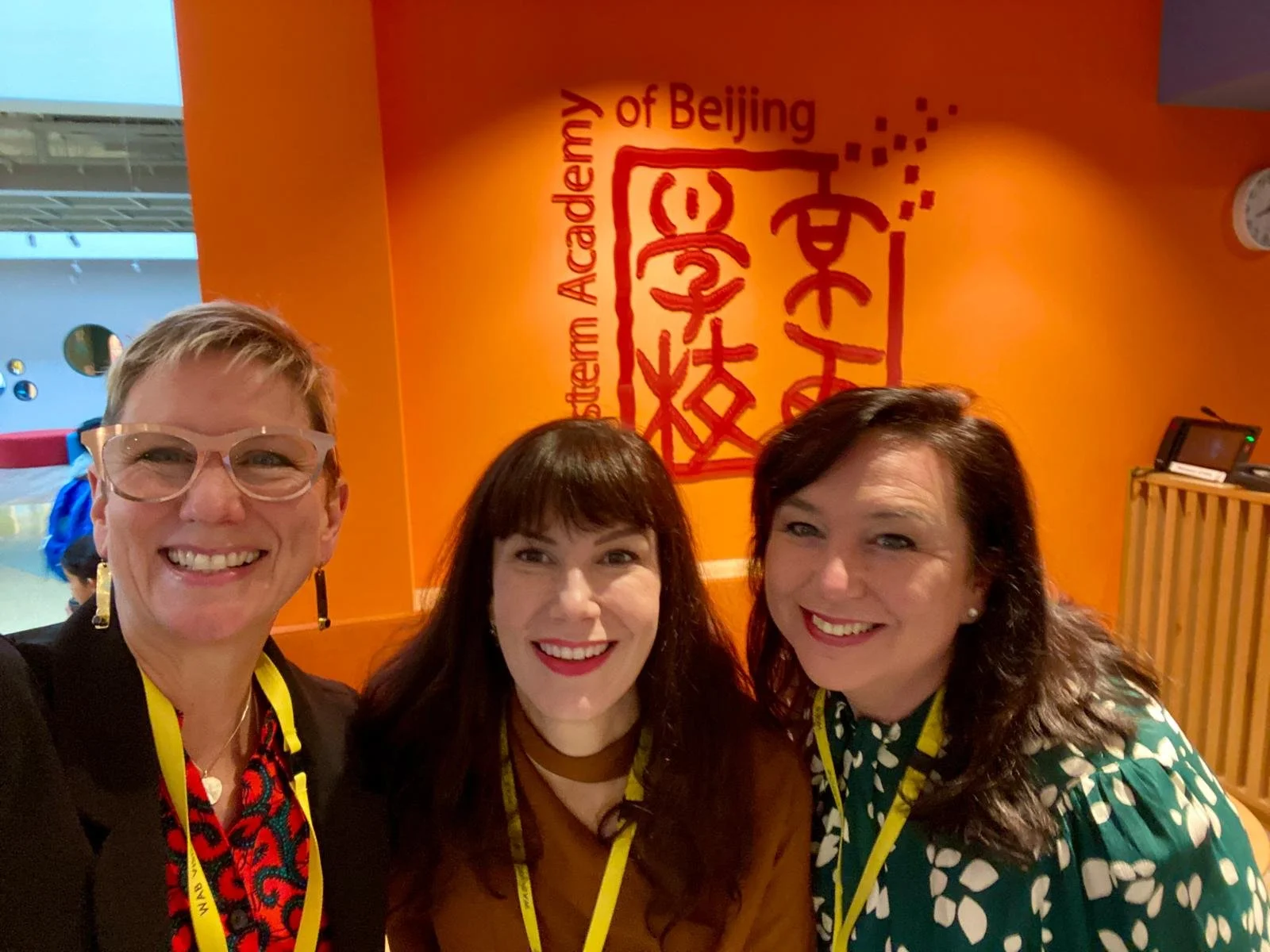
Below: photos from the November WAB PD Punk Festival organized by WAB’s Director of Innovation in Learning and Teaching, Stephen Taylor. Bottom left: me with Beth Stark (middle) and Rita Bateson (right).
A moment that stands out
When asked what has stood out to her so far in this journey of building a robust all-school citizenship program, Angie reaches for a story about a colleague.
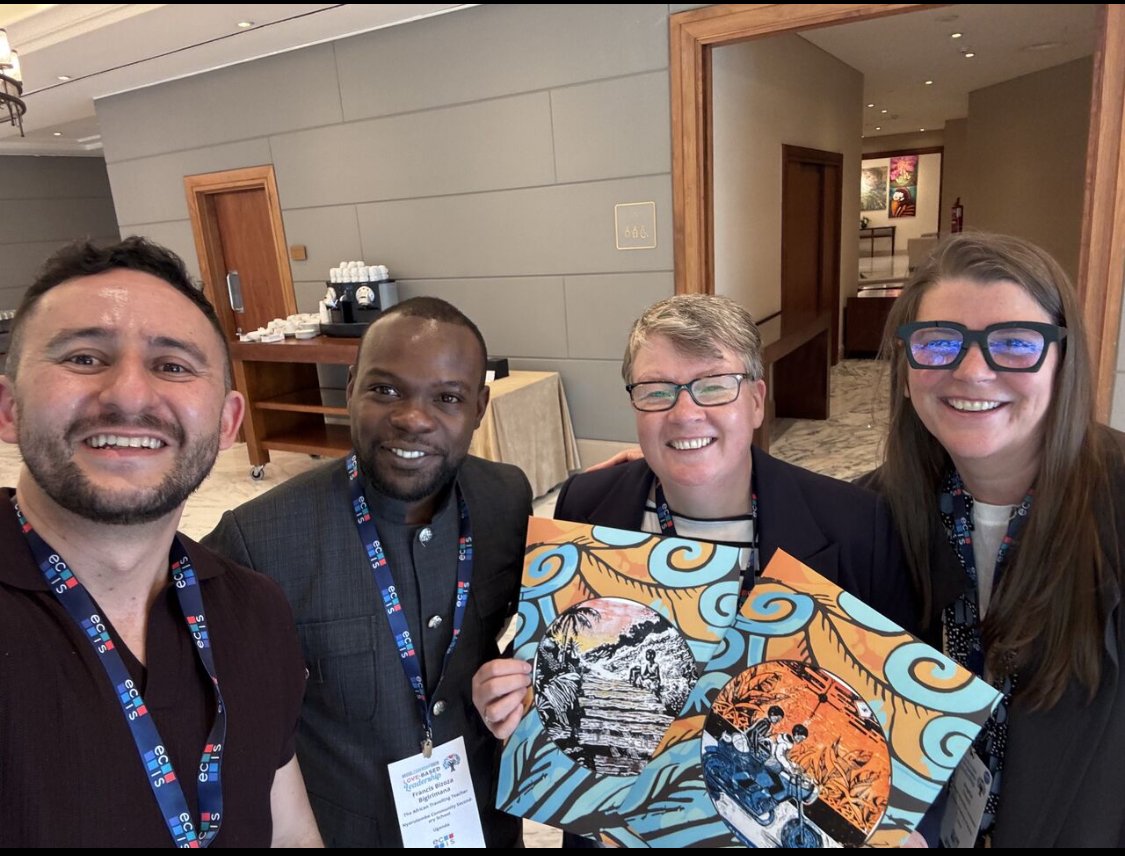
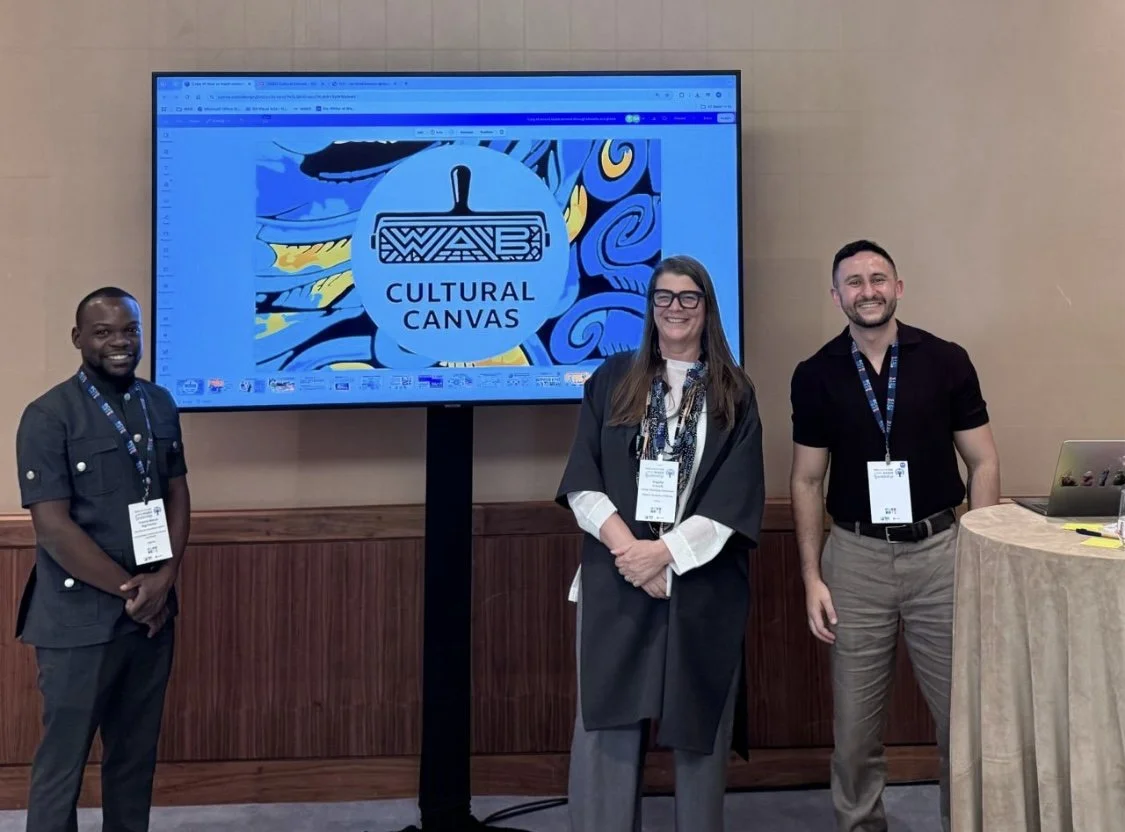
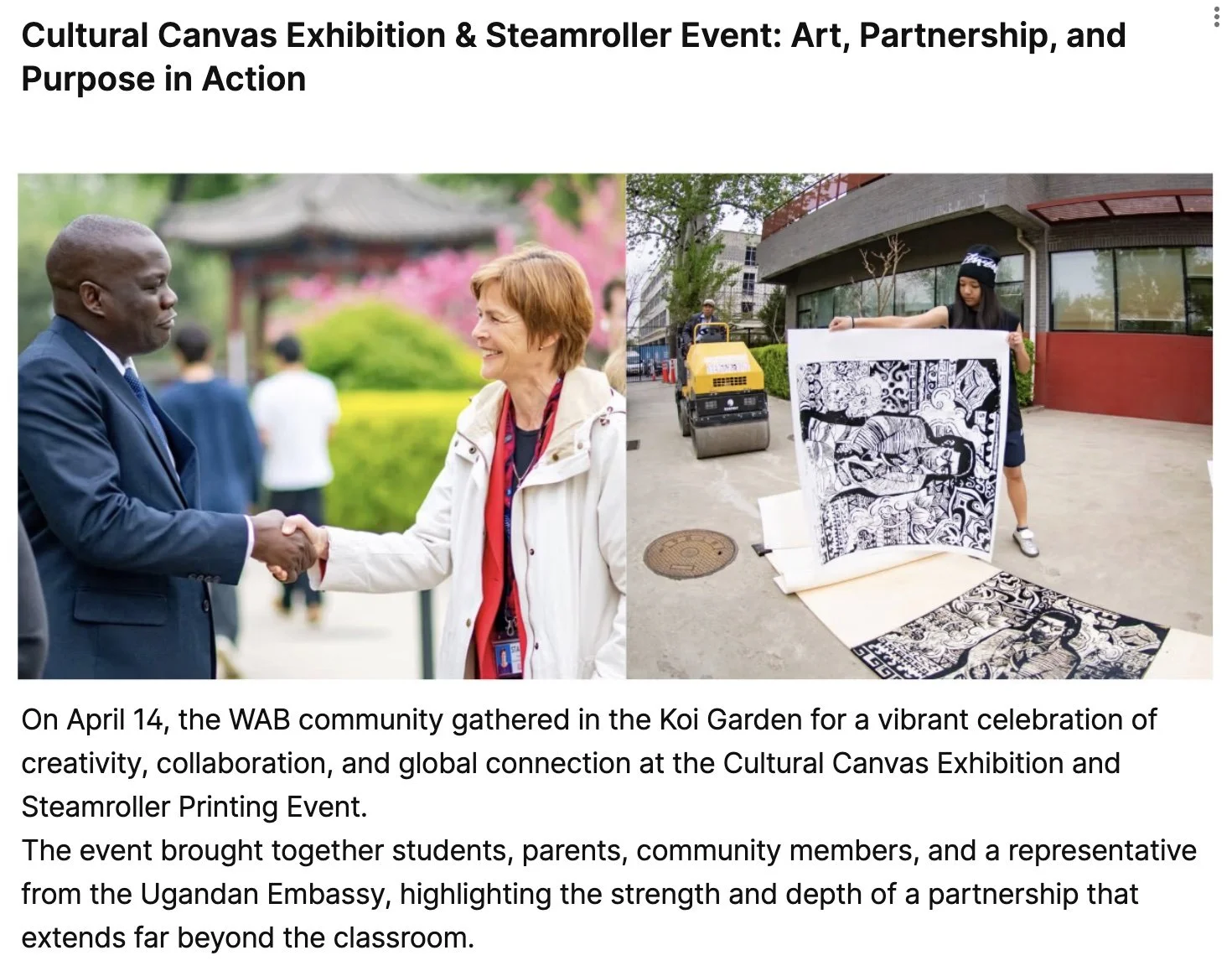
Daniel Avila, a visual art teacher at WAB, worked with Angie this past year to develop a project called Cultural Canvas, in which students collaborated with peers at the Nyarutembe Community Secondary School in Kisoro, Uganda, to create block prints reflecting local ecological and cultural life. The project took significant time and deep preparation. It culminated in an exhibition of finished prints in Uganda alongside prints made by students at Nyarutembe Community Secondary School. Daniel, Angie, another WAB teacher, and WAB alumni travelled to Uganda to deepen relationships with their Nyarutembe partners and to participate in the exhibition. Daniel and Angie also led a session about this partnership at a recent ECIS Leadership Conference in Lisbon (2 photos below).
Daniel told Angie that this was the most meaningful thing he had done in his entire career, and he thanked her for the opportunity.
"For him to say that," Angie reflects, "and for me to be able to give him and his students that experience, it's just another level. Empowering a colleague to make their practice more rewarding, and impacting students in such a relevant and experiential way, was so meaningful to me."
This example captures something important about how a well-built GC or community engagement program can open doors for teachers to reconnect with why they chose the profession of teaching in the first place.
You can learn more about the WAB/Nyarutembe partnership on the WAB Global Citizenship page. Scroll down to the GC blog and look for this post:
What comes next
Angie is building her team and program in a steady, intentional way, supported enthusiastically by her head of school, Dr. Marta Medved Krajnovic, the Director of Innovation in Learning and Teaching Stephen Taylor, Director of Marketing, Communications, and Admissions Irina Mach, and the principals of the elementary, middle, and high schools.
Her goals in deepening the global citizenship program are to:
continue working on embedding global citizenship into the curriculum in all divisions
align SEL (social and emotional learning) and wellness goals in a deeper way with global citizenship
ideate, design, and implement a plan for transforming WAB into a regenerative campus
design new curriculum for the GCiA and Action Buddies programs
continue the work of building reciprocal, reflective/reflexive, and inclusive mindsets for community engagement at the local and global levels
You can learn more about the WAB Global Citizenship program here, as well as see the blog that Angie and her team have developed to share global citizenship stories.
I asked Angie to share her top tips for building a meaningful, purposeful, authentic all-school program, and here are her key ideas:
Tips from the Field: What Angie Would Tell Someone Building an All-School Program
1. Build the foundation before you build the program. A shared definition of global citizenship, developed with students, teachers, and parents, is a key step. It is the thing that makes everything else coherent. Do it early and do it together.
2. Create systems that people want to use, and that make sense in your context. The vetting list and the MOU template are useful tools for WAB partners, and it’s important to build systems that become part of the school culture.
3. Find your allies and build a team. Designing an all-school program can’t fall on the shoulders of one person. Everyone in the community (from school leaders and educators to students, parents and partners) is responsible and accountable for building a robust program and making the school’s mission and vision real and lived.
4. Put it in the schedule/timetable. If global citizenship or community engagement only happens at lunch or after school, the message is clear, even if unintentional: this is not a priority. Protecting time in your formal structures is one of the most concrete things a school can do to show that it means what it says.
5. Pay attention to language and mindsets. The shift from "charity" to something more reciprocal happens slowly, through many conversations, the stories you share, and new norms. Track the language and mindset shifts. They are evidence that things are evolving.
6. Document the imperfect iterations. Not every attempt at authentic community engagement lands cleanly and, as you build your program, there will be events and experiences that don’t work out the way you had hoped. Naming that honestly, and planning differently for the following year, is more useful to the program than pretending it went well.
7. Celebrate the teachers alongside the students. Recognizing colleagues who take risks, try new things, and bring genuine depth to community-engaged learning creates the conditions for more people to step forward. Their enthusiasm is contagious, and their stories are worth telling.