The power of visual art for advocacy and reflexivity
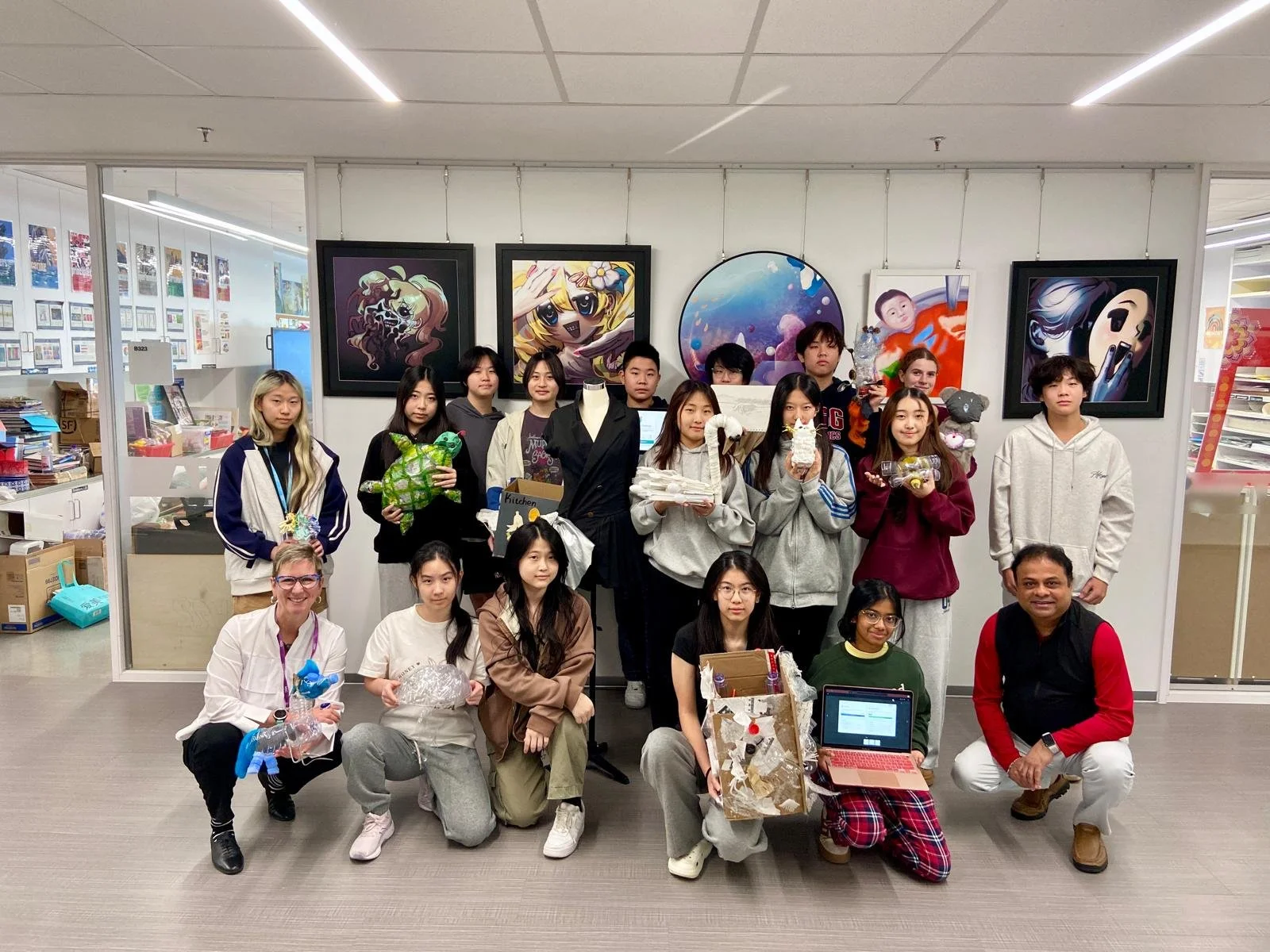
While working with the AISG team this year, I got to spend an hour with Sidd and his grade 9/10 visual arts students to explore the power of changeseeking and changemaking, and the role of art for advocacy and activism.
Sidd Bose is a part of the AIS-Guangzhou “Service Champions” team of educators. This team is enrolled in the year-long Service Learning and Community Engagement Specialist Certification Program that I facilitate with Cathryn Berger Kaye and Shei Ascencio. Because of his involvement in the Specialist Program, Sidd now plans all of his curriculum on a foundation of community engagement, service learning, and a deep sense of purpose.
When I walked into Sidd Bose’s visual arts classroom at the American International School of Guangzhou this year, I found a room full of students making art rooted in activism, advocacy, and meaningful awareness of local and global issues.
Sidd is an IB DP and MYP Visual Arts Teacher at AISG, and he is one of those educators whose passion for his work is immediately apparent. This year, he has completely redesigned his Grade 9, 10, and 7 visual art classes, and he loves what is evolving for students, the school community, and wider local and global contexts.
“My goal this year was to give students agency and personalization,” says Sidd. “And I’m so happy with how this has turned out. In my redesigned units, my students were not just thinking about art, but about how their learning can impact others."
The still life that wouldn’t stay still
The unit that started it all was simply called “Still Life” for Grade 9 and 10 students in the first semester. Still life is one of those classic art education pillars, grounded in tradition and technique. Sidd’s version of it became something considerably less conventional.
He began by asking a simple and generative question: How can still life connect to daily life? How can artistic expression raise awareness about social and environmental issues? The answer, it turned out, was that it could go in many directions, and Sidd let that happen.
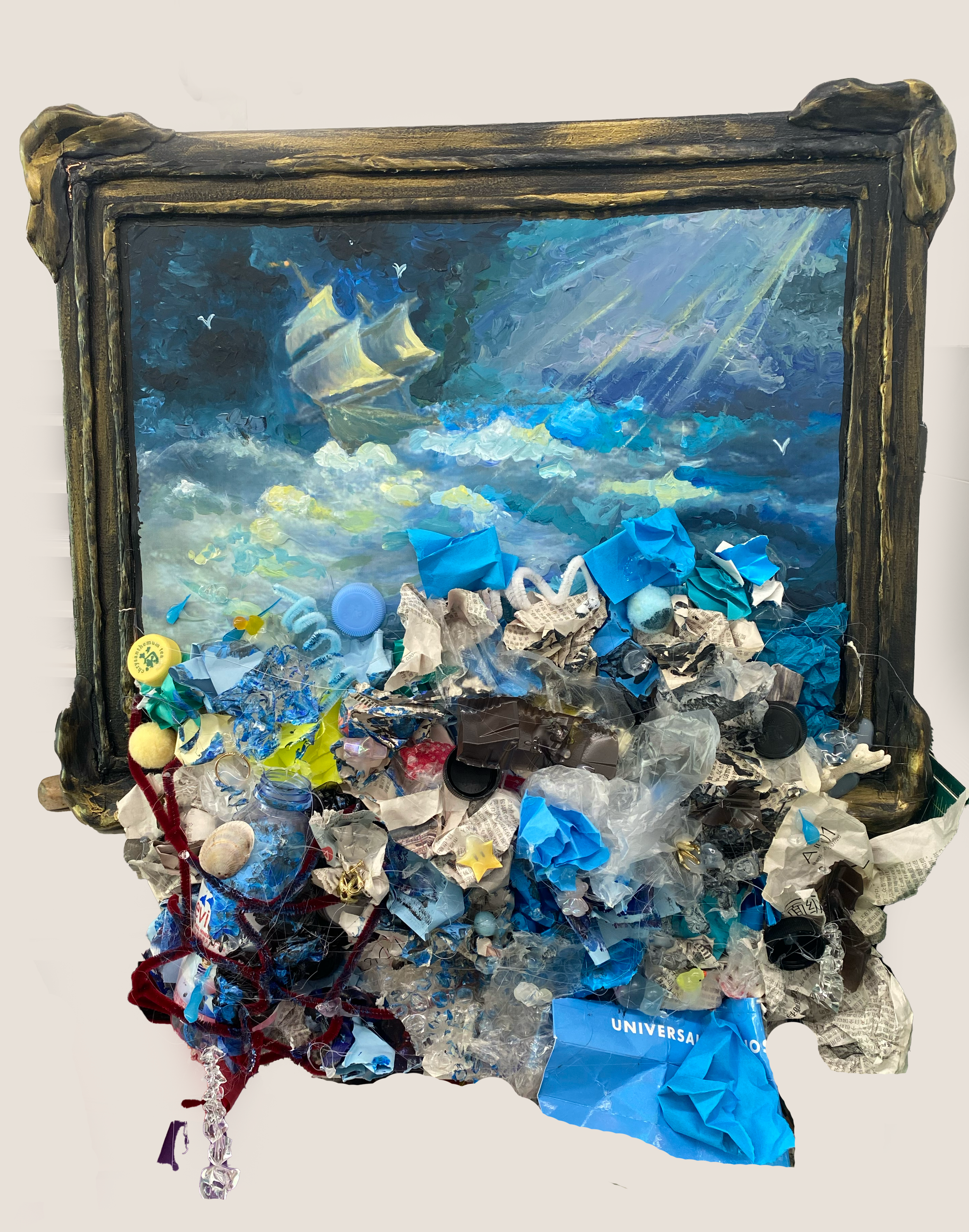
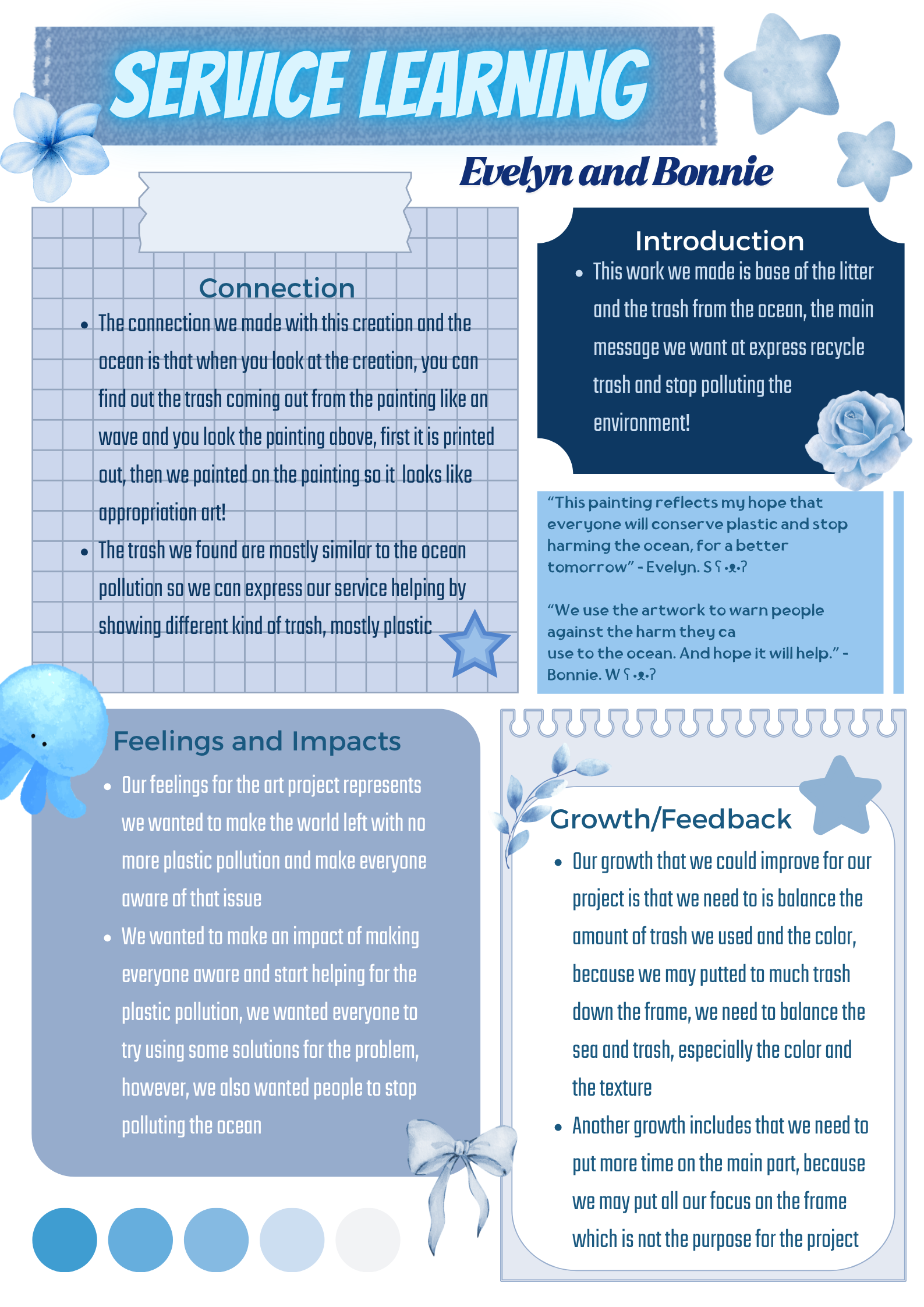
Students began by investigating. Some found their way to the single-use plastic bottle, a quintessential still life object and also a symbol of one of our most urgent environmental problems. They researched how plastics are sorted, which types can be recycled and which cannot, and how little most people understand about the consumer systems they participate in daily. The students’ response was to design a game that could teach plastic sorting in a way that was fun and accessible. They tested it with friends. They took it into their community. Eventually, they started thinking about what it would look like as an app, and they surveyed peers to find out how much people actually knew about ocean pollution and waste sorting. The answer confirmed everything their investigation had suggested: not much.
Other students went in different directions. One student designed a food waste awareness poster for the school canteen, took it to her classmates, and gathered feedback. Another traced the history of the mobile phone as a still life object and used that arc as a way of opening up a conversation about technology and mental wellness, how something so ordinary and present in every pocket has quietly reshaped how young people relate to themselves and each other. Each project was distinct. Each one emerged from a student’s own curiosity about a real issue. Each one was pointed outward toward a real audience.
What shines in this unit is how clearly the students understood the purpose of what they were doing. They were not making art for a grade. They were making art that would do something or reach someone, and that orientation changed the quality of student engagement and learning entirely.
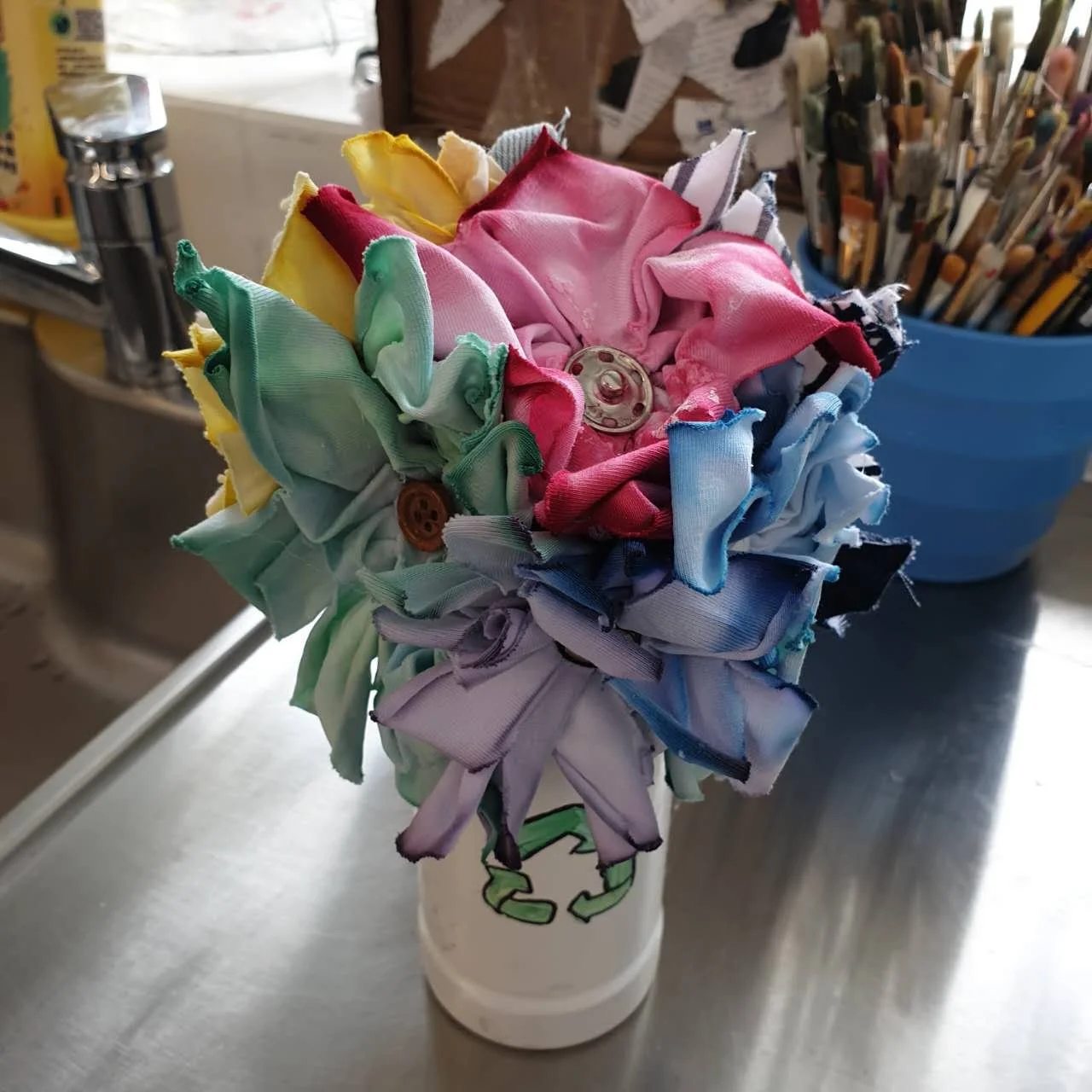
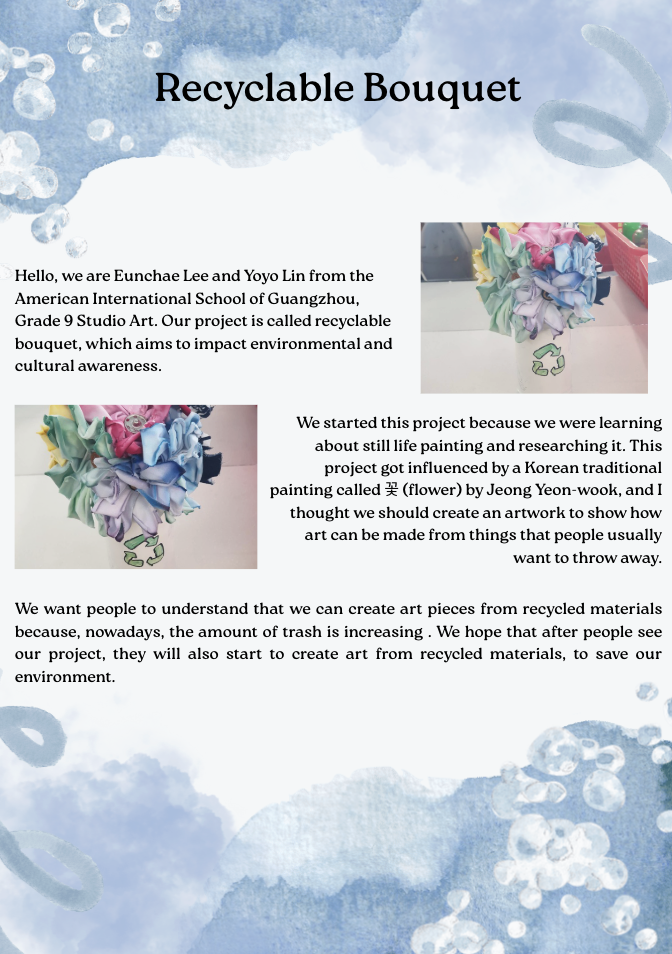
Below: examples of two pieces of student art from the “Still Life” unit, with rationales explaining how each piece sparks advocacy and action.
Assessment as a common thread
When a teacher centers student voice and choice in the way Sidd did with his grade 9/10 unit, the question of assessment can feel complicated. How do you evaluate equitably when students have taken different paths and produced completely different products?
Sidd’s approach was elegant. He gave students a framework at the start that included stories, examples, and prompts to spark their thinking. Then he coached each student or group through their ideation and research/inquiry. And throughout the learning process, he mapped what was happening in relation to MYP criteria:
Investigation connected to Criteria A.
Developing ideas mapped to Criteria B.
The final creation connected to Criteria C.
Reflection connected to Criteria D.
The framework stayed constant even as the processes and products varied wildly.
It’s a useful reminder that assessment criteria and student agency are not in tension with each other. They create the possibility of different roads leading to the same destination. The MYP framework gave Sidd a consistent lens through which to evaluate diverse work, and the students experienced it as freedom rather than constraint.
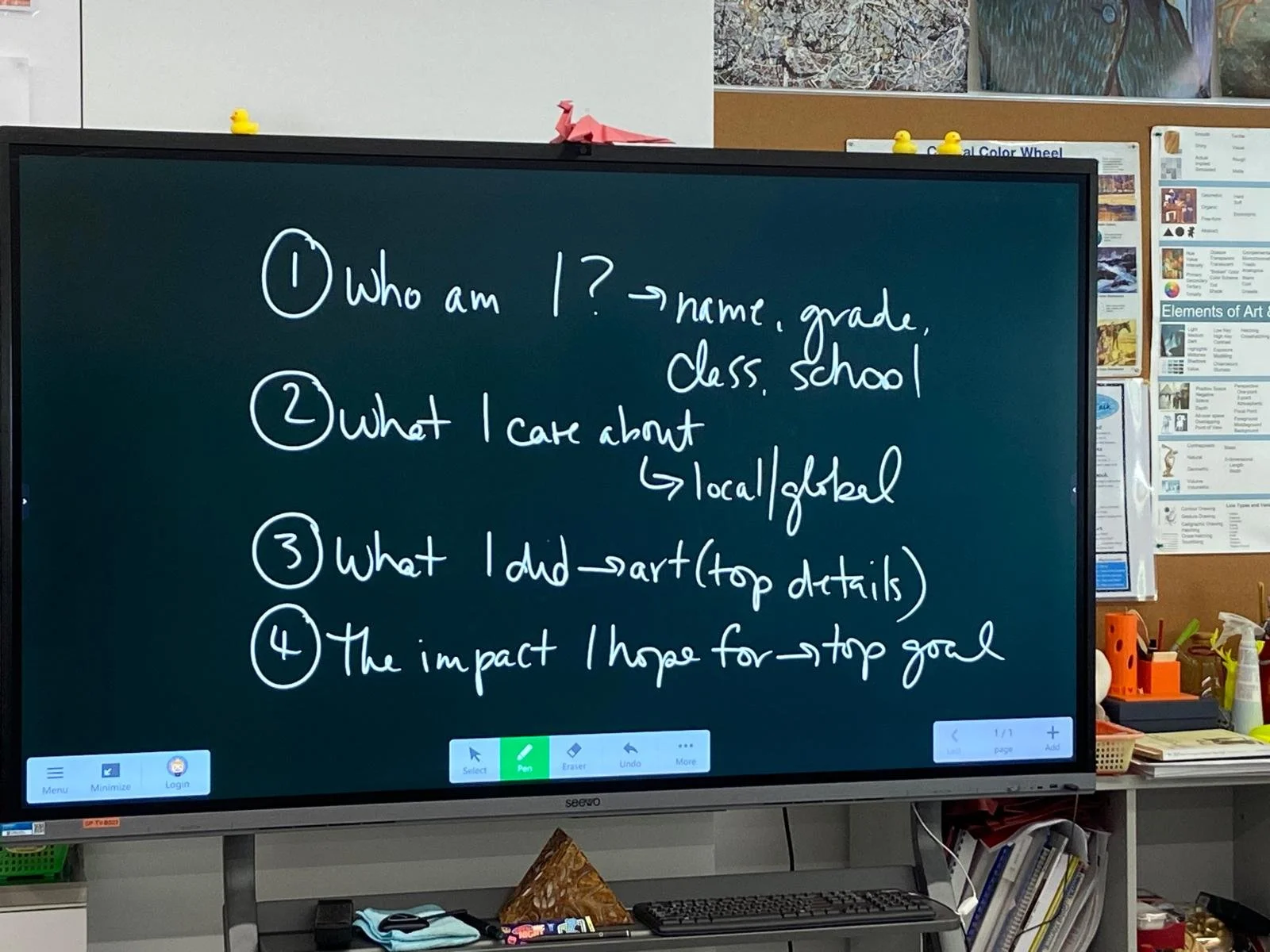
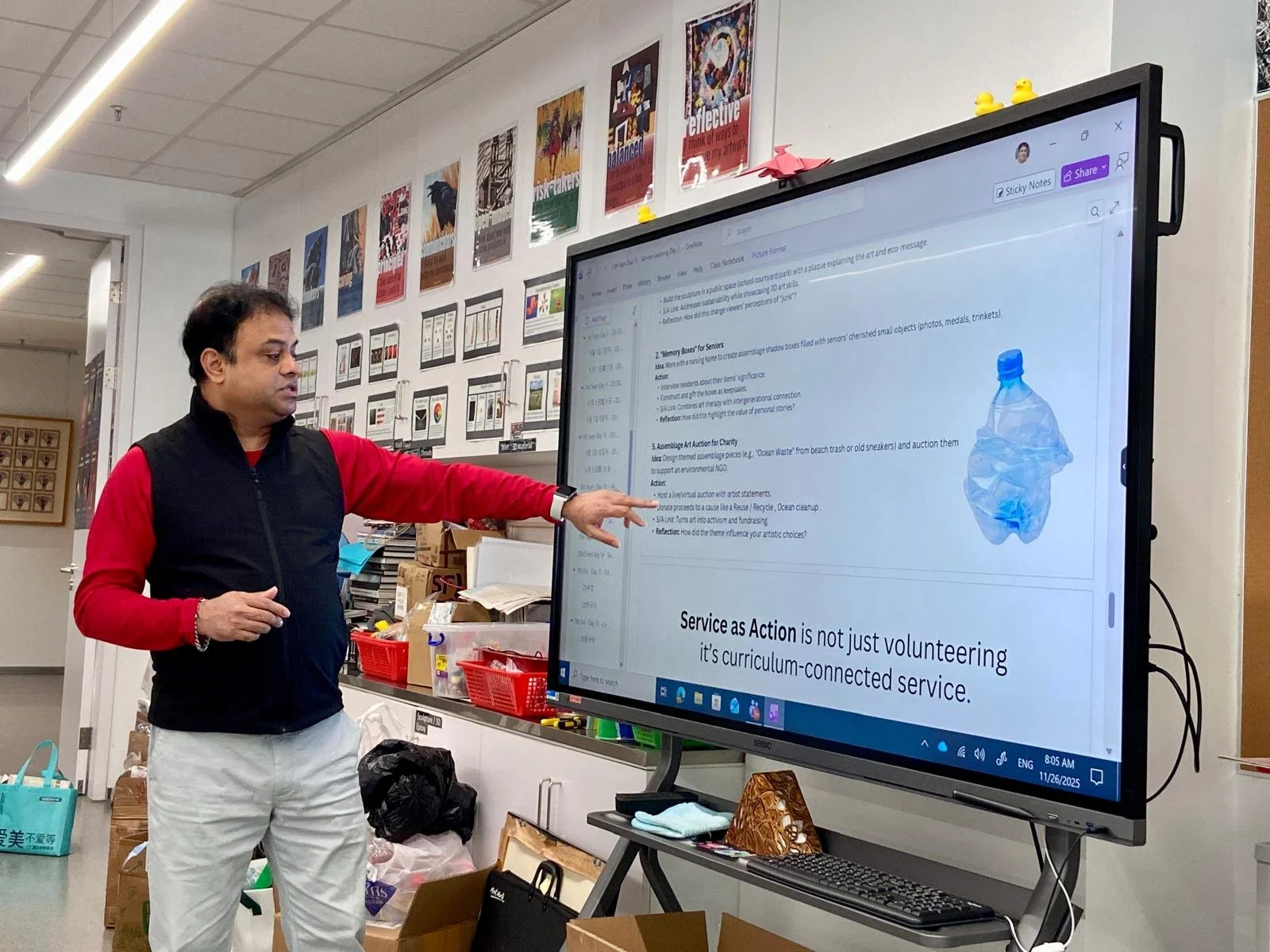
Below: Left - Some reflective prompts that Sidd’s students considered during my classroom visit to explore the impacts of changeseeking and changemaking; right - Sidd reviewing some outcomes for the grade 9/10 visual art Still Life unit.
Appropriation art as advocacy
Sidd’s Grade 7 unit was focused on “Appropriation Art,” a topic that already carries an interesting built-in question: When artists create art because they are inspired by others, is it stealing, or is it a legitimate artistic tradition? Sidd again gave students the framework and then asked them to find their own connections between this topic and the school/local community.
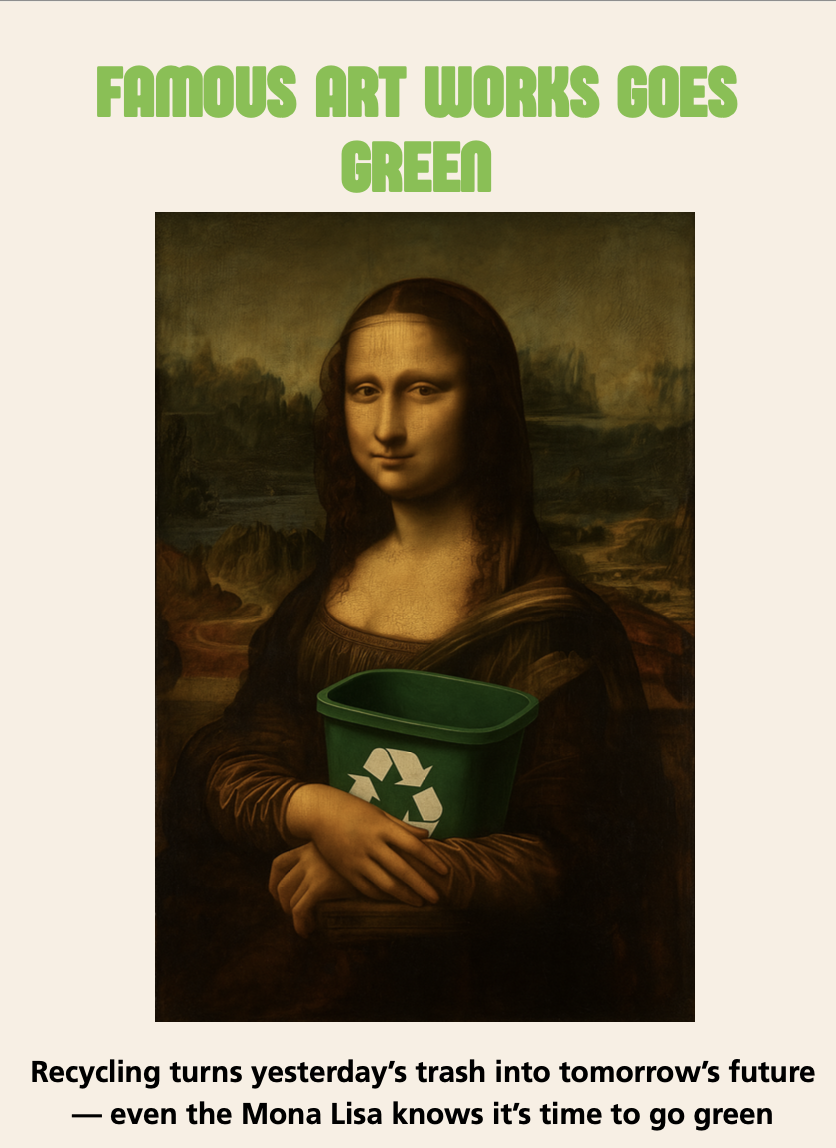
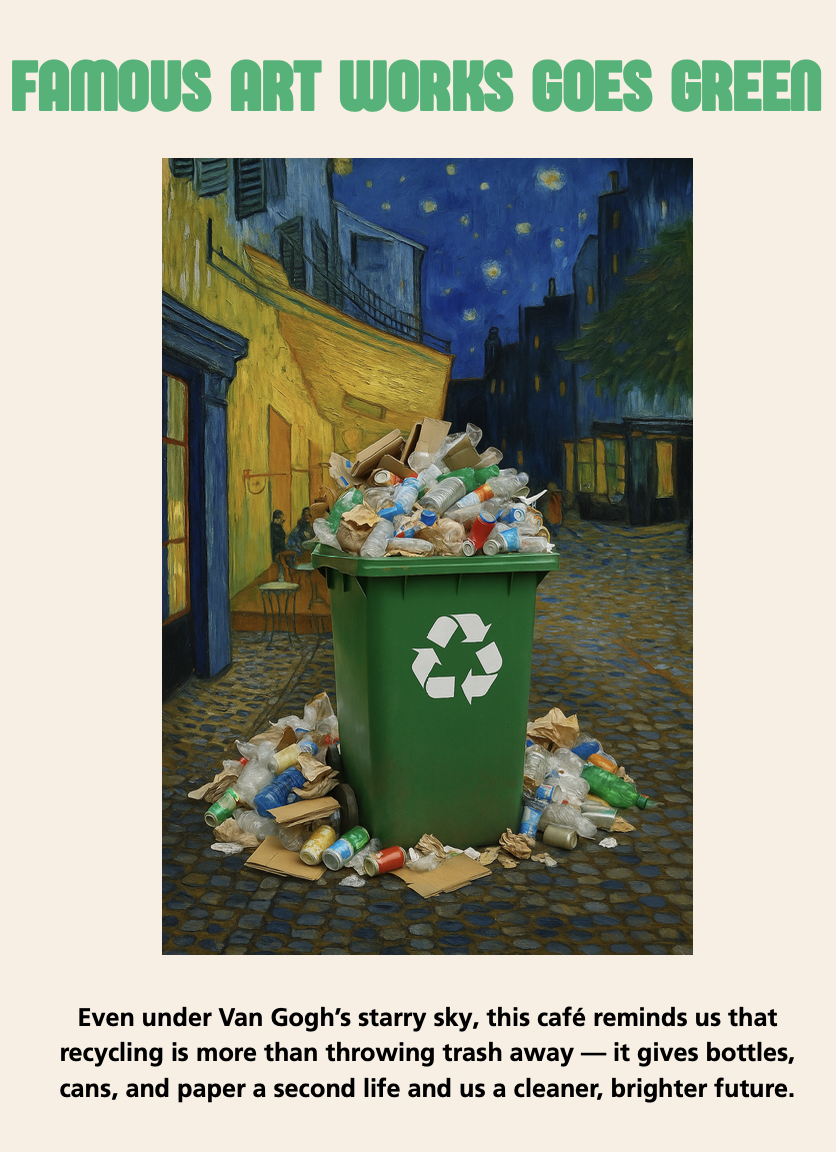
One student reimagined the Mona Lisa and Van Gogh portraits with an environmental advocacy lens. In the student art, these iconic figures held recycling tubs, and the student posted these around school with a message urging community stakeholders to reduce and recycle. Her posters had messages in three languages (English, Chinese, and Korean), so that the widest possible audience in her community could be reached.
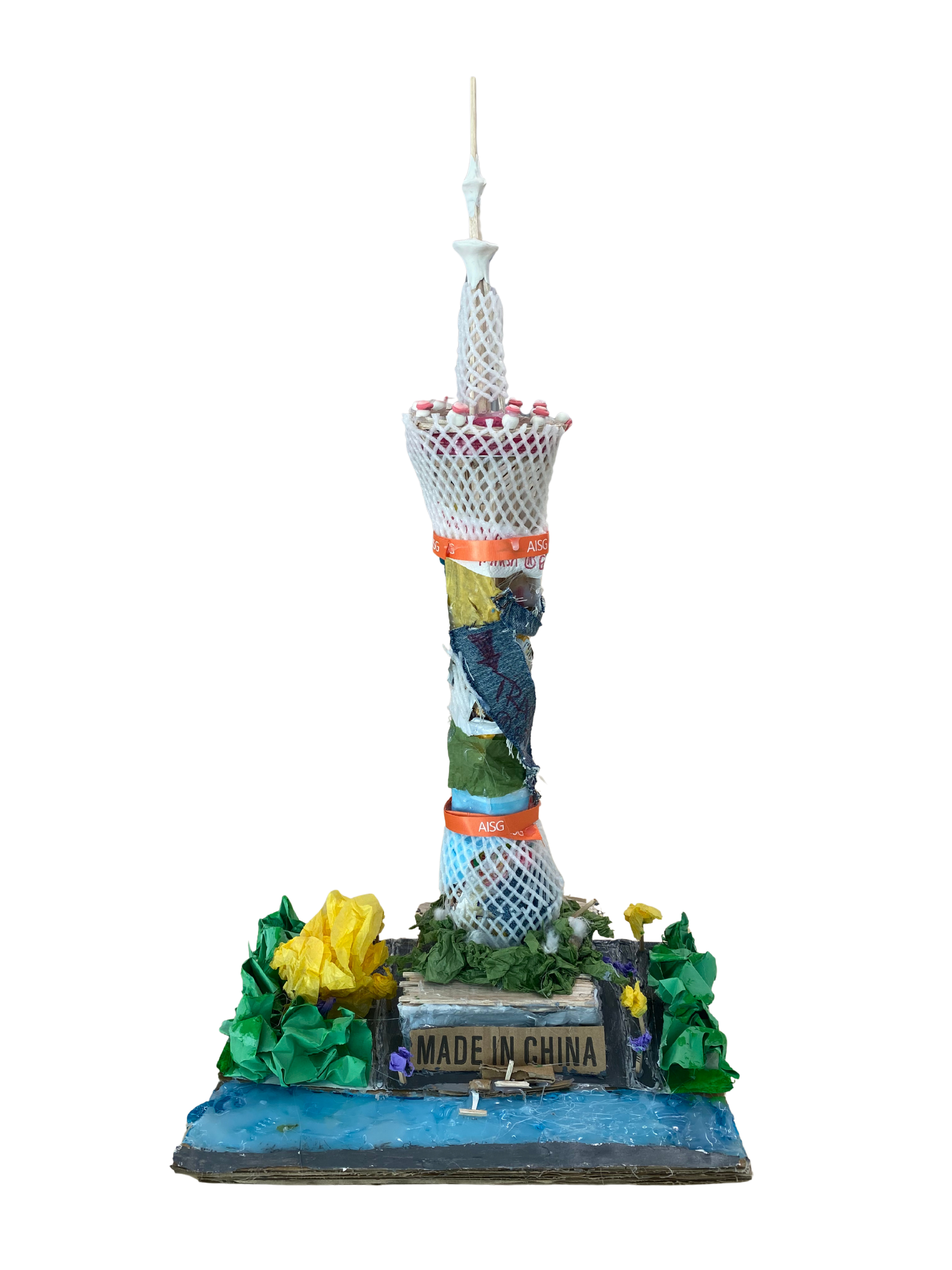
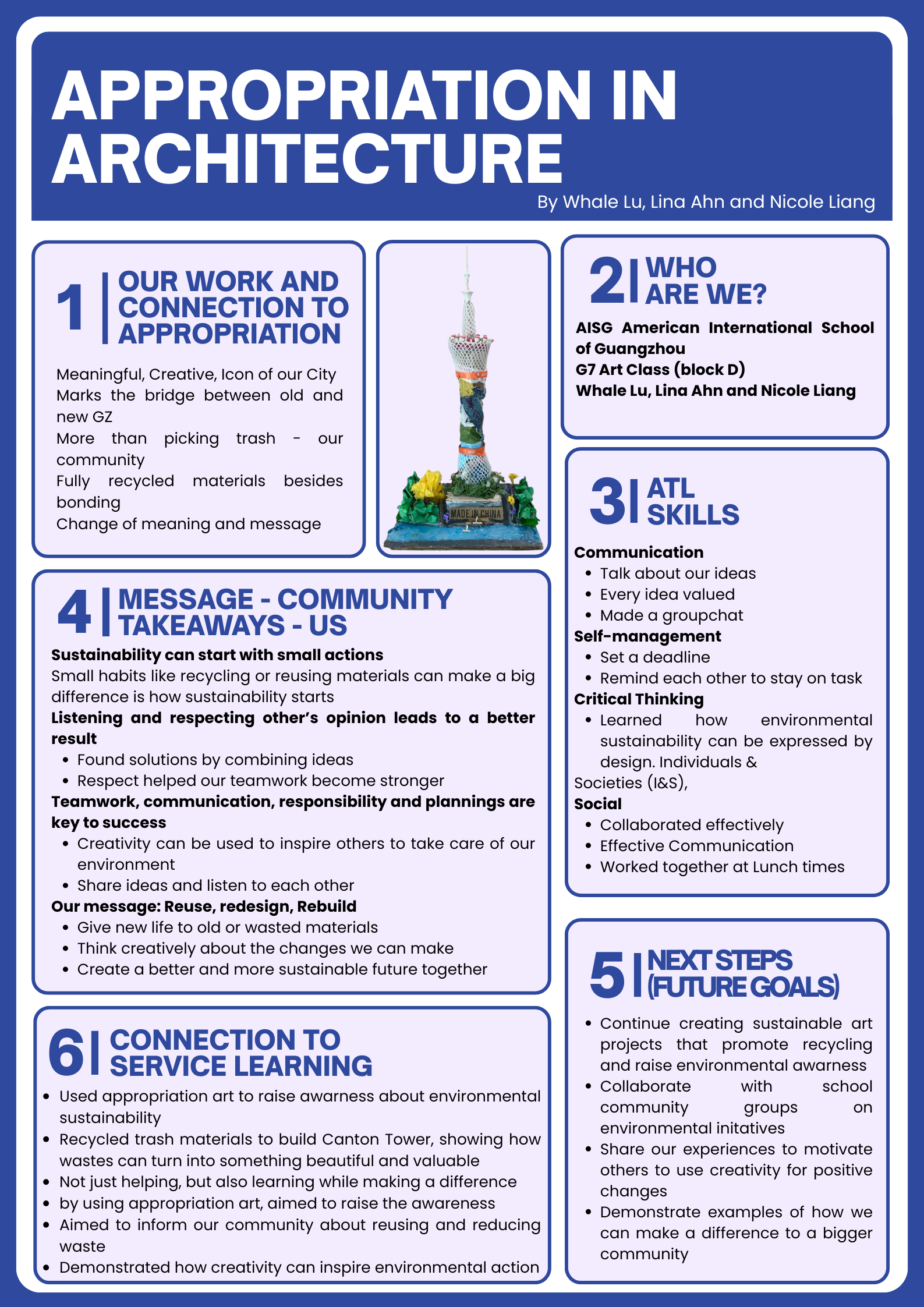
Another student created a sculpture of the Guangzhou Tower from recycled waste, a piece about civic pride and environmental responsibility, and about what it means to love a city and to want to protect it. That work was selected by AISG Director Kevin Baker to be displayed at a parent-teacher biannual meeting, and Sidd describes how the parents responded: “They were proud, not just of the artwork, but of what they were seeing in their children, such as confidence and a different way of thinking. The students had a sense of purpose that had not been there before.”
Another group used appropriation art to create anti-bullying materials for Grade 4 and 5 students, bringing older students into a mentorship relationship with younger peers through the medium of visual art.
Below: From the Appropriation Art unit, the student rendition of the Guangzhou Tower (top, with rationale), and (bottom) two of the famous art posters adapted with planet care messages.
What shifts in a teacher, shifts in a classroom
What is most compelling about Sidd’s story is not just what the students did, though that is genuinely impressive for a first attempt at embedding community engagement across a visual arts programme. Rather, it’s how Sidd’s own perspective on his role has changed, and the deep reflexivity he has personally experienced.
"Teaching like this has changed my life, as well,” he reflects. “If we, as teachers, can establish these examples in our classes, we can create a change in the new generation's minds. If they see us modelling behaviours like care for the planet, they will learn this is possible. For example, I’ve been intentional about reusing things in my studio, even old canvases. You can paint the canvas white and use it again; as the students observe this approach to resources, their own behaviours change."
Sidd now visits the school copy room and asks for used Post-it notes, markers with ink still in them, and leftover supplies rather than newly-opened ones. He has a device for measuring the charge left in materials such as batteries, to avoid discarding those items until it’s absolutely necessary. For Sidd, it’s obvious that if you are teaching students to care about consumption, you probably need care, and model that care, yourself.
He also talks about his daughter, who is 14. He and his wife try to model the same principles at home: not wasting food, not buying clothes that aren’t needed, not consuming for the sake of consuming. While he began his community engagement and service learning journey with these beliefs and values, something has shifted for him this year that has intensified his commitment to planet care and environmental stewardship.
Often, the most effective community engagement teachers I meet are people for whom this work and its values are real and lived convictions, and Sidd is one of those people. When a teacher's choices reflect a meaningful relationship with the planet (not sustainability performed for a unit, but woven into how they actually move through the world), that becomes an invitation into dialogue rather than isolated instruction.
What is already in motion
Sidd is hosting an end-of-year art exhibition at AISG that will bring both the grade 9/10 and grade 7 units into a wider community space, with students presenting work that was made to spark more conversation and action. This will create additional ripples of impact as all community stakeholders interact with the visual art pieces and the convictions of the student artists.
Looking ahead to next year, Sidd wants every unit he teaches across Grade 9 and 10 to be rooted in authentic community engagement. He is planning to build five dedicated sessions into each unit for that purpose, and he is already thinking about:
how the central questions of each unit might be modified
how he can embed Triple WellBeing (care for self, others, and the planet) into those central, guiding questions
how the action that emerges in each unit might ignite and amplify what students care about
“Art has always been for something”
There is a version of visual arts education that keeps everything inside the room: technique, composition, personal expression, and grades for products that stay in the classroom space. That version of teaching and learning isn’t wrong. But it is incomplete.
Art has always been one of the ways human communities make meaning together, advocate for what they value, grieve what they have lost, and imagine what might be different. When Sidd asks his students to use appropriation art to educate peers about bullying, or to use still life as a vehicle for raising awareness about ocean plastics, he is not asking them to do something foreign to the artistic tradition. He is asking them to participate in it honestly.
Watching 12- and 13-year-olds debating whether a small scrap of paper is still useful for a collage, and older students thinking through what it would take to get their game into an app store, is a reminder of what becomes possible when a teacher genuinely believes that learning is an act of engagement with the world.
Sidd has taken core and pathway courses in his year-long Service Learning and Community Engagement Specialist Program. He has also participated in group and individual coaching with me, Cathryn Berger Kaye, and Shei Ascencio. The Service Champions have had monthly cohort calls to apply their learning from the course to the AISG “Engagement for All” framework that guides curriculum design and brings the school mission and vision to life.