Story Circles 3.0: When a Spark Becomes a Movement
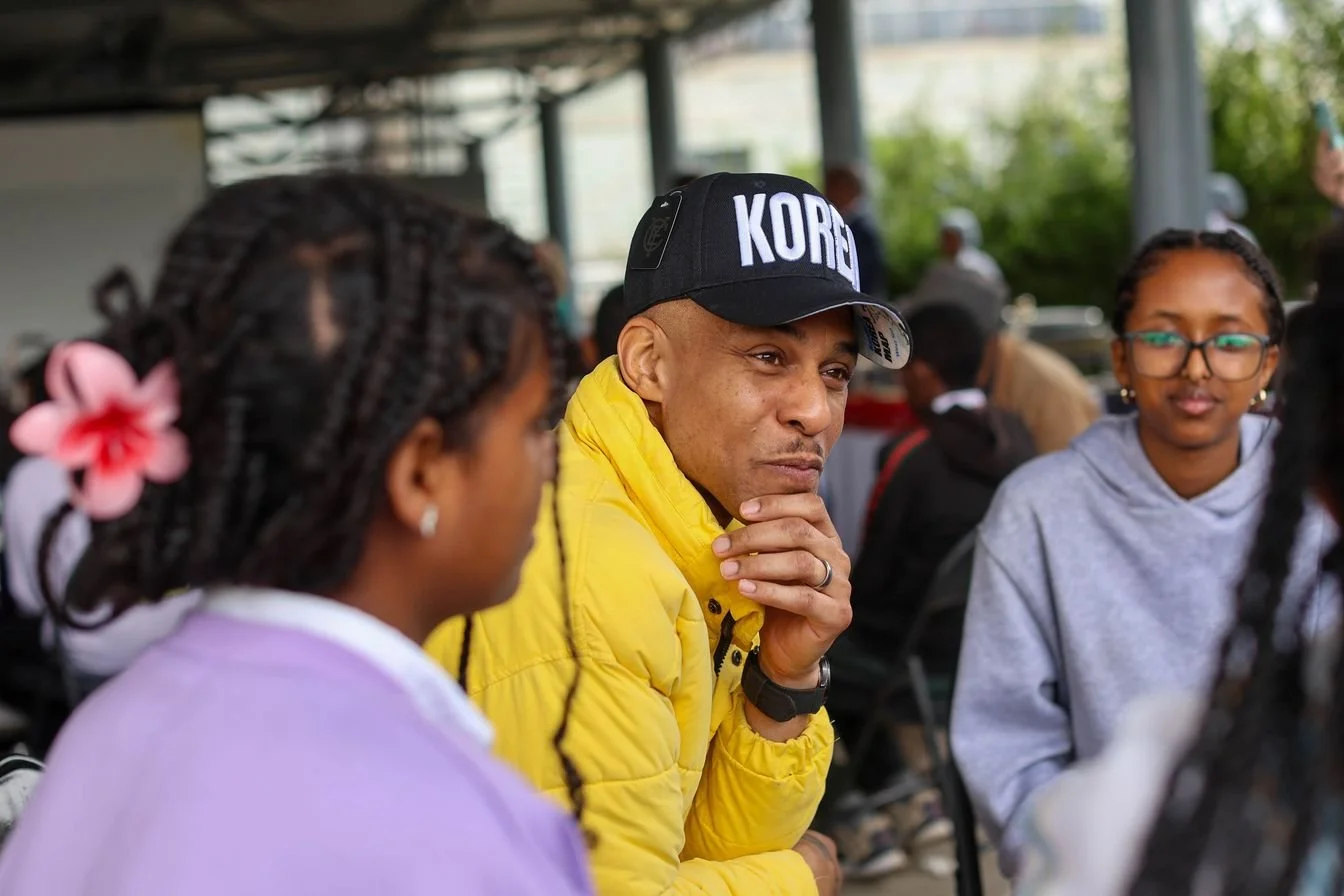
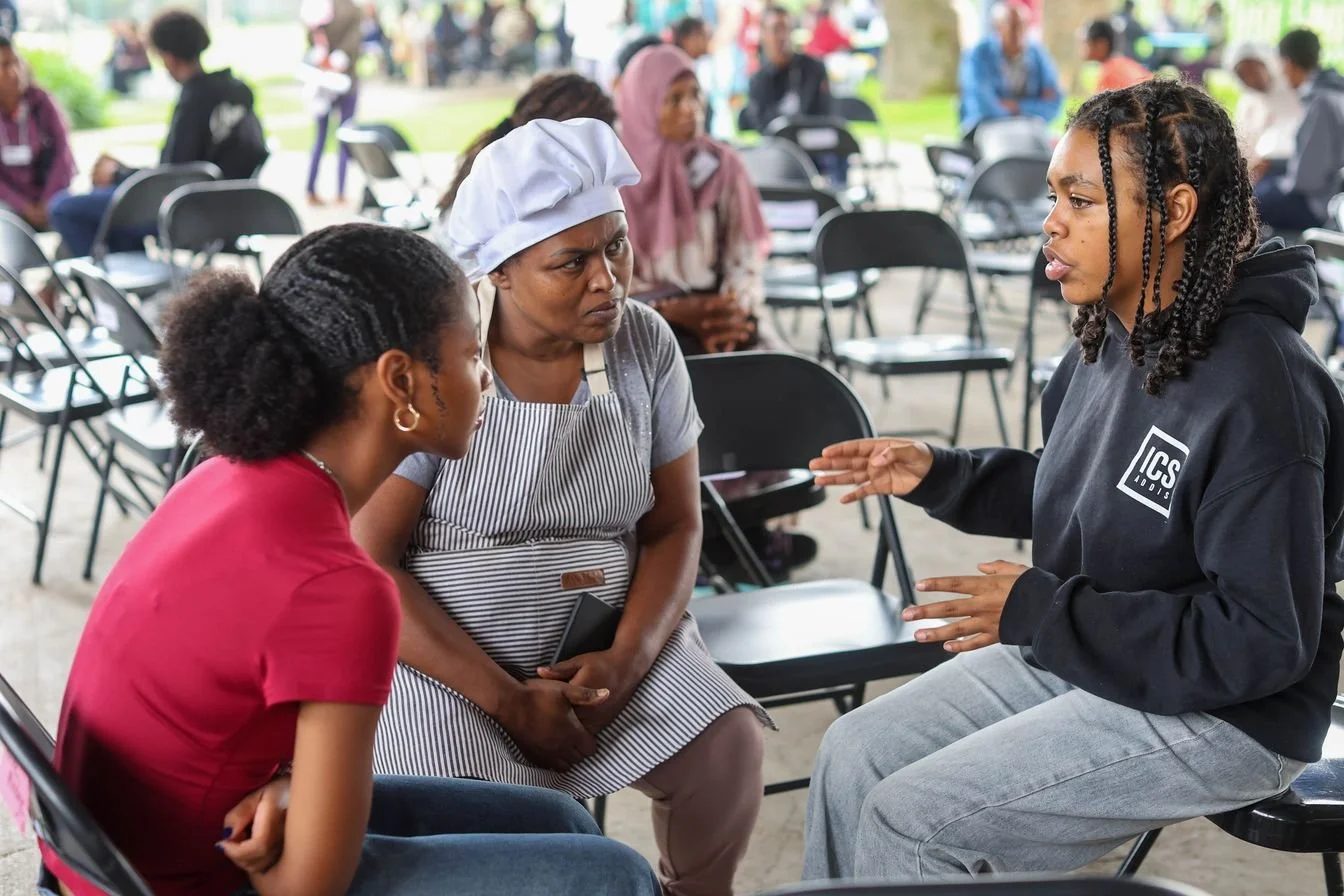
This is the third in a series of posts about the Grade 9 Language & Literature story circle experience at the International Community School of Addis Ababa. If you’re joining us for the first time, you can read the origin story here and the 2.0 evolution here. All photos in this post are from this year’s Story Circle experience.
Something has shifted and emerged in the grade 9 Language and Literature story circles at ICS-Addis. In year one, Rebecca Gillman and her colleagues lit a match. In year two, Adrienne Garcia and Joshua Smalley built a fire. In year three, that fire has spread beyond the ICS-Addis walls to spark new experiences in local schools.
To tell the story of this year’s iteration of this anchor community engagement experience in the ICS-Addis curriculum, I talked with two members of the team who have been part of each story circle since the beginning: Tsegereda (Rose) Abebe and Lelna Nega, from the ICS-Addis Student Support Services department. Educators Adrienne and Joshua continue to lead the Grade 9 Language and Literature team, and Rose and Lelna have supported individual students and the running of the story circles experience each year.
What Rose and Lelna have witnessed across three years is the kind of evidence that flows beyond the boundaries of a summative rubric. It’s the evidence of relationships, connectedness, intercultural understanding, and the power of stories.
A Bridge, Then a Builder
Rose and Lelna came into this work through their student support roles. In year one, they were there primarily as translators and supporters, helping to communicate the concept of story sharing to the local Amharic-speaking staff who made up part of the community participant group, as well as supporting specific students with learning needs.
“In our cultural context, people don’t usually share their story or try to understand other people’s stories if they are strangers,” explains Lelna. “It is a little bit culturally sensitive, because this experience initially puts people outside of their comfort zones. And especially since they (the community members and partners) were talking to students, there was a huge gap.”
To ask a school maintenance worker, security guard, or community partner to share a personal story with a teenager they have just met is a significant ask. Lelna, Rose, and others on the grade 9 team had to invest time explaining the process and putting people at ease so they felt comfortable participating in year one.
Something happened after that first story circle that nobody had fully anticipated. The people who participated went back to their colleagues and shared what the experience had been like. They talked about feeling heard. About discovering that students face similar challenges. About the surprising sense of common humanity that emerged across what felt like a very large social distance.
By year two, Lelna says, it didn’t take much convincing at all to get ICS-Addis community members to participate in the summative story circles experience.
Year Three: The Circle Expands
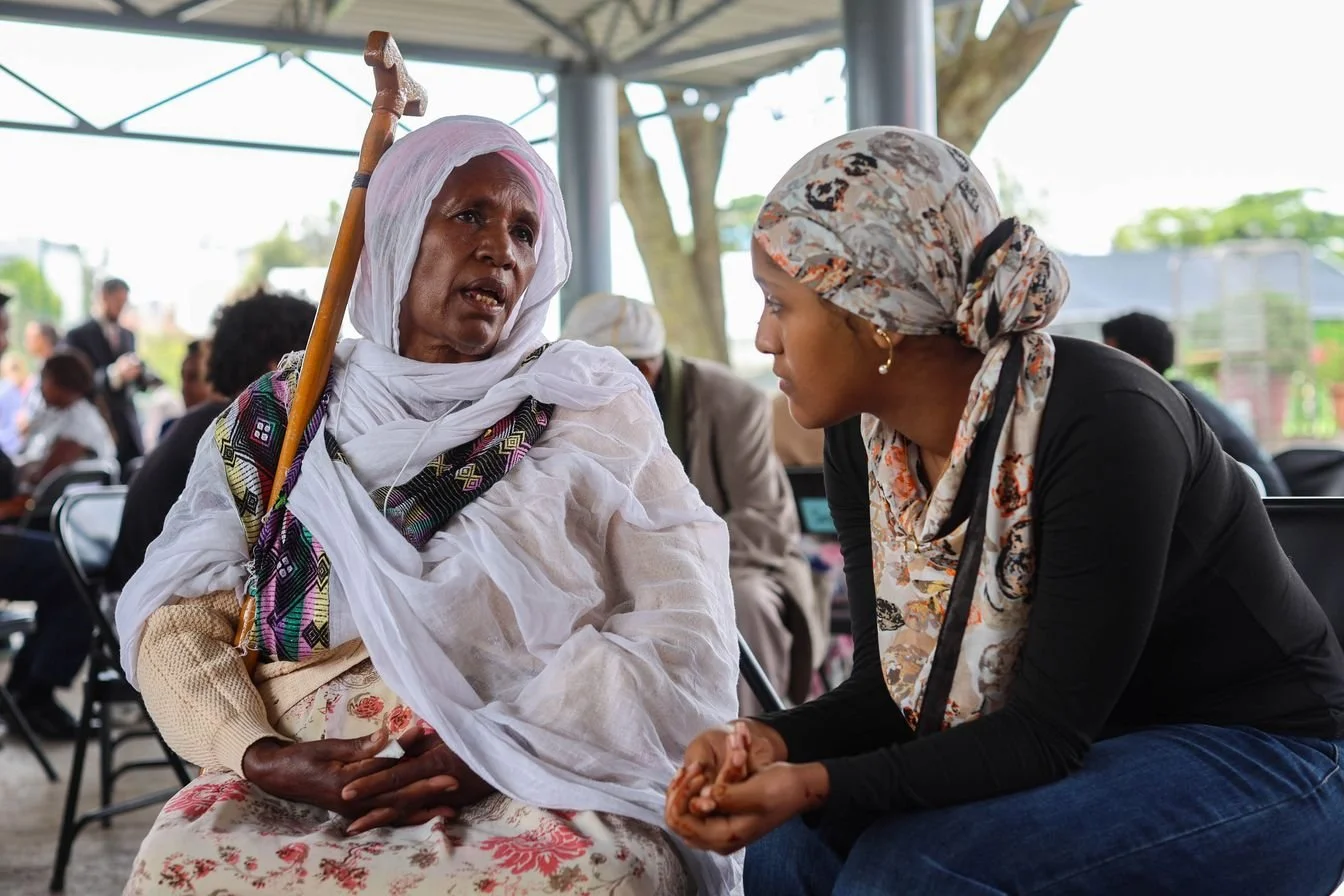
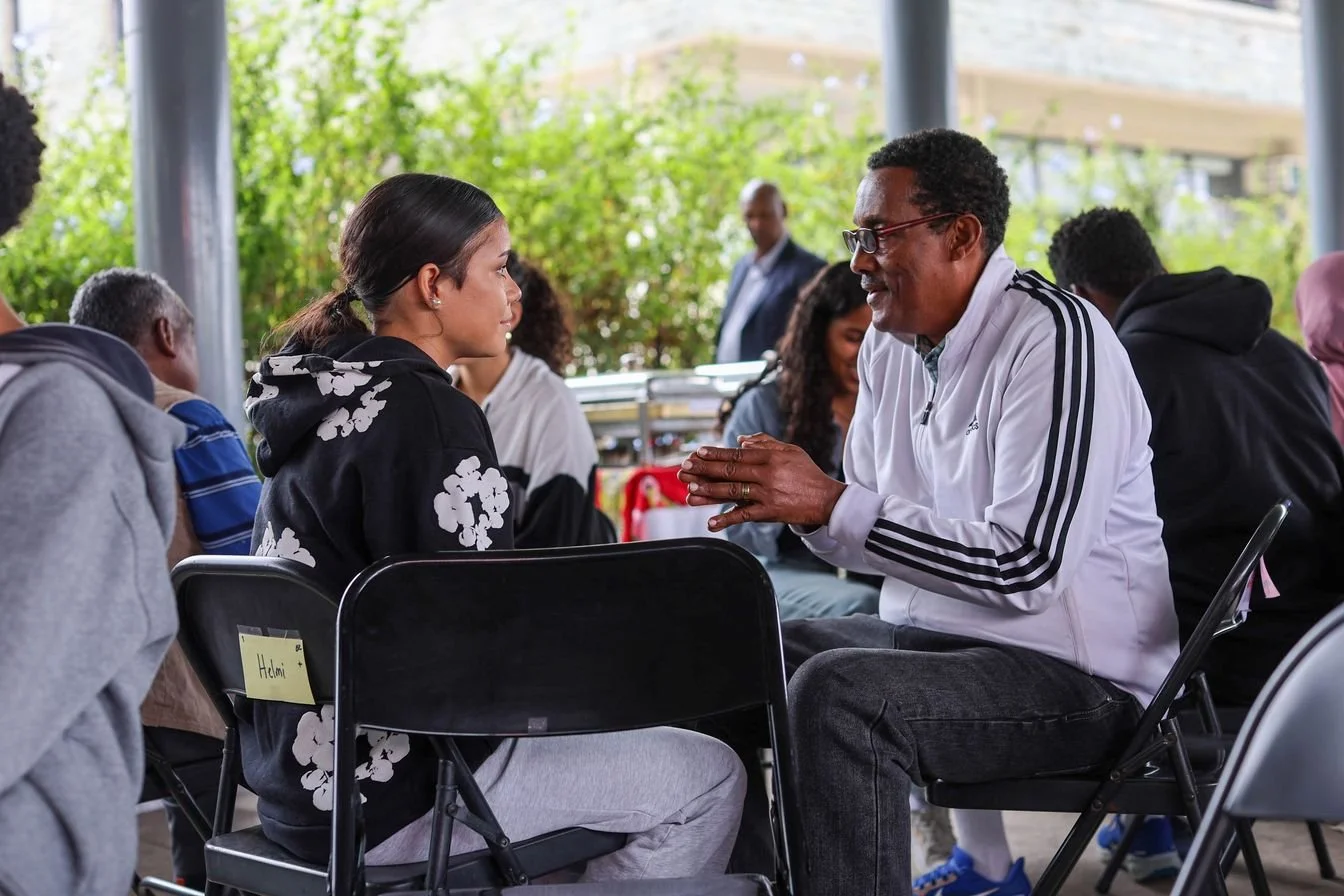
Each year, the team has deliberately widened the circle of community participants. In year one, it was primarily ICS staff and a community partner organization, Mekedonia. In year two, more local staff were included, and additional organizations were invited. Teachers and leaders from a local school also participated. In year three, the expansion has been impressive, yet again.
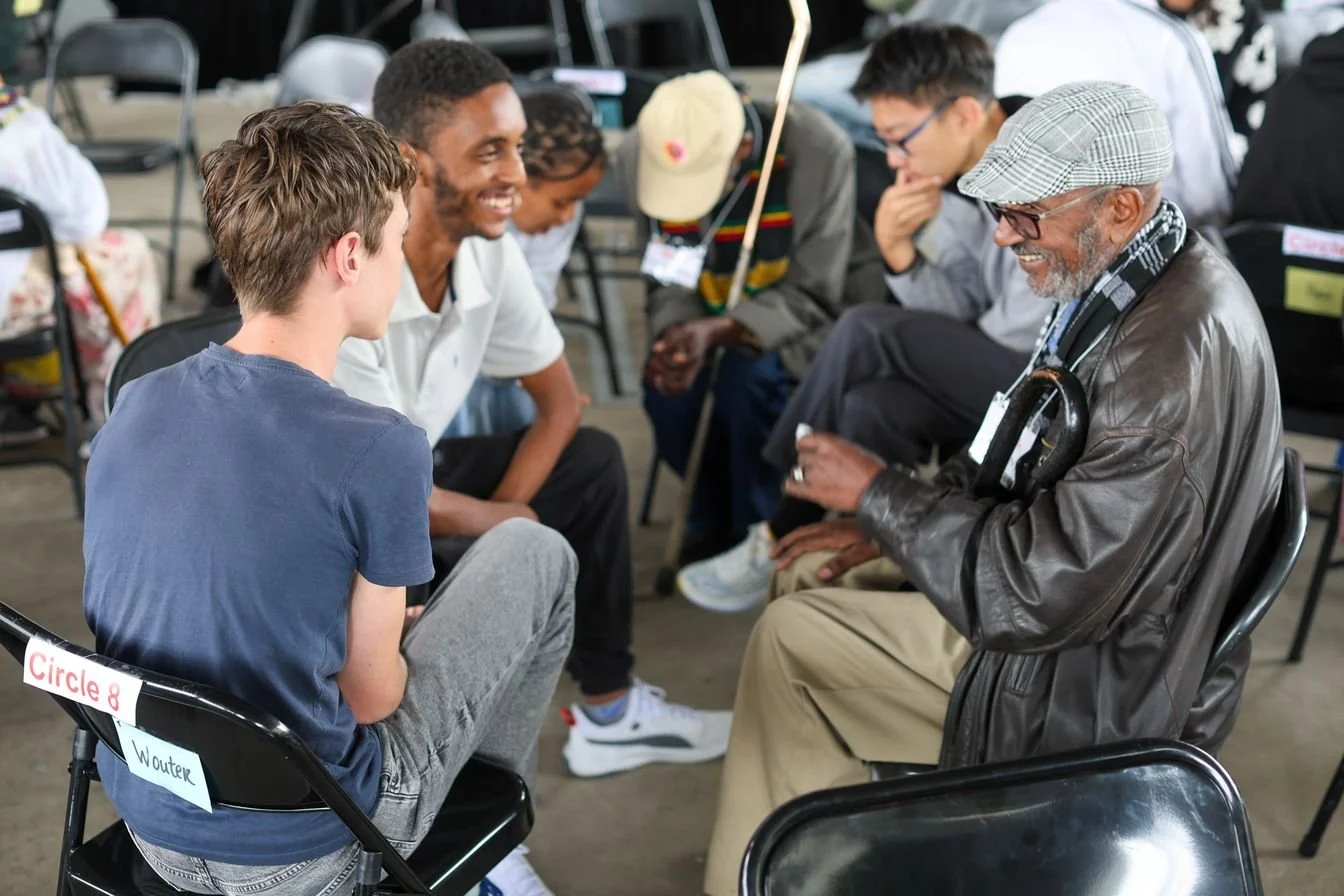
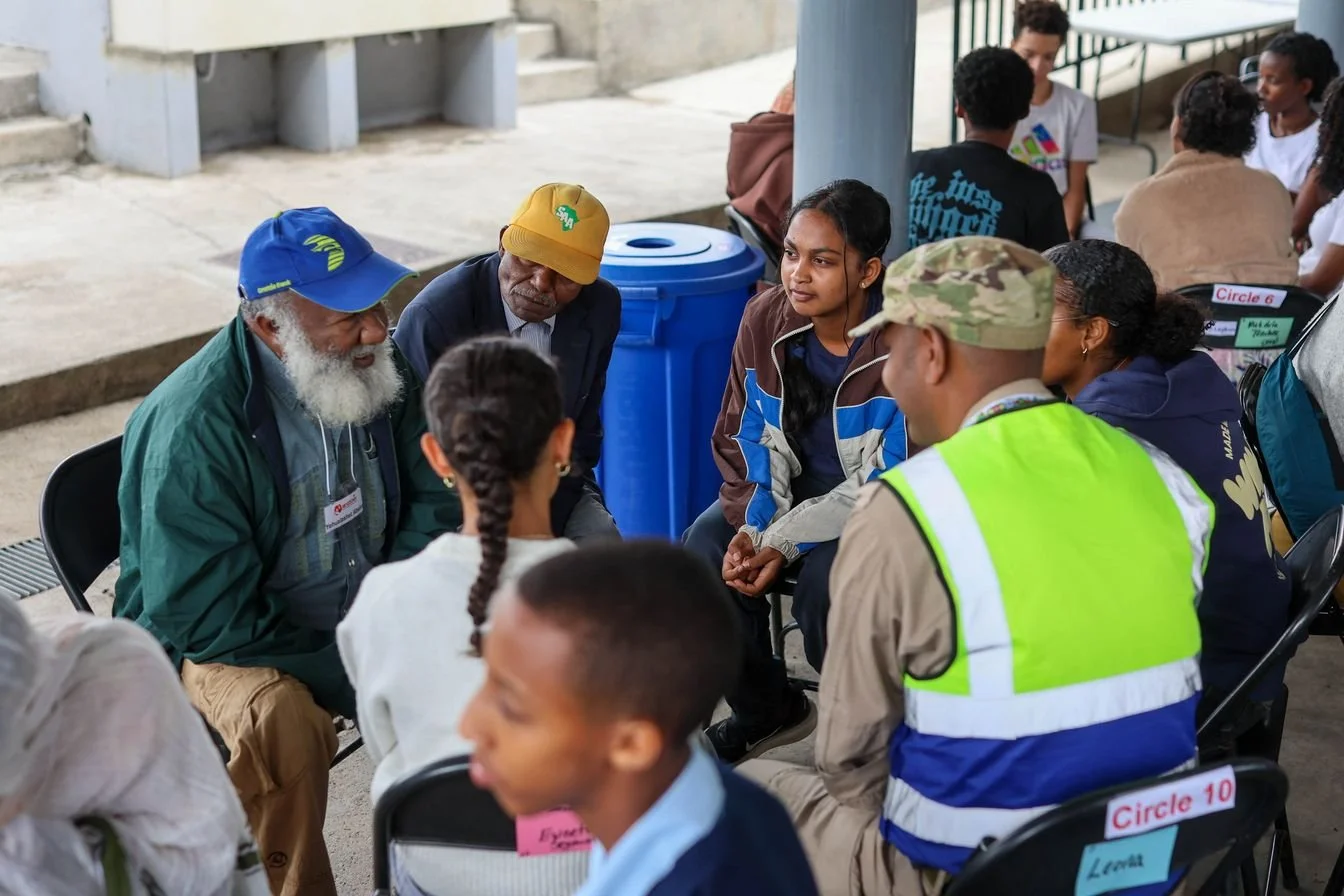
This year’s story circles included participants from an elders’ centre and a children’s cancer centre, alongside students and teachers from the local school that was represented in year two, and an additional local school.
“This experience gives them (the students) an understanding of different perspectives and experiences,” says Rose. “Some stories shared by community members involved people being neglected, or abused, or not given the attention they deserve. This really widens the students’ understanding of life here in Addis.”
Peer to Peer, Bridging Cultures
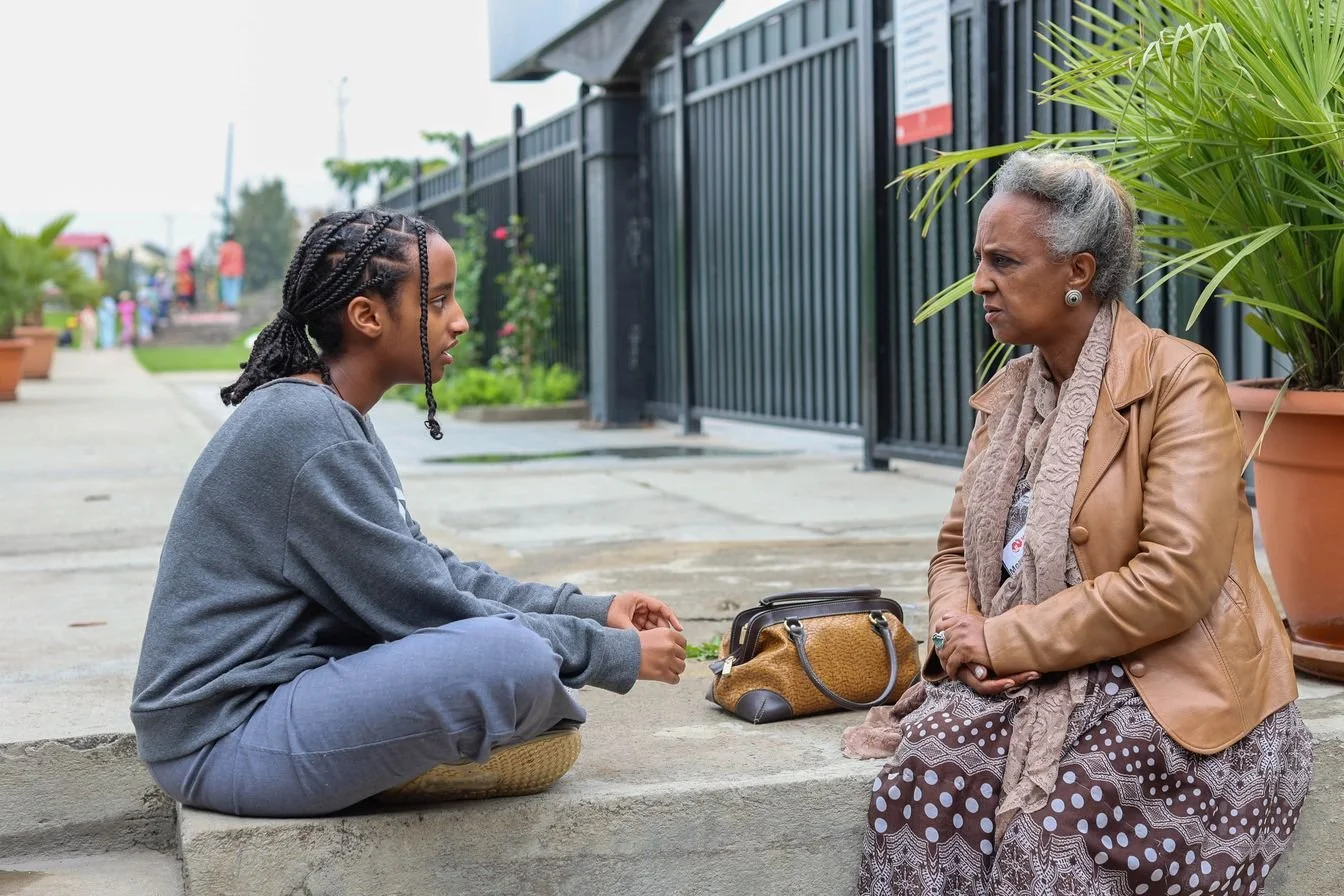
The inclusion of local school students as participants this year resulted in something the team hadn’t fully predicted: a peer connection that cut across assumptions about what it means to be an international school student versus a student from a local Addis Ababa school.
“ICS students in the same age group as the local students realized that, even if they’re living in two different worlds, they have so many things in common,” reflects Rose.
This is, of course, exactly what the story exchange protocol is designed to do: foster intercultural understanding and connection.
Lelna observed students lingering after the formal exchange had ended, continuing conversations in small groups, trying to stay connected. The feedback from students was consistent: this should keep happening. Many expressed a desire to maintain the relationships they’d just formed.
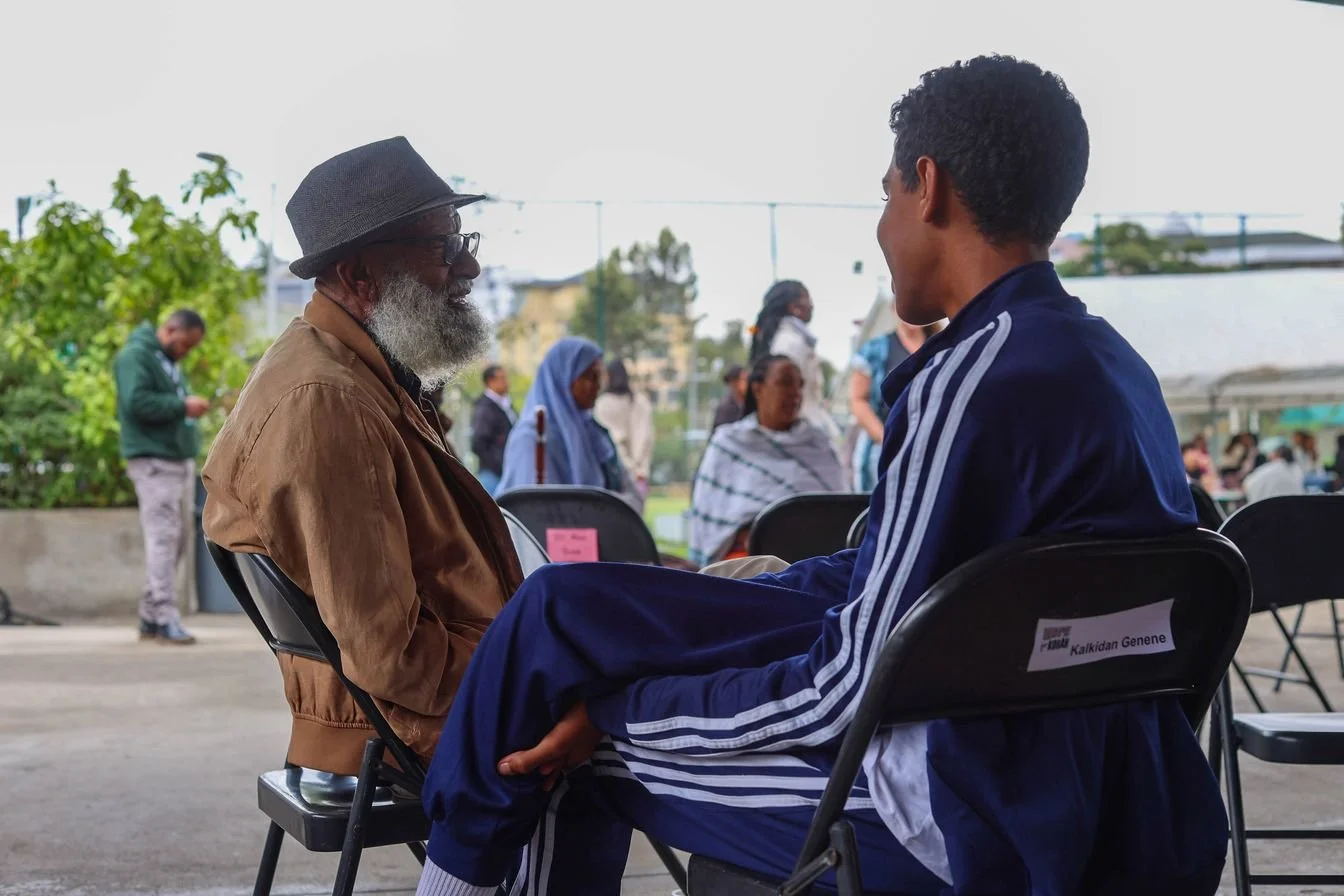
Culturally, Lelna notes, the initial discomfort in each year’s story circle has been real. Sharing personal stories with strangers is not a common or easy thing in Ethiopian social contexts. However, as each event has unfolded, participants relax, connect, smile, laugh, and enjoy each other’s company.
“Everyone is chatting, having a lot of conversation,” reflects Rose. “Having seen this happen three times now, I realize that the more you do it, the more natural it becomes.”
A Spark That Travelled
The local school team that participated in last year’s story circle (with leaders and teachers) and in this year’s story circle (also with students) went back to their own school, determined to host a story circle of their own. They invited five other local schools, and the response was overwhelming.
Because ICS students were in the middle of summative assessments at the time, they couldn’t attend, but Rose went as a representative of the school. She could see so many ripples of impact as the local school students led their own gathering.
“Our ICS students have done this three times now, so they’re aware of the process of sharing stories using this protocol,” says Rose. “But for the other local schools, considering that this is culturally something we don’t do often, you could see they were a bit shy at first as they led this experience. By the end, though, it seemed like everyone came from the same school. There was a lot of meaningful connection.”
Nobody at ICS organized that event, trained those students or gave them a manual. The local students experienced something meaningful, recognized its value, and replicated it, which speaks to a powerful, grassroots impact and intentional capacity-building.
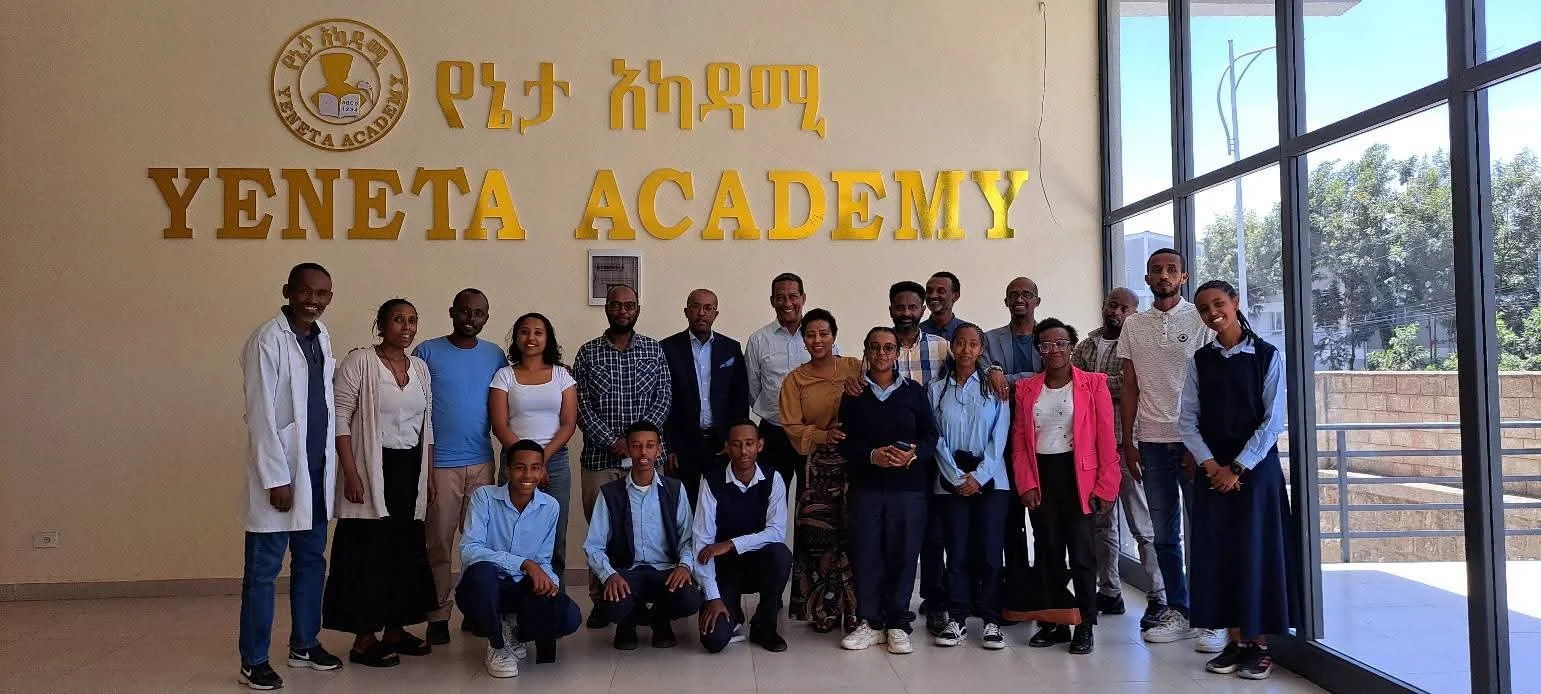
Community members at the Yeneta Academy who, after participating in this year’s ICS-Addis’s Story Circle, brought their own Story Circle to life involving 5 local schools.
Belonging Beyond the Classroom
The thread running through everything Rose and Lelna described is the thread of belonging that comes from being genuinely seen by other human beings.
Rose described her own experience of sharing her story in a circle with a student she worked with. Months later, that student still asks how her daughter is doing.
“It’s a really true connection, and it has impacted how I see all of my students, explains Rose. “Some students are struggling. There is a lot happening at home, in their lives, and they might not feel able to share with someone like an adult in school. But once there is an event like this, they can open up to anyone.”
For the students that Rose and Lelna support through the Student Support Services department, this kind of opening matters in particular ways. Some of these students have small social circles and some find it genuinely difficult to start conversations or sustain a relationship outside the classroom. The story circle is not a therapeutic intervention, but it provides something that many other school experiences do not: a structured, purposeful, low-stakes reason to be a in a relationship with someone new, in a setting where everyone is equally asked to be honest.
The team has refined their approach for these students across three years. In year one, a student who needed support to communicate had an educator from Student Support Services sit alongside them to help clarify langauge and instructions. By years two and three, the team worked with students on their prompts in advance, so they could share independently. They developed a practice of, in the sharing round, having students offer key words from their partner’s story, with the partner then able to tell the fuller version to the group as a solution that honoured both the student’s capacity and their partner’s voice.
Lelna describes what happens when other students see a peer they’ve mostly encountered in a classroom context show a different side of themselves through story: “When they hear their stories and see a new version of them outside of the classroom, it helps them to connect more. This gives them a way to show who they are outside of the classroom environment. It helps them to be vulnerable, and it helps the other person understand them in a different way,” she says.
Two samples of student writing and reflection from this year’s grade 9 class clearly show the impact that Rose and Lelna have witnessed. You can read the student reflections here and here.
What Three Years Teach You
The ICS-Addis story circle experience is, at this point, a case study in what it actually takes to grow something well and create an anchor community engagement curricular experience and summative assessment that gets better year by year.
This requires educators and adult mentors who are bridges and builders in this process. It takes a willingness to invite people into the experience, and to help all stakeholders feel comfortable even when they’re far outside their comfort zones. It takes inclusive design that is specific enough to be genuinely useful (in this case, through prompts prepared well in advance, a clear protocol and flexible instructions).
It also takes the particular kind of wisdom Rose and Lelna demonstrated when they described the plan for next year: to invite more new schools and to keep the circles of impact moving.