Reinventing an advisory program: one school’s take on action
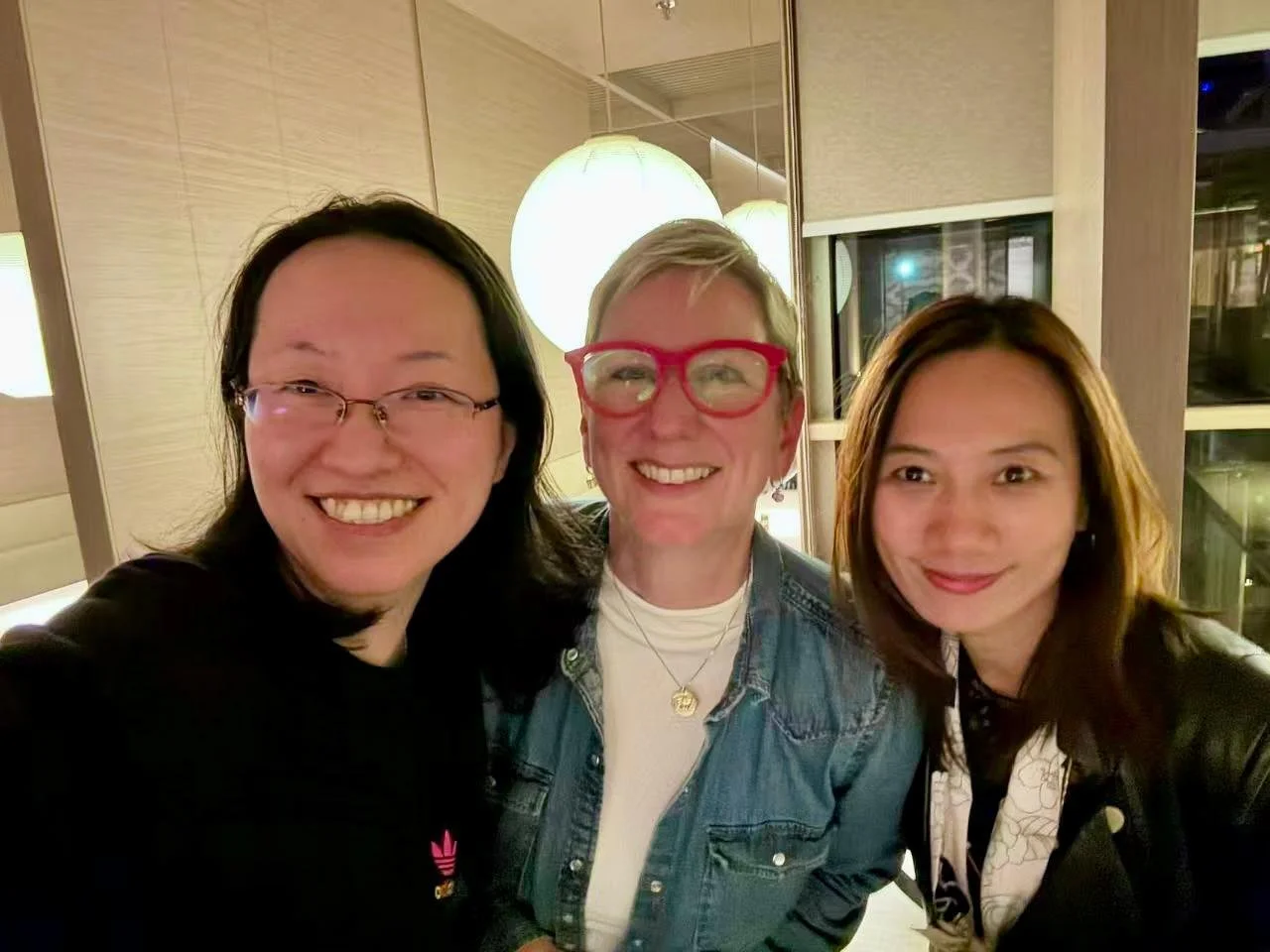
I had a chance to meet up with Julie and Nichol in person in Shanghai in the late fall of 2025/26, just as their teams were moving into the planning stage of their Tutor Time advisory service learning cycle.
Advisory (also known as homeroom, flex time, seminar, or form time for UK-based schools) can present a predicament for teachers and program coordinators: How do you design a cohesive program, equip a large number of teachers with learning plans they want to use, and make the time meaningful?
If you’ve ever taught one of these periods, you know what this can look like if things go off the rails:
teachers who don’t have a plan (or time to make one)
lack of cohesion and vision across groups/classes
perfunctory use of time, such as sharing announcements and taking roll call; for students, perfunctory use of time can look like catching up on homework, scrolling on a phone, or waiting for the bell to ring so they can move to a more authentic learning environment
These pockets of the school day can easily become administrative holding spaces, yet they sit in a privileged position in the weekly schedule. Students are with teachers in small, consistent groups where the conditions for something meaningful exist and where relationships and learning can flourish (with a well-developed plan!).
At Shanghai YK Pao School, a team of middle school educators decided to find out what would happen in 2025/26 if they used their advisory time in a meaningful way. Inspired by a 2-day ACAMIS service learning workshop I facilitated in Hong Kong in the spring of 2025, this team wondered if they could design their middle school advisory around a 5-part service learning cycle (investigation, planning, action, demonstration, and reflection). They reached out to ideate, and I had the privilege of helping them design the program under the name of “Tutor Time”, and of supporting the team through its implementation.
What they accomplished in a single year (a full Tutor Time curriculum for grades 6, 7 and 8!) is worth sharing widely, and I hope this story will inspire you with ideas for your own advisory/homeroom program.
I first heard the broad arc of how the year might unfold from Julie Wang (Service Learning Coordinator) and Lanco Ke (Director of the Experiential Learning Office [ELO]). Later, Nichol Wang joined the Tutor Time planning team and became a valuable leader, as well.
At Shanghai YK Pao School, there are 25-minute blocks for middle school advisory from September to May, and this year the vision was to:
engage all students in a meaningful exploration and investigation of a local issue or partnership
guide students in how to take relevant and authentic action
empower students to engage in impactful advocacy and reflection
Starting at the root
One of the early pivots the team made was in how they scaffolded the investigation phase for Tutor Teams. They wanted students to enter the service learning cycle with curiosity and deep engagement, so initial lessons focused on student interests and local/global issues they were most interested in.
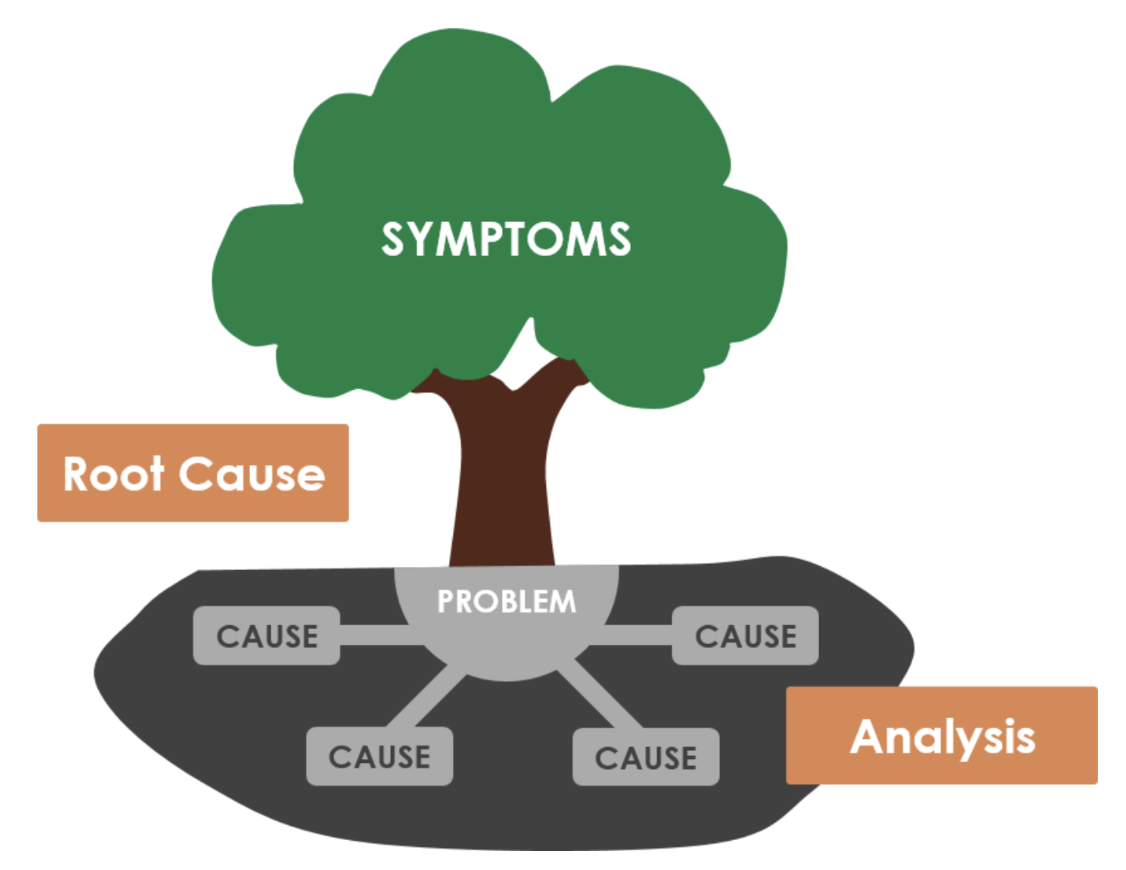
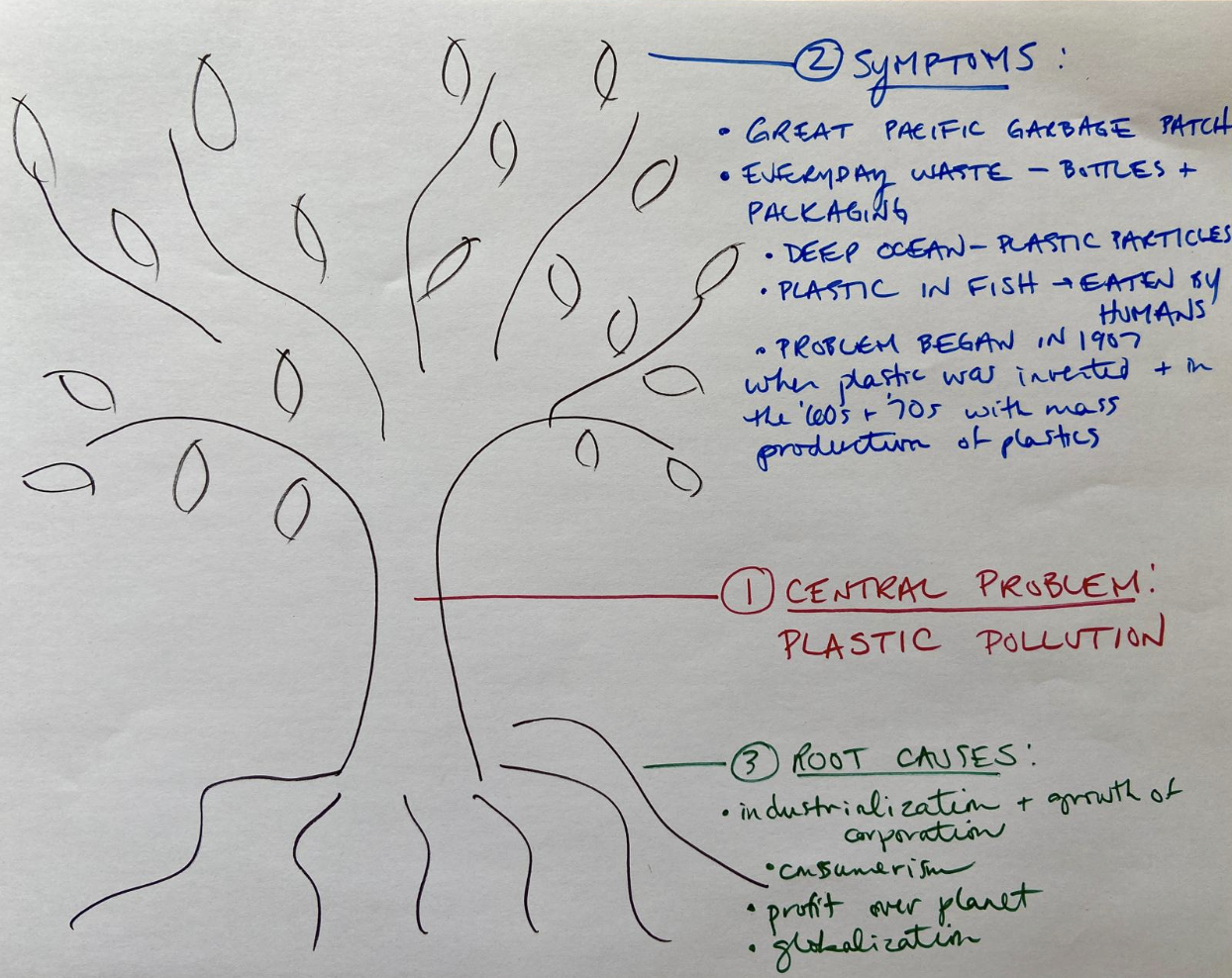
One lesson for all year groups introduced the root cause analysis tree as a way for students to deepen their sense of local issues and community partnerships. And the students loved this lesson! The depth of critical thinking that emerged at this stage of the inquiry cycle was excellent and revealed deep engagement for many students.
Below: What a root cause analysis tree looks like, and a sample I created using the central problem of plastic pollution. This example, paired with a video that teachers could share with students to orient them to the root cause analysis tree, set students up to conduct their own thinking about a local issue or partnership.
For the Year 8 groups in particular, this lesson produced some striking results. In the photos below, you can see how students began tracing connections between their immediate service context and much larger systemic issues in complex and thoughtful ways. The root cause analysis lesson, in conjunction with community assets mapping, led students towards an intentionality in understanding their issues, contexts, and partners.
In the planning stage of Tutor Time, students applied what they had learned during their investigations about local/global issues and community partners as they created action plans. Grade 7 and 8 teams were paired with specific Shanghai partners and organizations, and grade 6 teams were challenged to create action plans for creating positive change on campus.
Grade 7 and 8 students presented their action plans to their community partners, received feedback, and then refined their plans. This was significant and positive, as partners were involved in an authentic way in co-designing action with the students. Having community partners weigh in on the initial action plans meant that the action students eventually took was more grounded, more responsive, and more likely to be genuinely purposeful and impactful.
What action looked like
The range of what groups designed and carried out was genuinely impressive for the first year of Tutor Time. One group partnered with a secondhand charity shop in a local shopping mall. They created promotional materials, designed interactive activities for shoppers, and spent their action day welcoming guests into the space and helping them understand the value of the shop. The shop’s feedback was enthusiastic; they saw students who had clearly invested in preparation and who showed up caring about the outcome.
Another group partnered with a Children’s Museum, creating interactive programming for young visitors built around the museum’s content on oceans and space. They designed quiz games, developed a short drama performance, and served as guides. The preparation was evident in the quality of the experience they created.
Julie’s own tutor group worked with a school for children with intellectual disabilities. Students came to this partnership knowing very little about autism or other intellectual disabilities experienced by peers at the local school. Through the investigation phase and then through planning a collaborative drama performance, they connected with their local peers and learned in a deep, empathetic way. And they had to figure out how to communicate in a variety of new and different ways. Julie describes the shift she heard in her students’ language after their action day on campus at the local school: students were now talking about specific people, specific experiences, and specific reasons for caring about others with intellectual disabilities.
“The shift in the students’ empathy and connection with the local students was really meaningful,” Julie reflects.
What teachers learned
One of the most striking things Julie noted in our recent debrief was teacher growth. And when I asked about the biggest positive benefit of the Tutor Time program this year, Nichol put it simply: “Teachers came out with more confidence; they stretched into unfamiliar territory.”
The Middle School Tutor Time program at YK Pao became more than a student learning and community-building initiative. It also became a teacher professional development experience.
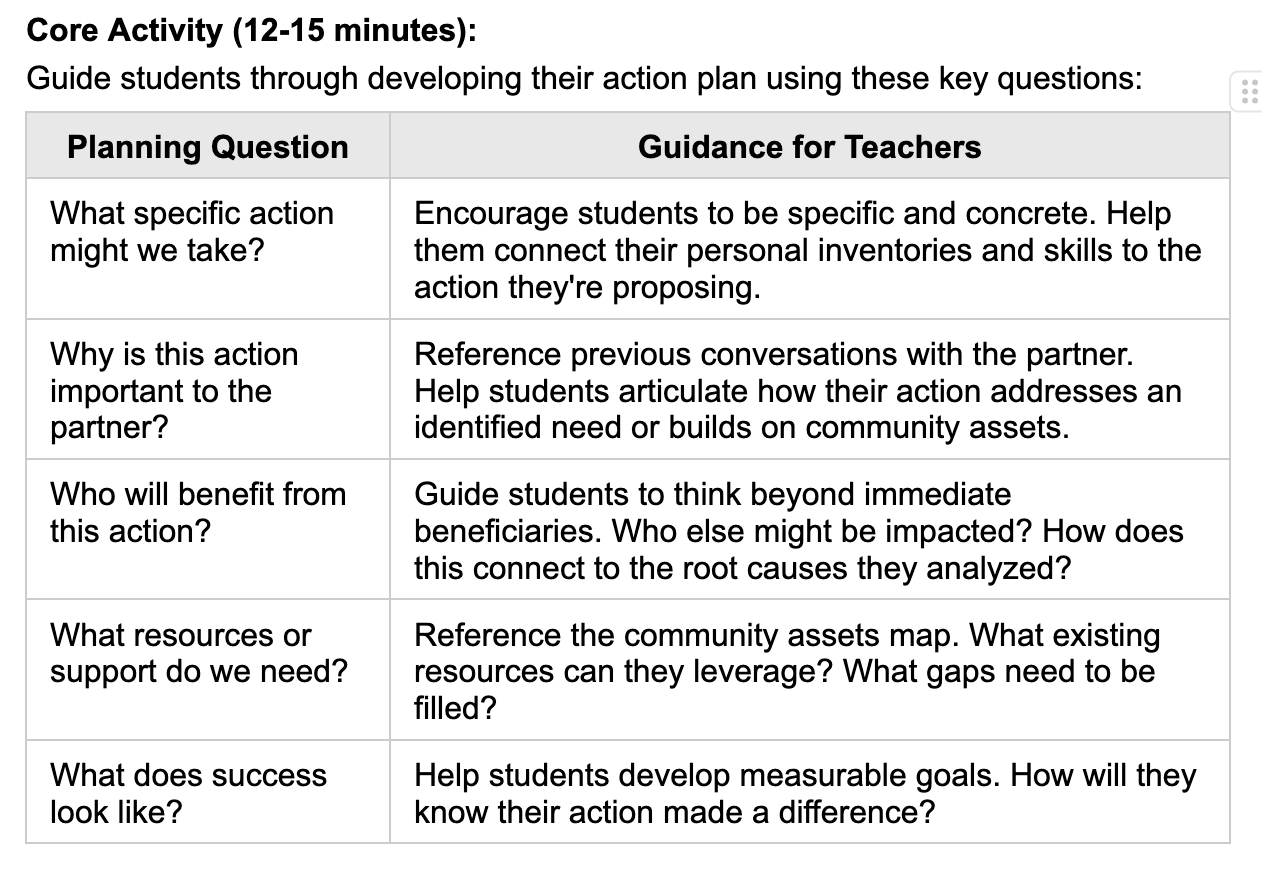
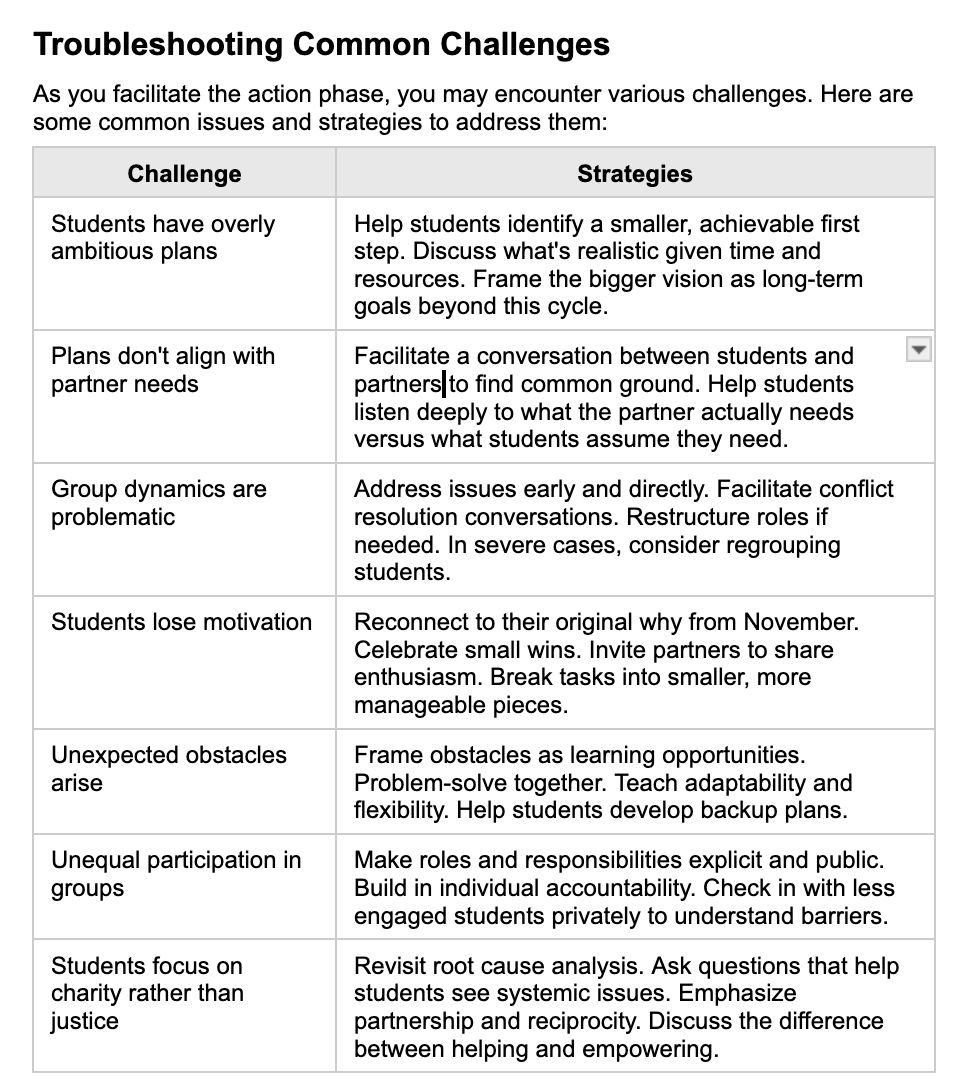
In leading Tutor Time, teachers used a planning guide I helped the YK Pao team develop, and teachers had flexibility to create their own visuals and prompts based on models provided in the planning guide. Each lesson had its own detailed plan, slide deck, and additional resources so teachers didn’t have to carve out planning time for Tutor Time beyond their orientation to the plans and any time they wanted to spend adapting examples and resources.
Below: some screenshots from the Tutor Time teachers’ guide to support faculty in leading effective and meaningful advisory sessions each week.
Implementation varied across Tutor groups, and some teachers needed more scaffolding than others. One idea for next year is to develop a peer mentorship program linking teachers who are facilitating Tutor Time confidently with those who are still building their understanding of how to guide students through an authentic service learning cycle. Like all good curriculum, this program will evolve and get better next year.
The questions they’re sitting with
Part of what I respect about the YK Pao Tutor Time leadership team is their willingness to look clearly at what needs to shift to make the curriculum even better. They’ve sent surveys to both students and teachers and are working through the results. Several threads are already clear.
One is time. The full cycle took significant Tutor Time across the year, and Julie, Lanco and Nichol want to find more balance in how that time is used in 2026/27. One approach they’re considering is paring back some of the investigation sessions involving research from online or digital sources, and creating more focus on the interviews and deep listening that students did with community partners.
“Getting students out to meet partners and learn in context is where we saw investigation really come alive this year for students,” says Julie.
Another thread is the AI question, as some students used AI to help develop their action plans. Julie’s observation was sharp: when they worked with their community partners, they discovered that the AI-generated plans didn’t hold up, and she wants to design fully analogue investigation and planning components next year. Encouraging students to design their plans using chart paper, markers, sticky notes, and their own thinking first, and then perhaps running those ideas through AI later to refine ideas, will hone the students’ creative thinking and collaboration skills, and keep the focus more human-centric.
A third thread that has emerged from this year’s Tutor Time experiences is thematic expansion. This year’s projects were largely oriented toward connecting and supporting other human beings: working with elderly community members, children with disabilities, animals, and youth. Next year, Julie, Lanco, and Nichol are curious about expanding into career-connected themes, social entrepreneurship, using technology for good, and planet care.
There’s also an opportunity to more intentionally layer in a global perspective. The projects this year were all locally grounded, which is appropriate and excellent in terms of context. Adding even one session next year where students map connections between their local issue and its global dimensions could deepen meaning-making in a significant way. Supporting children with disabilities connects to global access and inclusion. Students working in the local secondhand shop can come to understand they’re participating in a much wider conversation about human rights and climate change.
What comes next
The team is thinking about how to celebrate students who demonstrated deep engagement, strong teamwork, or particularly thoughtful reflection. And next year, they’d like to wrap up Tutor Time with a full celebration or fair with display tables and student presentations, potentially including mini TED Talks where students can bring their experience to life for a wider school audience. These are exactly the kinds of culminating moments that help students recognize the significance of what they’ve done.
At the end of this year-long process of designing and implementing this inspiring new advisory program at YK Pao, I’m thinking about what it takes for a school to do something like this in its first year:
Key leaders have to be willing to try something that doesn’t have a guaranteed outcome. It takes coordinators like Julie, Lanco, and Nichol who hold the thread across a complicated school year. It takes a leadership team willing to give real time in the schedule to something that resists easy measurement.
Students need to be supported in showing up and doing things they’ve never done before, such as getting to know children who communicate differently than they expected, or standing in a shopping mall trying to get strangers interested in secondhand goods.
There needs to be a commitment by leaders and faculty to carve out time to think, plan, and implement something new, and to embrace a growth mindset. We all know that the first time we do something like this, there will be bumps in the road. Acknowledging that from the start, and agreeing to keep going when there are challenges, is a key component for success.
Community partners need to be willing to understand reciprocal partnerships and how they can interact with students to learn from and with each other. The partners need support in learning about the principles of community engagement and community building so they can participate as full co-designers and co-authors of the learning experiences.
Advisory time at its best is not a holding space. It’s a place where students encounter issues, people, and contexts they care about in ways that help them see themselves, their communities, and local/natural environments in new ways. YK Pao’s Tutor Time shows what it can look like when a team decides to take all of this seriously, and what they’ve built in one year has created impressive ripples of impact across Shanghai.