Honouring our reciprocal relationship with nature
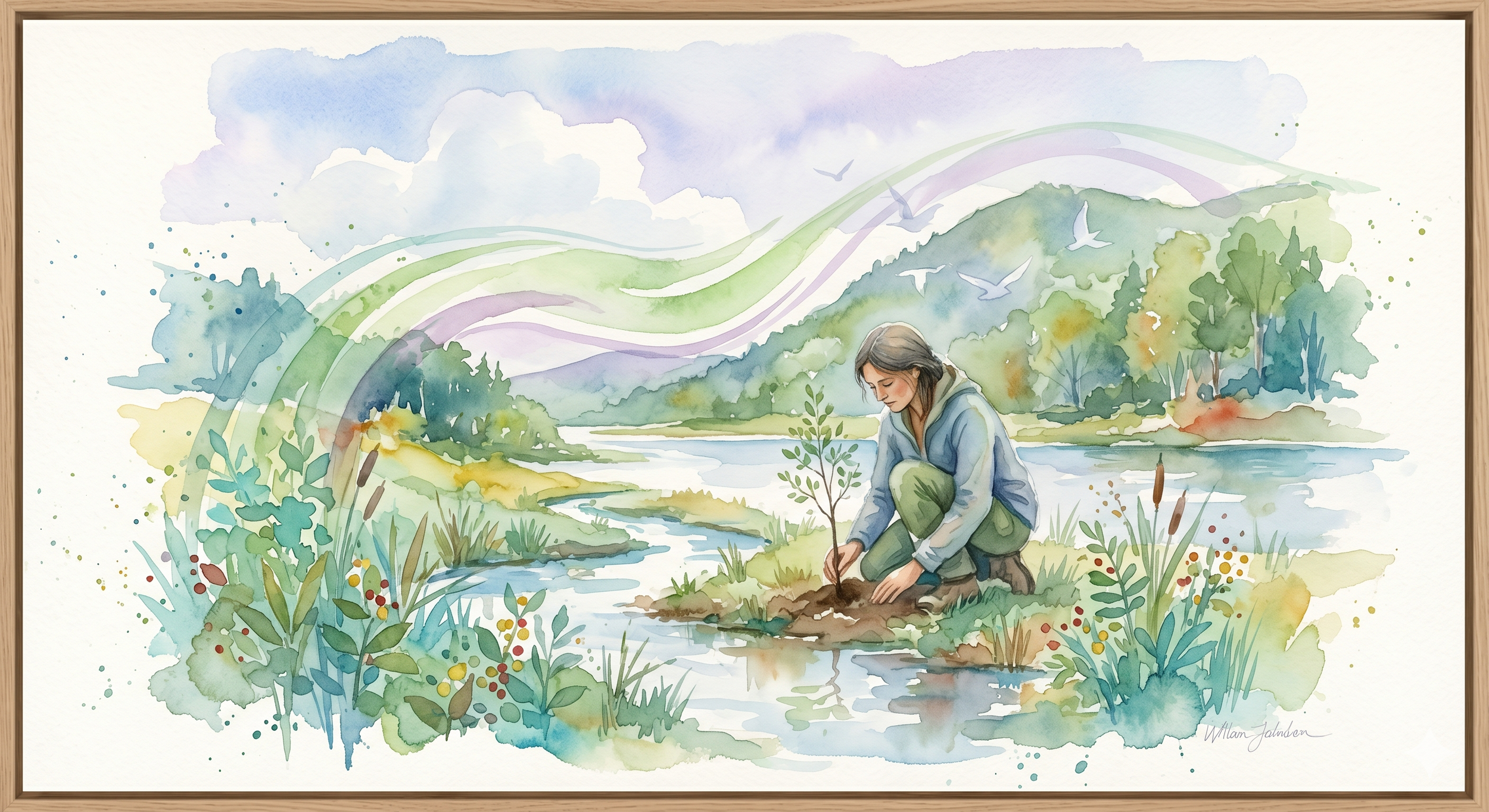
This image was created with the help of AI (Gemini) in response to my conversation with Kenny about the principles of regenerative education.
There is a word Kenny Peavy uses that has stayed with me since our last conversation. He unpacked this word’s double meaning in a way that, once I heard it, I can't unhear it.
The word is a simple one: remember.
To remember, in the ordinary sense, is to recall something you once knew. But Kenny offered another reading: to re-member is to become a member again, to re-enter a relationship that you perhaps lost track of, or to rejoin something you were always part of but, somewhere along the way, stopped acting like you were.
For Kenny, that something is nature. And the forgetting, he would say, is one of the central crises of our time.
“We ARE Nature. The trick is to REMEMBER. I mean this in two senses o the word. to REMEMBER- or recall cognitively AND RE-MEMBER- to BECOME A MEMBER AGAIN. This is achieved with long stretches of time spent outside wandering and wondering being captured by the beauty of the natural world.”
Kenny Peavy is the Outdoor Learning Specialist at Green School Bali, a role that involves everything from risk assessments and safety planning to leading Grade 1 students on morning hikes to collect leaves and flowers for their nature journals. On any given day, he might be helping a grade 12 student plan a community event, teaching a middle school class, or wading into a rice field with kids who want to catch tadpoles. Because the Green School Bali is a campus rooted in nature (through its bamboo structures, open spaces, forests and permaculture garden), there are ample opportunities for Kenny to engage with students in natural settings. But he feels these types of educational experiences are needed in all schools and all environments (urban and rural). Wherever kids are, he says, they need to spend time in nature.
Kenny and I have been in conversation about the value and urgency of centring nature in educational experiences and programs for several years now, and a few key themes are central to his work:
our relationship with nature
what education is actually for
how we might design schools differently
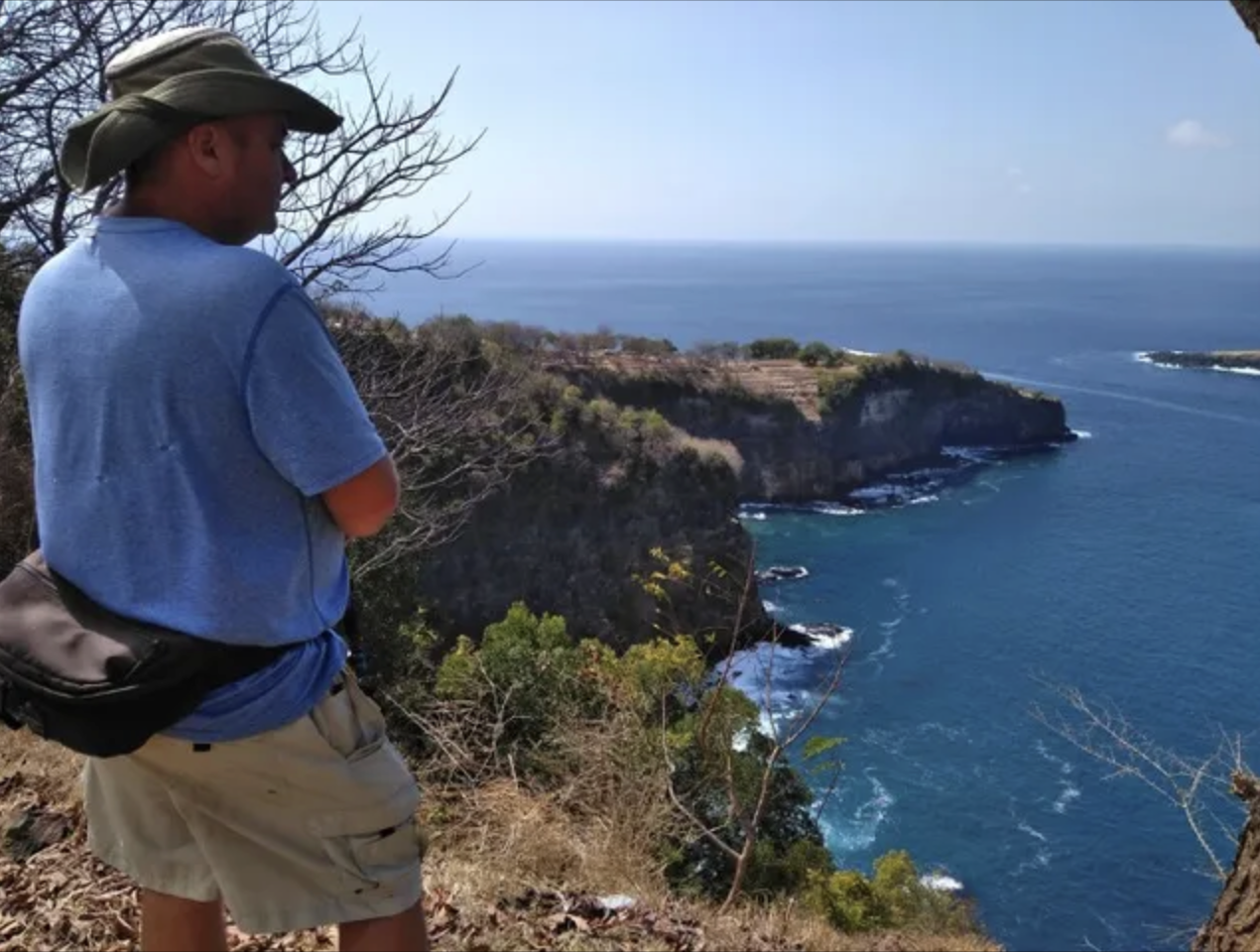
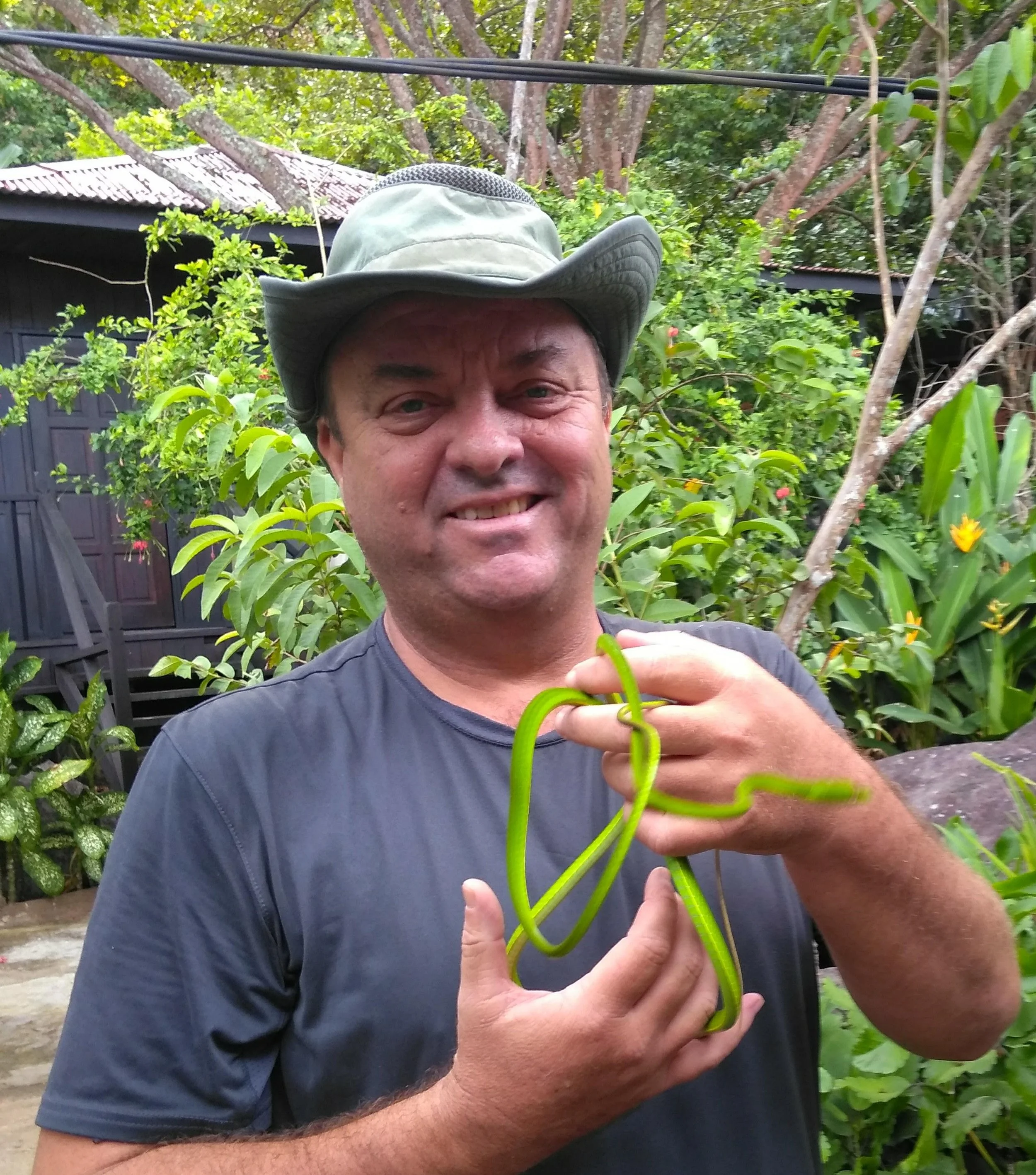
Below: a few photos of Kenny in his favourite natural places.
Nature as Teacher, Not Resource
One of the most useful framings Kenny offered in our most recent conversation is this: What if we thought of nature not as a resource, but as a teacher?
It is a shift in language that carries enormous implications. When nature is a resource, it exists to be used (extracted from, studied, visited on field trips, referenced in textbooks). When nature is a teacher, it has something to say to us. It becomes what Kenny calls "a living, learning lab", a place you go to foster a relationship and a way of being.
Treating nature as a resource, and acting as though humans are separate from the natural world, rather than embedded in it, has led us to the verge of ecological collapse. This has been spurring Kenny on in his work and has led to his recent thoughts about regenerative education.
What Regenerative Education Is (and Is Still Becoming)
Kenny is honest about the fact that the definition of “regenerative” is still evolving, and the framework he’s developing rests on three pillars: connection to self, connection to community, and connection to nature. These are not three separate strands. They are a braid where the three strands strengthen each other.
Connection to self encompasses what we might recognize as social-emotional learning (mindfulness, self-knowledge, and understanding one's own values and inner life).
Connection to community means both the human community (local, immediate, and tangible), and the natural community. The Balinese community where Kenny lives, the community of educators he works alongside, and the rice fields and rivers where he walks every day are, in the fullest sense, his habitat.
Connection to nature is where Kenny's work becomes most distinctive as a foundational orientation toward the world. “We are nature,” he says, and we have spent too long pretending otherwise.
Moving beyond sustainability into regeneration means something specific here. Sustainability asks: How do we maintain what we have? Regeneration asks something more challenging: How do we heal what has been damaged? How do we restore the relationships that have frayed?
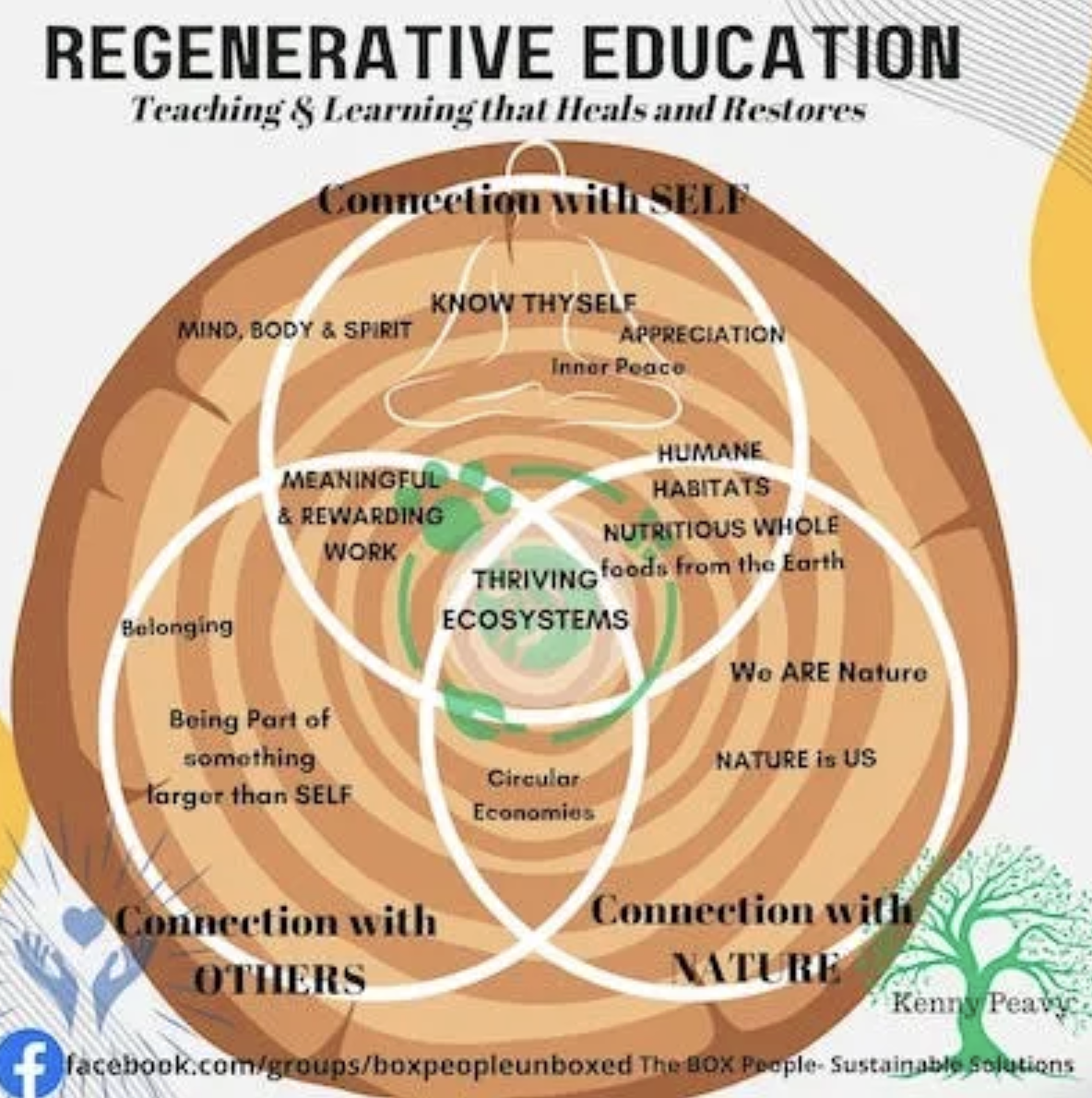
Kenny’s graphic representation of how connection with self, others, and nature is a foundation of regenerative education.
The Kids Who Aren't Afraid of a Grasshopper
Kenny says he can tell almost immediately which students have parents who take them outside. They are the ones who will pick up a grasshopper without hesitation, who will stick their hands into a nest of weaver ants without panicking, who are already at home in the world beyond the classroom walls.
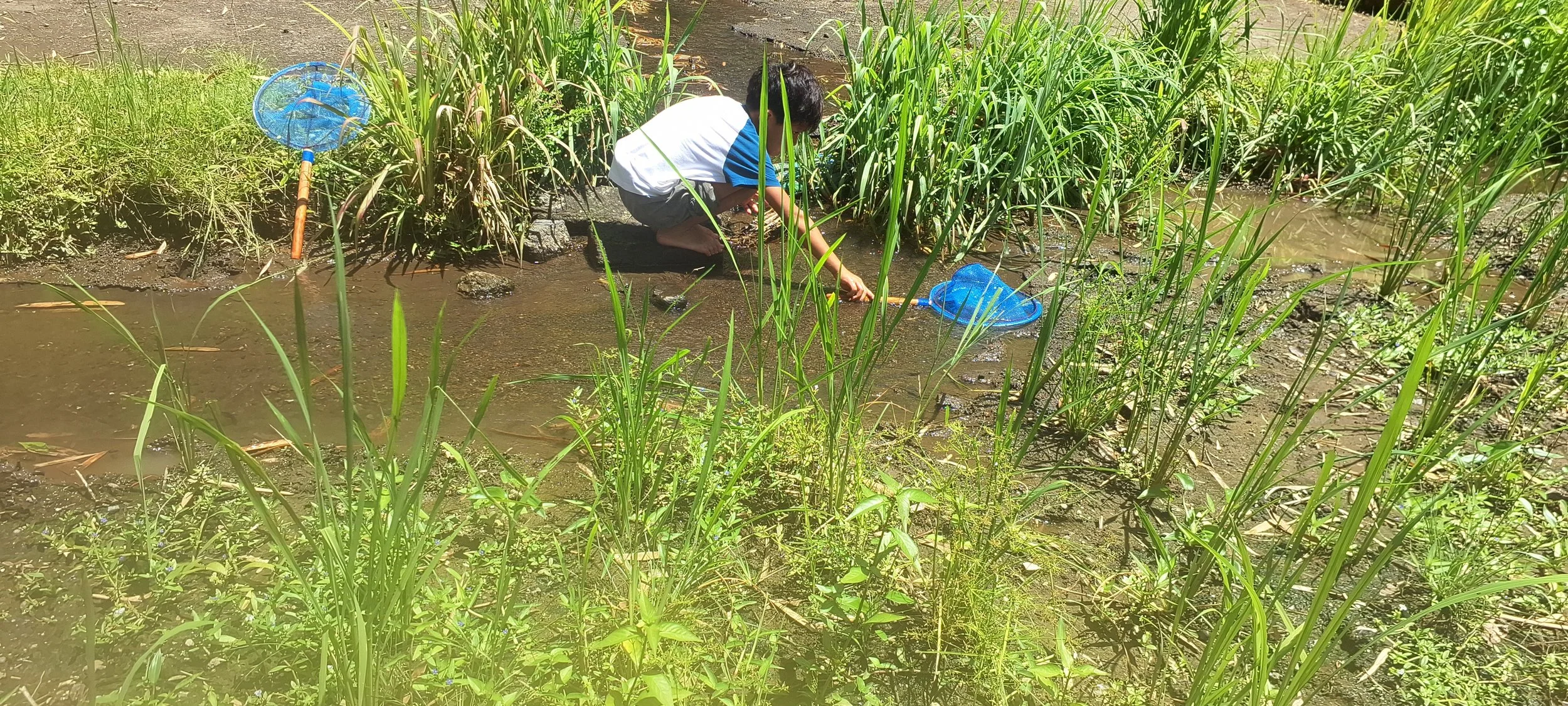
The ones who haven't had that experience yet are not unkind or incurious. They are simply unacclimated. And what Kenny has discovered is that living things are the fastest bridge. If he goes to the rice field with nets and lets kids catch tadpoles and tiny shrimp and put them in an aquarium to observe before returning them to the water, the students become invested in the lives of these small creatures.
“‘Look what I’ve got’, they say, and they come running toward you with their hands full of wonder,” he reflects.
Kenny grew up in Georgia (USA), playing outside until dark, and following creeks home when the forest got too dark to navigate, so this type of tangible relationship to nature, rooted in awe and wonder, is in his DNA. That’s why now, at this point in his life, he is out in the rice fields at sunrise, watching the light come over the mountains. Or putting weaver ants on his hand so a group of first-graders can see that he is not afraid.
An Ecosystem of Practices
The big question that Kenny is exploring with his regenerative education model is: What habits of mind and body could students carry home with them so their sense of connection with nature is constant and evolving?
Here are some of Kenny’s biggest tips, especially if you teach in an urban setting:
Cultivate mindfulness and gratitude practices
Engage in nature walks, observations, and journaling. Walk slowly with attention. Find spots to sit, listen, and observe. Do some sound mapping.
Build rooftop, window, or classroom gardens. Even sprouting and growing things in cups brings nature into the classroom.
Work with your operations team (and your students) to create a campus map that maximizes green space and suggests designs for new green spaces (like living walls or roofs).
Create a community map with your students that shows where local gardens, green spaces, and nature moments can occur.
These are the kind of practices that, when done regularly across different contexts, begin to shape how a person sees, how they move through the world, and what they notice.
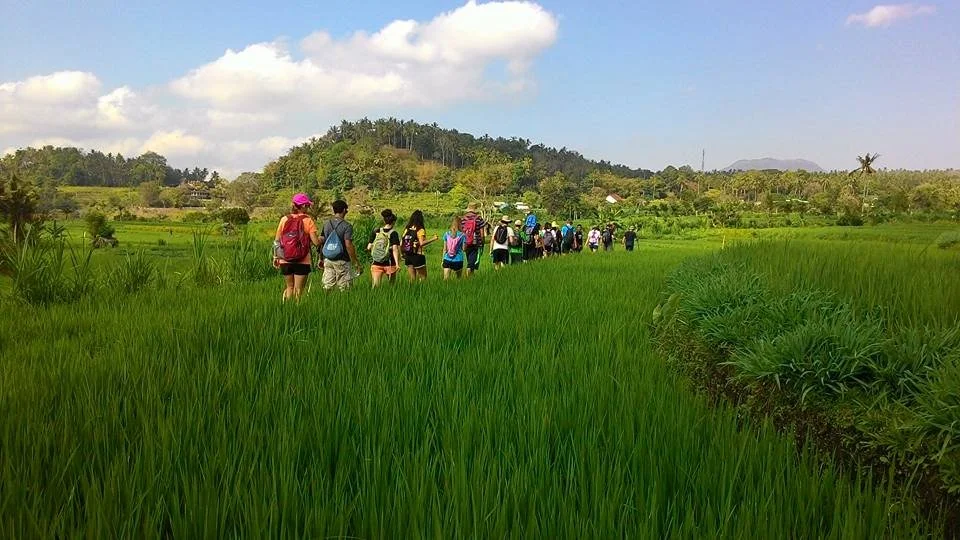
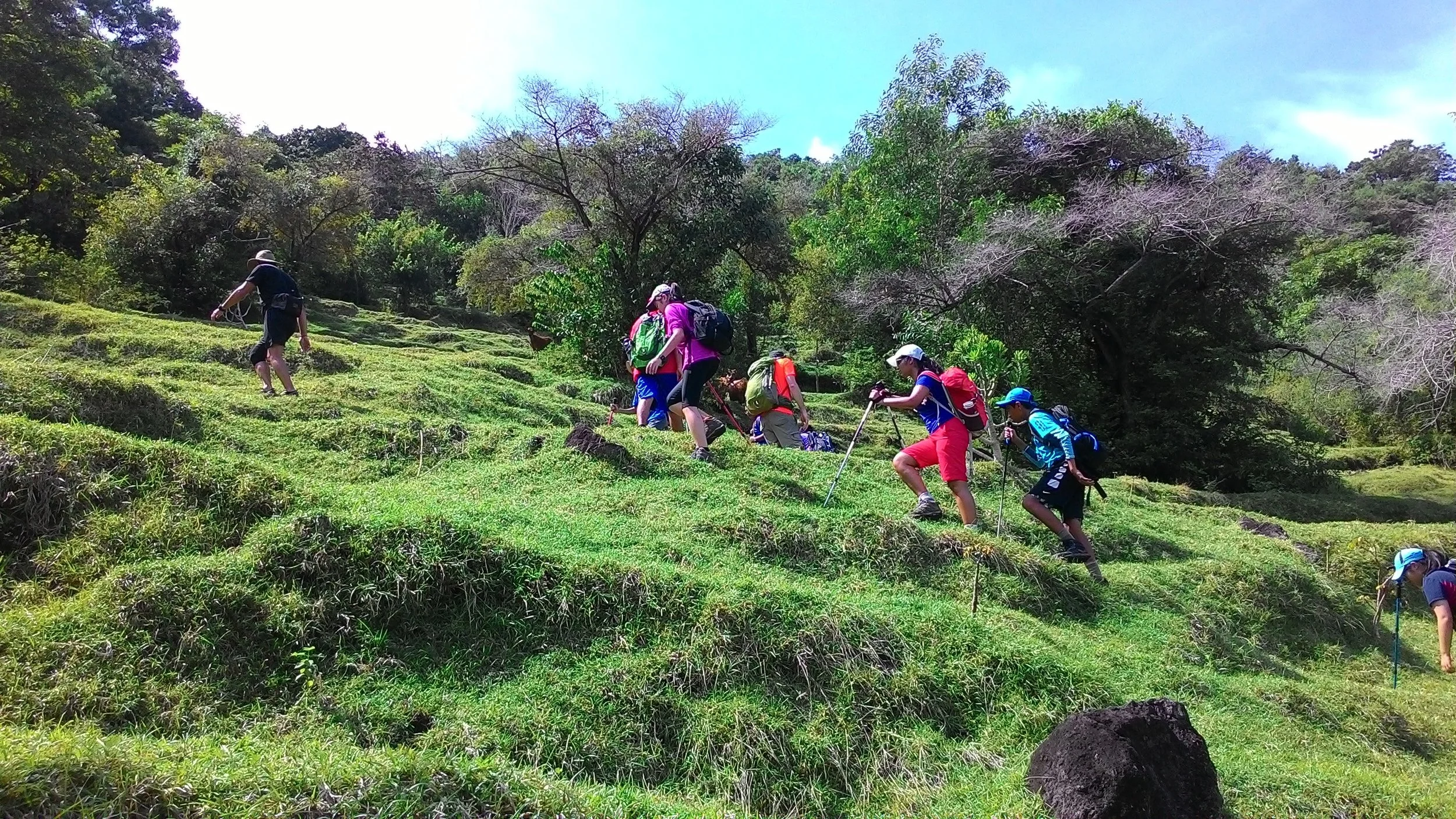
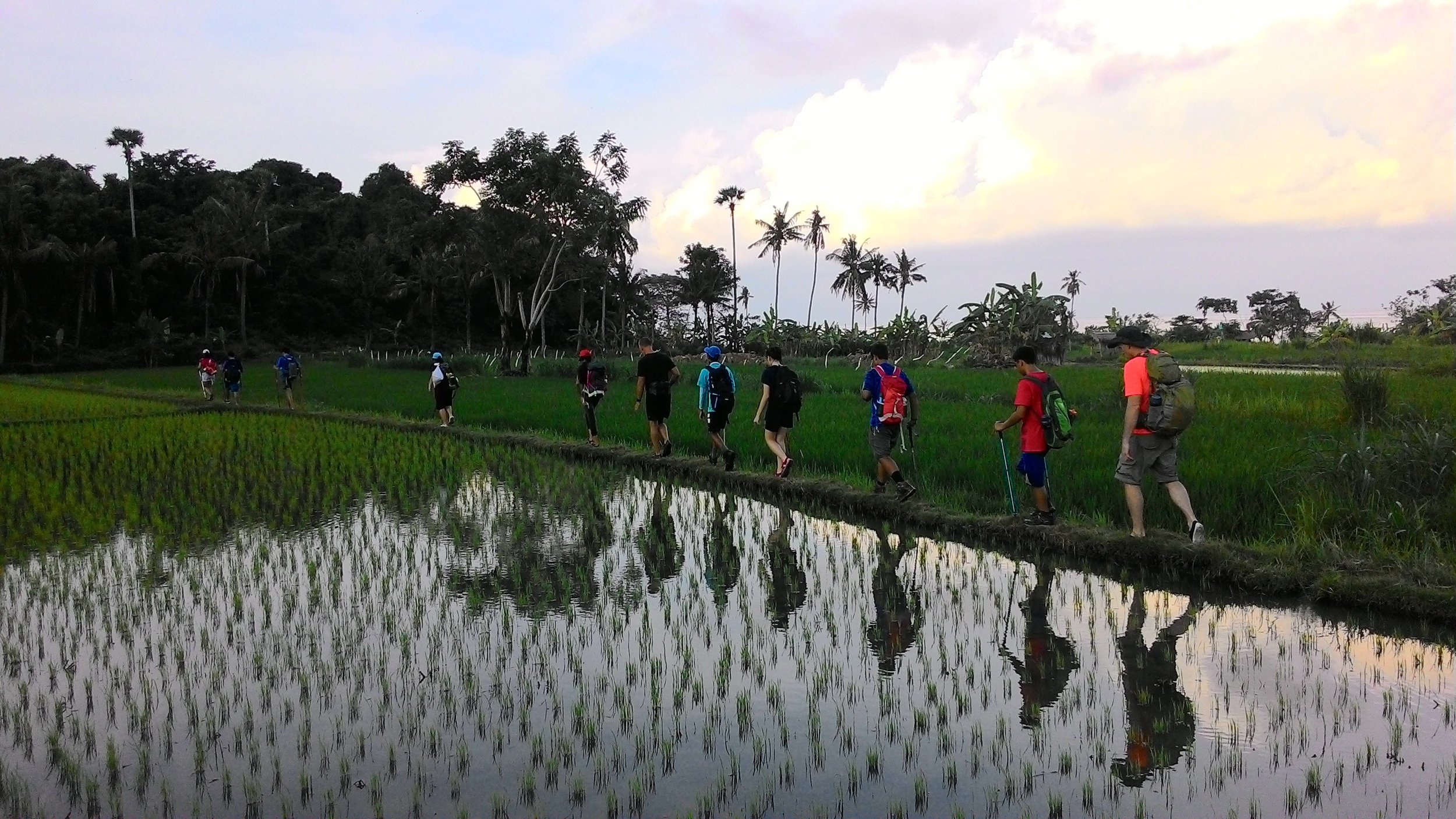
Below: Green School Bali students, learning from and with Kenny and nature.
The Urgency Underneath
At the end of our conversation, after we had stopped recording, Kenny became reflective. He said: Imagine what would be different if we all had a deeper sense of self, a deeper connection to our communities, and a much more genuine relationship with the natural world?
As an advocate for the Triple WellBeing framework from Thoughtbox Education, Kenny’s question really resonated with me. I think this is the question that might change the way we think about what we teach, why we teach it, and the approaches we embrace that might restore our relationship with nature.
Kenny Peavy is the Outdoor Learning Specialist at Green School Bali, Indonesia. He writes on regenerative education and related topics on Medium and hosts a community of over 8,000 people on Facebook called The Box People Regenerative Solutions and he is the author of a picture book called The Box People: Out of the Box!
Most recently, Kenny co-authored a paper with Dr. Catherine Ho called “We Are Nature - Even If the Economics Says Otherwise”. Definitely check this out!
And some more links to learn more: