Deep listening to school custodians shifts mindsets and actions
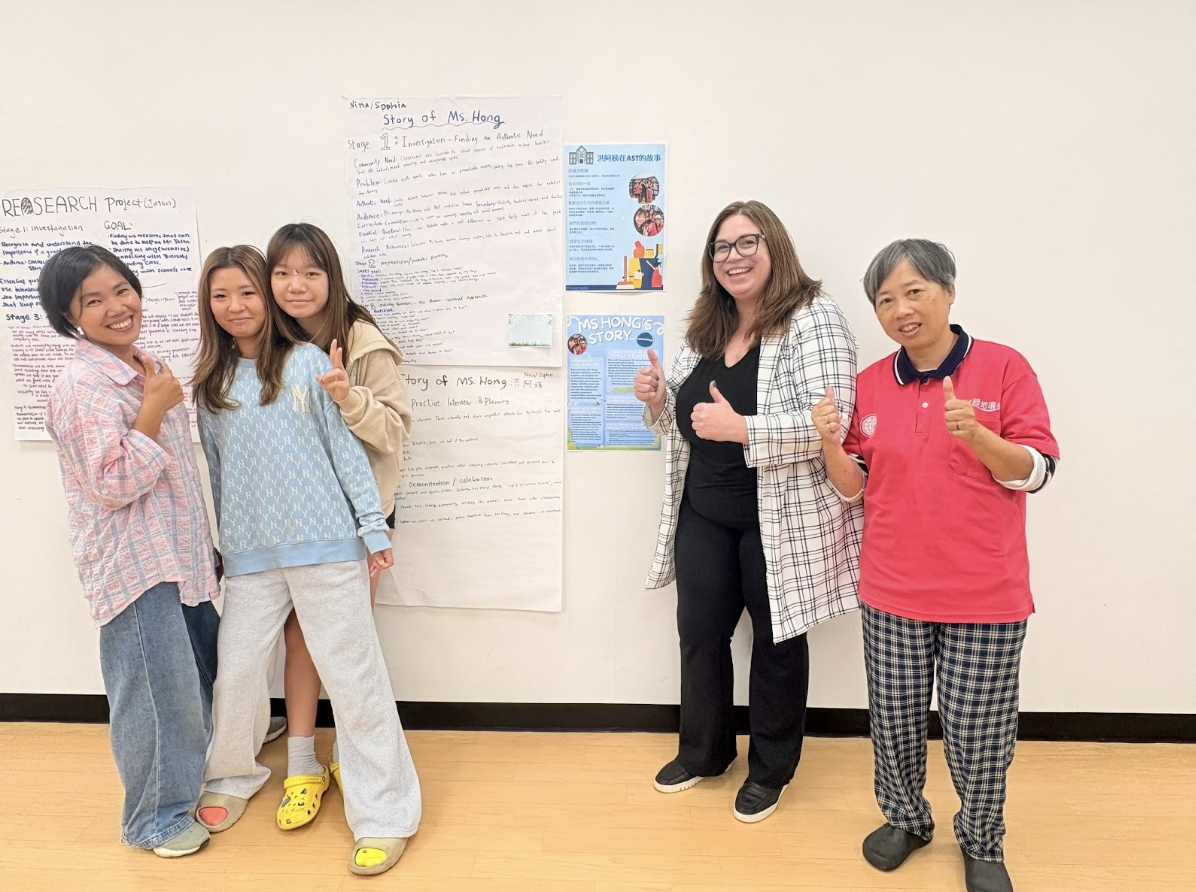
Tina (far left) with (left to right) 2 students, an AST leader, and an AST custodian, at the Business Computing exhibition at the end of her recent community engagement unit.
Tina Ngô is a Business Computing, Computer Science, and Robotics teacher and VEX Robotics Coordinator at the American School in Taichung, Taiwan. She is also a participant in the Service Academy’s Service Learning and Community Engagement Specialist Certification Program that I lead with Cathryn Berger Kaye and Shei Ascencio.
There is a particular kind of community building that doesn't begin with a grand vision statement or a new strategic initiative. It begins with a simple question: Do I know your name?
For Tina Ngô, educator and service learning leader at the American School in Taichung (AST), that question became the seed of a quietly powerful community engagement experience involving her Business Computing students and school custodians.
The Idea: Honouring the Custodian Team
Tina called the unit “Honouring the Custodian Team at AST”, and the name says everything about the orientation she brought to it. The word “honouring” has many layers of connotation, particularly in the ways in which students approached, interacted with, and responded to the school custodians. The students sought the custodians’ stories, became curious about each person’s life journey, and then carried those stories in respectful, honouring ways as they considered the ongoing relationship between teachers, students, and non-teaching staff on campus.
The premise of the unit was straightforward: the custodians and support staff at AST come to the school every single day. They clean classrooms and bathrooms, manage waste, and maintain the physical environment that makes learning possible. And yet, as Tina says: "We don't even know everyone’s names."
So she set out to change that by creating the conditions for her high school students (in a mixed grade class involving grade 9-12 students) to connect with these community members, and simply listen.
What Listening Actually Looks Like
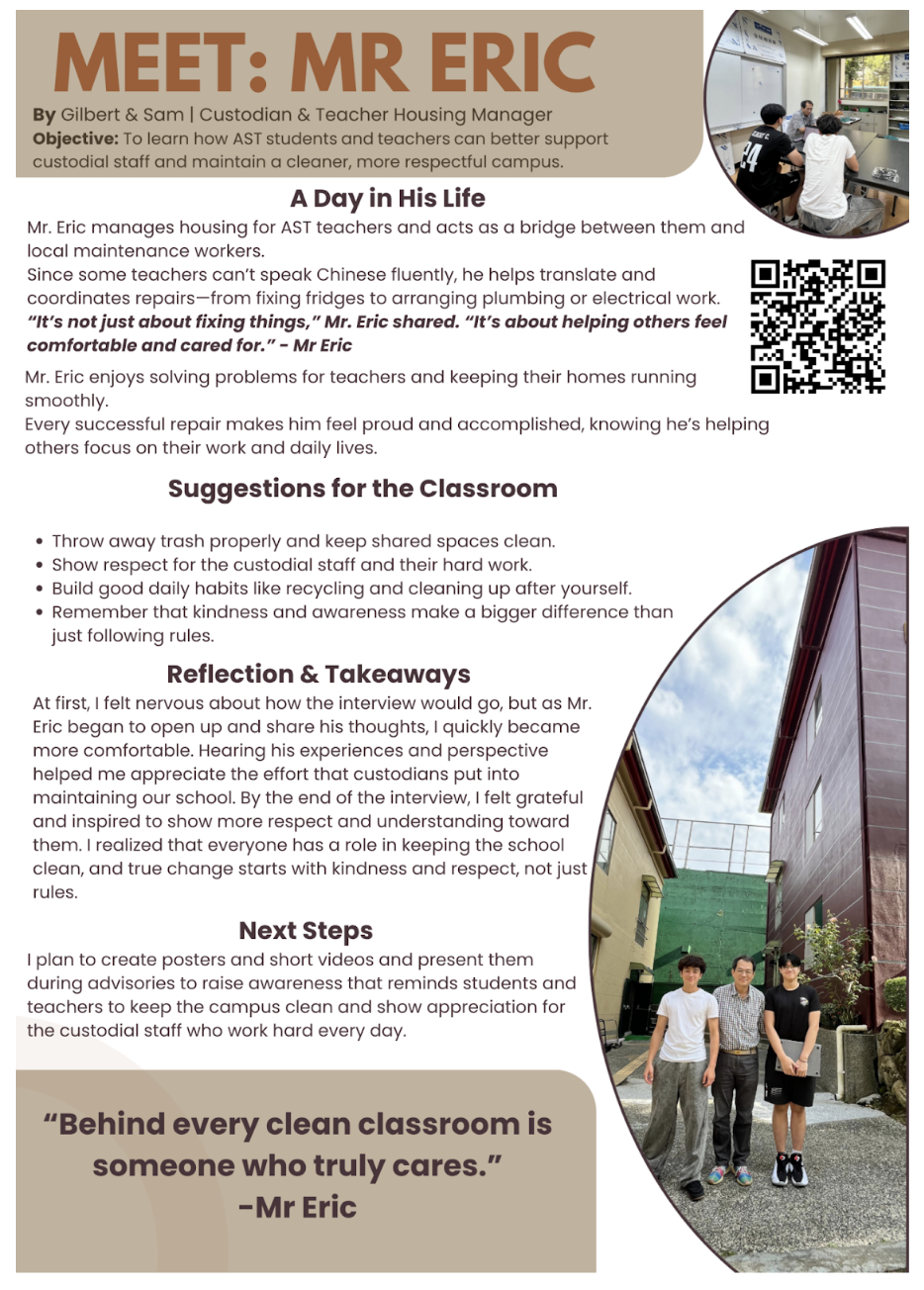
Students prepared interview questions. They practised. They worried. Would the custodians open up? What if language barriers were an issue? (Several of the custodians speak primarily Mandarin, so students prepared questions in both English and Chinese.) They wrote scripts for their first conversations, fully intending to follow them.
And then something happened that Tina describes with obvious delight. One group came back and reported that their interview had run over by forty minutes. They had barely needed the script. Once Mr. Eric started talking, he led the conversation himself, and the students just listened and responded with natural follow-up questions.
What they heard changed them. They learned about the actual physical demands of the work, such as the sheer volume of what the custodial team manages every day, including things students had never paused to think about. One student came back and told Tina that he wanted to do something about how boys were using the bathrooms: "I don't want people to have to clean up my mess,” he said. That reflection, Tina reflects, was "really deep" and “completely unprompted”. It emerged from the authentic listening experience..
This is what genuine community engagement can produce: real shifts in perspective, the kind that happen when young people move from knowing about someone to actually knowing them.
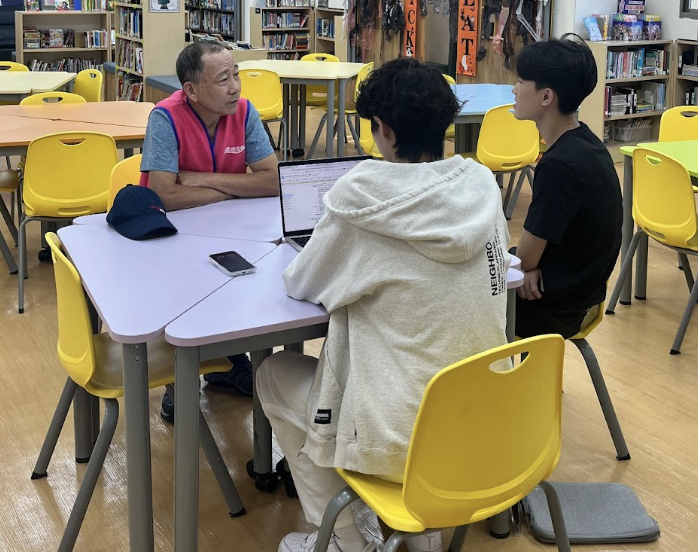
Business Computing students conducting an interview and engaging in deep listening.
The Stories That Surfaced
Part of what made this unit so remarkable was who the students chose to interview and what they uncovered.
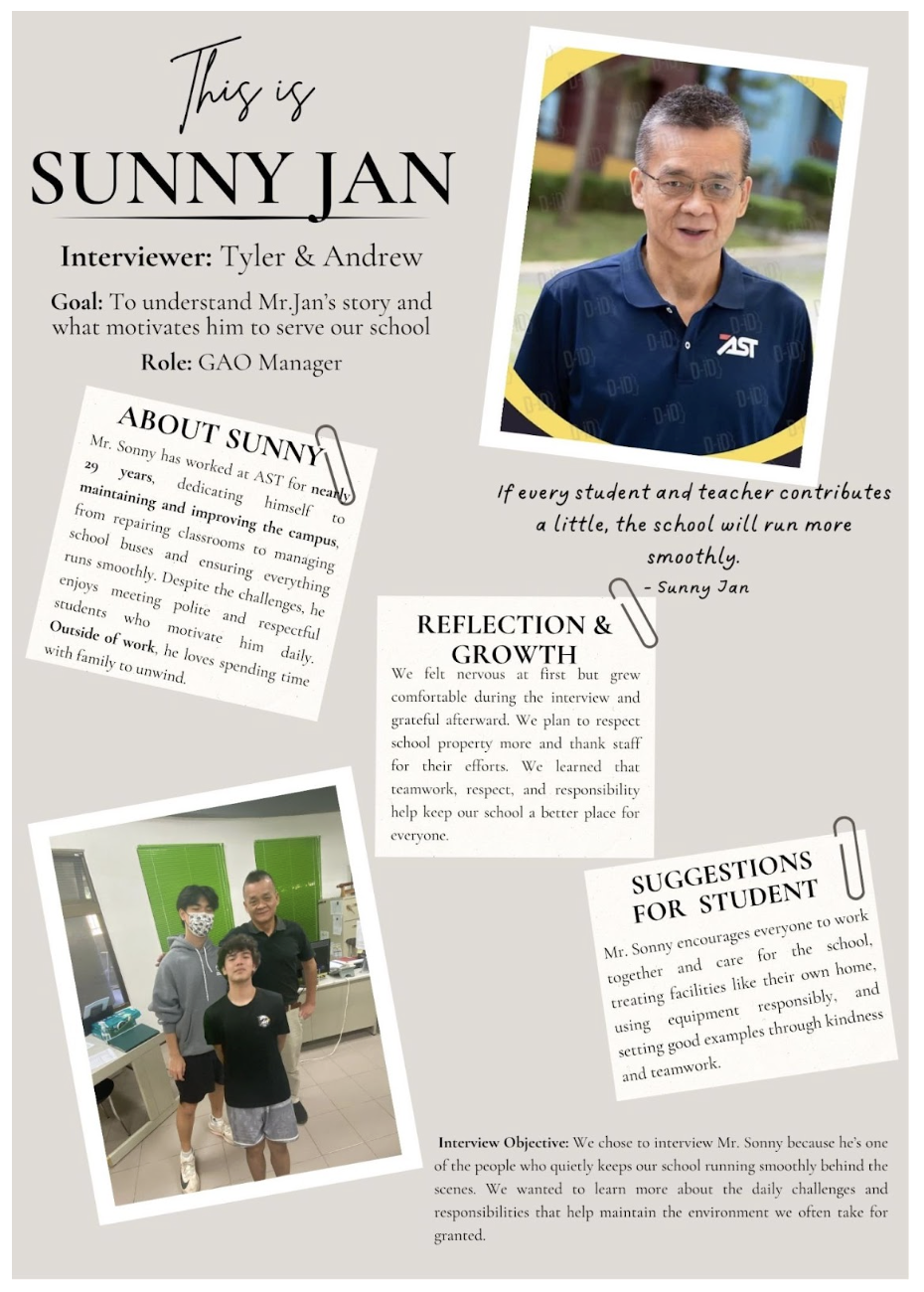
Mr. Sunny has been at AST since the school's first day in 1989. He is, as Tina puts it, "a living history of the school." When she first approached him to ask if students could interview him, he declined. But when the students came to ask him directly, he said yes and was visibly happy to tell his story. As Mr. Sunny is retiring at the end of this year, the interview exists now as an artifact of institutional memory that would otherwise have left the school with him.
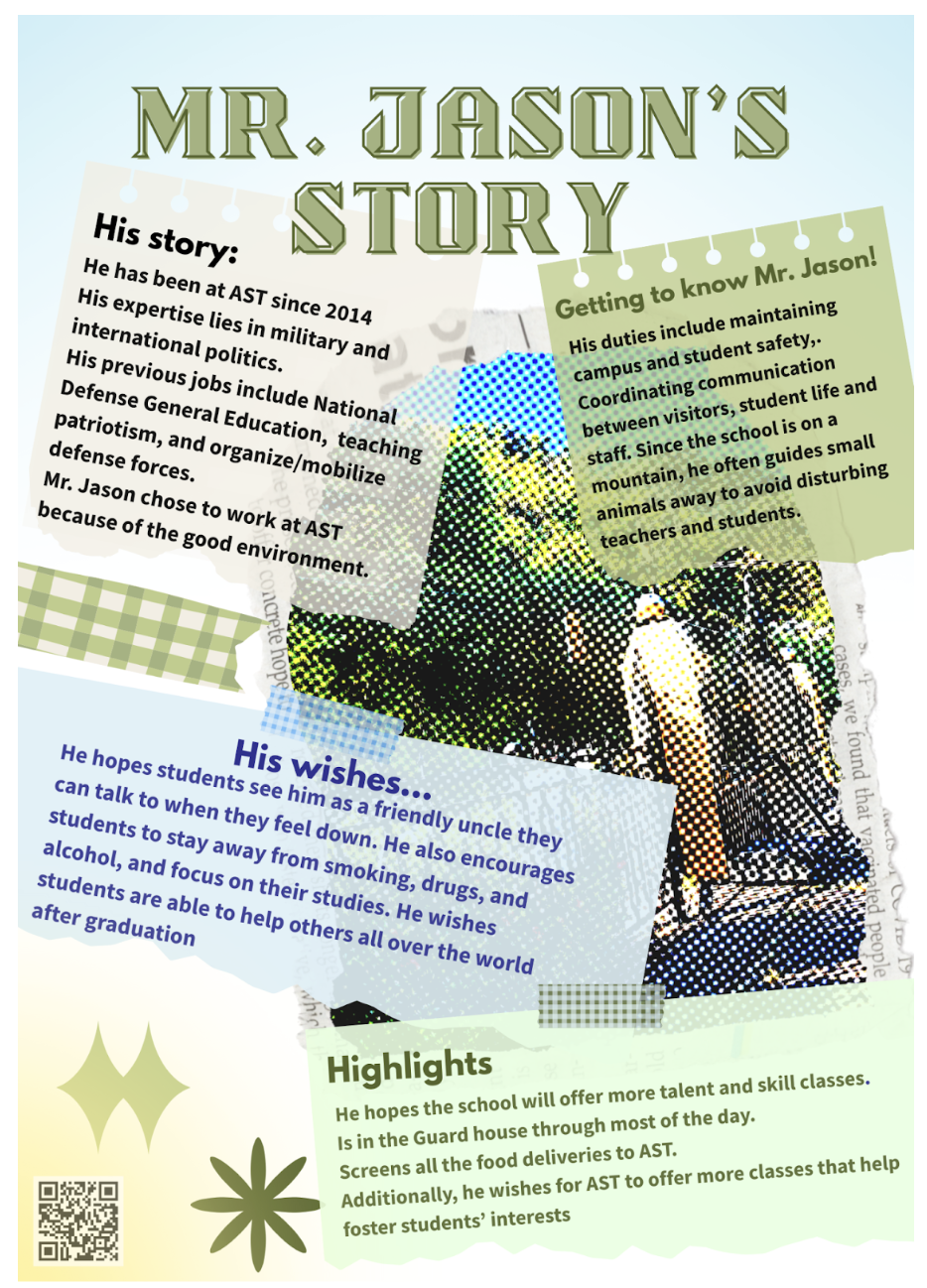
Then there is the story of Mr. Jason, an AST security guard. A Grade 11 student has known Mr. Jason since she was in elementary school; he was the one who waited with her at the gate until her parents arrived when she was a young student. She specifically requested to interview him, and Mr. Jason told Tina, afterward: "Thank you so much for doing this project. None of the students came to interview me before."
These encounters are evidence of what becomes possible when we treat non-teaching staff as valuable, insightful, and contributing community stakeholders.
From Listening to Action
Tina's unit didn't stop with deep listening, even though those experiences, in and of themselves, were rich. Students analyzed data from their interviews and identified the three concerns that came up most consistently from the custodians:
respect
bathroom cleanliness
organic waste classification
These three issues sparked the students into action, rooted in advocacy. They visited advisory classes across the school, with Business Computing students focused on one issue with each advisory group. First, they explained their issue clearly: what it meant, what it looked like in practice, and how students could change their habits to better respect and honour the custodians. They had clear advice about how to keep the bathooms clean and how to properly sort their waste into specific buckets, and they also helped students understand how important it was to acknowledge the custodians and speak respectfully.
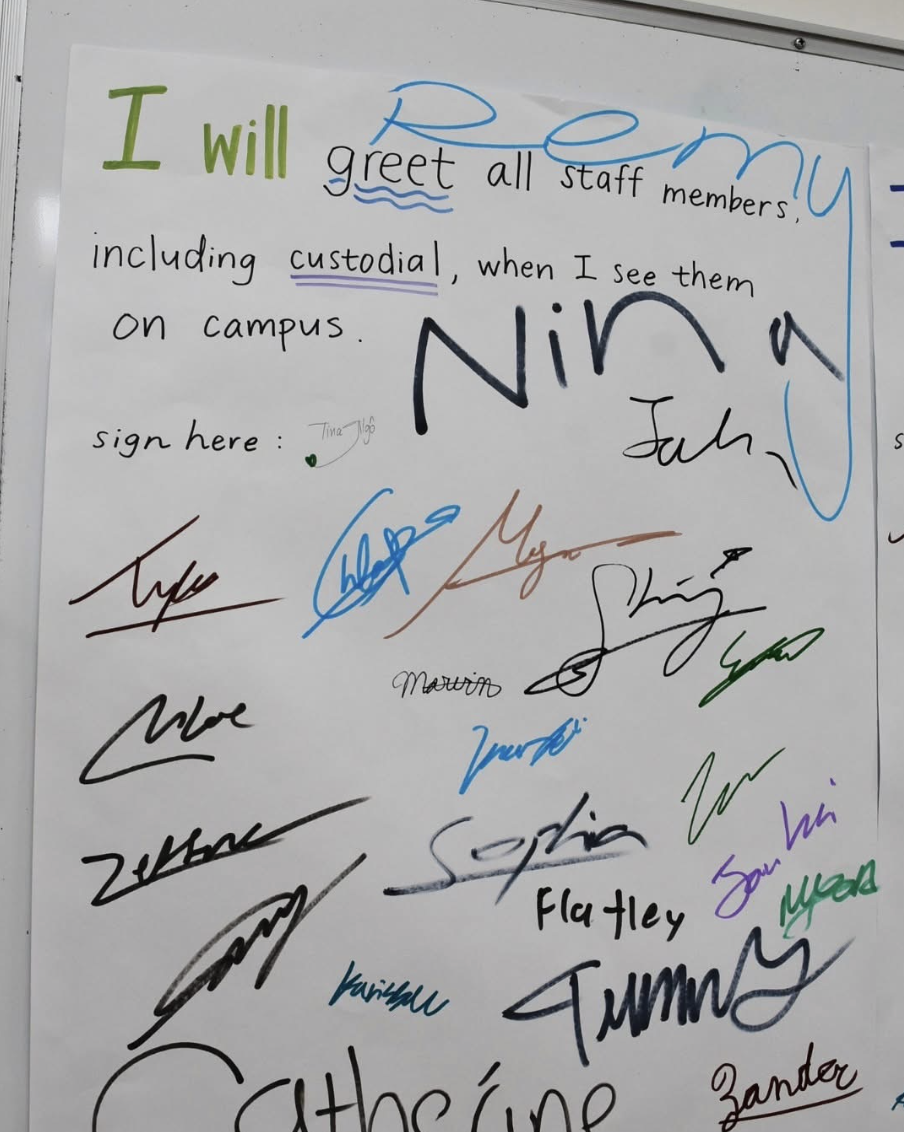
Students sign a pledge to honour and respect the AST custodial staff as a result of the Business Computing interviews and research.
The Business Computing students also created digital stories (websites, posters, and QR codes linking to full profiles of the people who had been interviewed), and they curated these in a gallery exhibition for the school community. They also designed and hand-delivered bilingual invitation letters to the custodians themselves, who came to the gallery as honoured guests.
Miss Hong, one of the custodial staff interviewed by Tina’s students, came to the gallery and sat beside her own poster, with her photo and story on the wall. As students and administrators paused to engage with these artifacts, Miss Hong was able to share more about her life and connect with multiple students, teachers and leaders.
"After that day," Tina says, "whenever I see Miss Hong in the morning, I always call, 'Good morning, Miss Hong' instead of just 'good morning, Ayi.'"
Tina now knows Miss Hong's name. She also knows that Ms. Chang, another custodian, loves learning new vocabulary, so she tries to use a new Chinese word every time they cross paths. These are small things, but they are also the building blocks of a strong community. When all community members feel seen, heard, and valued, and when everyone in a community can call each other by name, the culture and fabric of that community changes its shape and its strength.
Below: 3 posts designed by Tina’s Business Computing students to honour their interviewees’ stories.
The Assessment Question
When I asked Tina about how she assessed this unit, she was clear: the formal assessment focused on the technical skills of the course and the specific standards for this unit: data collection, analysis, and digital storytelling using tools like Canva and Wix. There was a rubric, and students were evaluated against it.
But something else happened alongside that formal process. Because students knew their work would be seen by the whole school, and by the people whose stories they were sharing, the quality of their engagement shifted. As Tina says, "The students no longer submitted the work just for me to see. They knew that their work was now being seen by the whole school, and they did it for someone else. And when you do it for someone else, it's different."
This is one of the most compelling arguments for authentic, community-connected learning: it imbues the whole process of inquiry and assessment with deep engagement that stems from curiosity, connection, empathy, and an authentic audience.
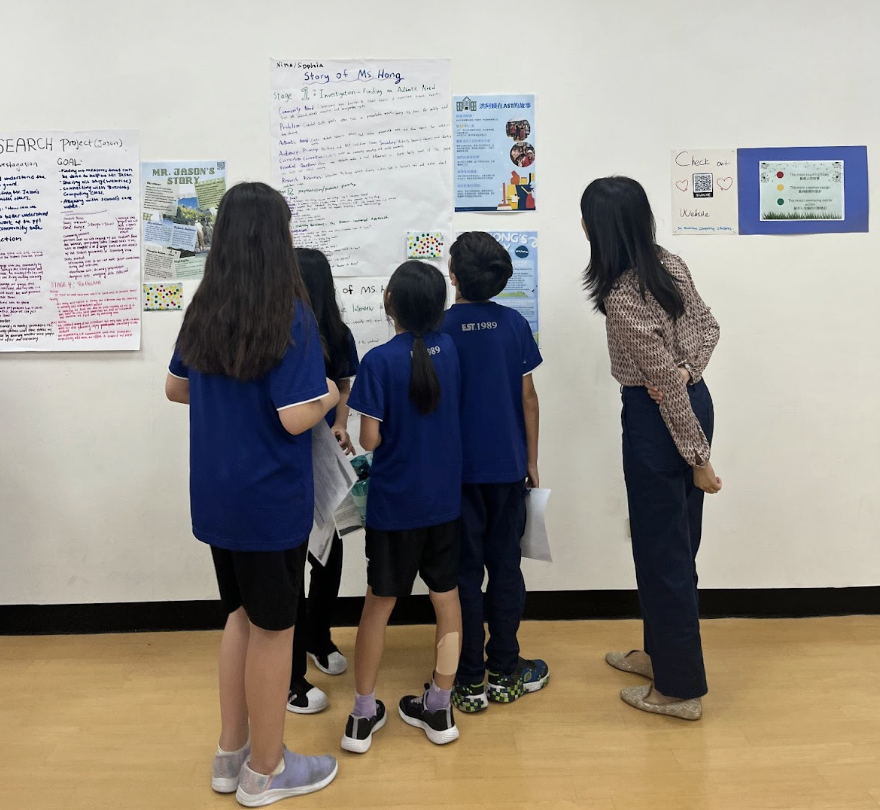
Students and a teacher interact with posters and stories at the Business Computing gallery that served as a capstone assessment and experience for this unit.
What Comes Next
Tina is thinking carefully about the sustainability of this unit in her Business Computing curriculum. She doesn't want this to be a one-time experience that the students fondly remember and the custodians wonder about later. Her vision is to carry the experience forward each year, with new students building on the relationships established by those who came before. She’s thinking about having students leave notes and reflections for the next cohort, continuing to check in with the custodians, and keeping the message alive: We care. We hear you. We're still here.
This kind of continuity and sustainability creates genuine shifts in community culture.
A Note on What This Requires
In many international schools, support staff can be among the most overlooked members of the community. They are often from different cultural and linguistic backgrounds than the students and teaching staff. They frequently lack the visibility that comes with being in a classroom or serving in a front-line role. And yet they keep our communities functioning in foundational ways through their institutional memory, daily presence, and care for the physical spaces where learning happens.
When we treat non-teaching staff as full community stakeholders, a lot of shifts occur. Students gain a more honest understanding of how their school actually works and who makes it possible. Non-teaching staff feel seen in ways that the routine of daily work doesn't usually offer. And the whole community, bit by bit, becomes more human (aware, present and connected) to itself.