Dystopian Fiction Meets Digital Reality for 8th Graders
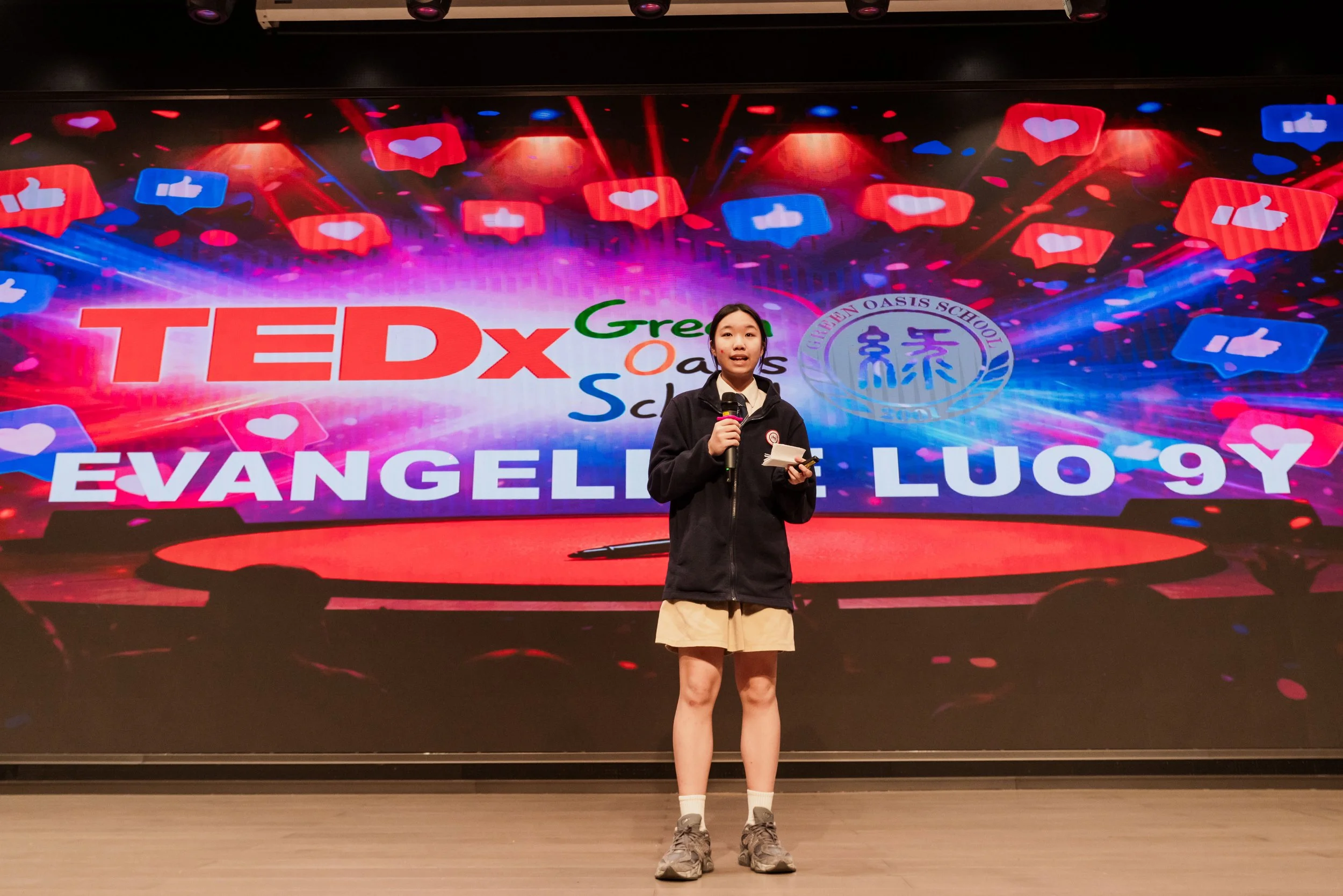
The Ted Talk event that was designed as a summative storytelling and action showcase in the year 9 Dystopian Fiction unit gave students the opportunity to share ideas and create impact in their community.
At Green Oasis School in Shenzhen, China, the Year 9 (grade 8) English team recently completed their first iteration of a redesigned dystopian fiction unit, one that moved beyond traditional literary analysis to help students recognize the dystopian elements already present in their own digital lives. What emerged was a powerful example of a curriculum that asks students not just to read about power, control, and ethical choice, but to investigate these forces in their own communities and take action.
The Redesign: From Static to Lived
The original dystopian fiction unit focused primarily on skills such as teaching students to identify and write within the conventions of the genre. While students learned about narrative hooks, atmosphere, and descriptive techniques, the learning felt somewhat disconnected from their lived experience. As team leader Stephanie (Steph) Gall put it during the unit debrief: "There’s no relevance in students’ real lives for a lot of what they're learning. I feel like sometimes they think, ‘we're only learning this so that we can go to high school’."
Working together through a Head, Heart, Hands planning framework, I helped the team reimagine the unit around a driving question that bridged fiction and reality: "How do we maintain our humanity and make ethical choices when power structures or cultural norms challenge our values?"
The redesigned unit maintained its focus on craft and genre (the Head: knowledge), but expanded to help students care about self-awareness in ethical dilemmas, individual responsibility when systems conflict with ethics, empathy for those facing bullying, and how power operates in digital spaces (the Heart: care). This caring was designed to then drive action: advocacy for digital citizenship through creative writing, TED talks, panel discussions, and other communication formats (the Hands: application and changemaking).
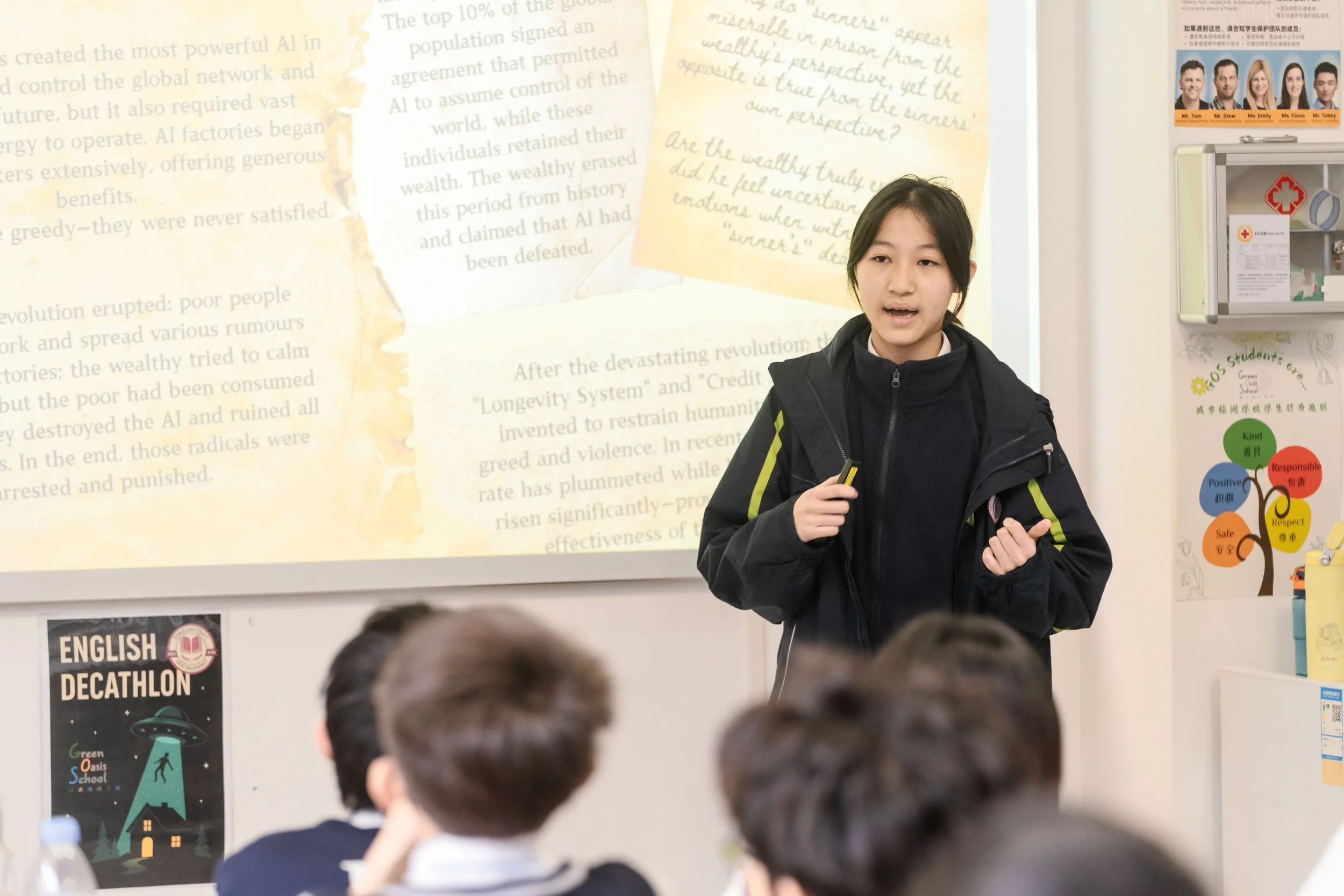
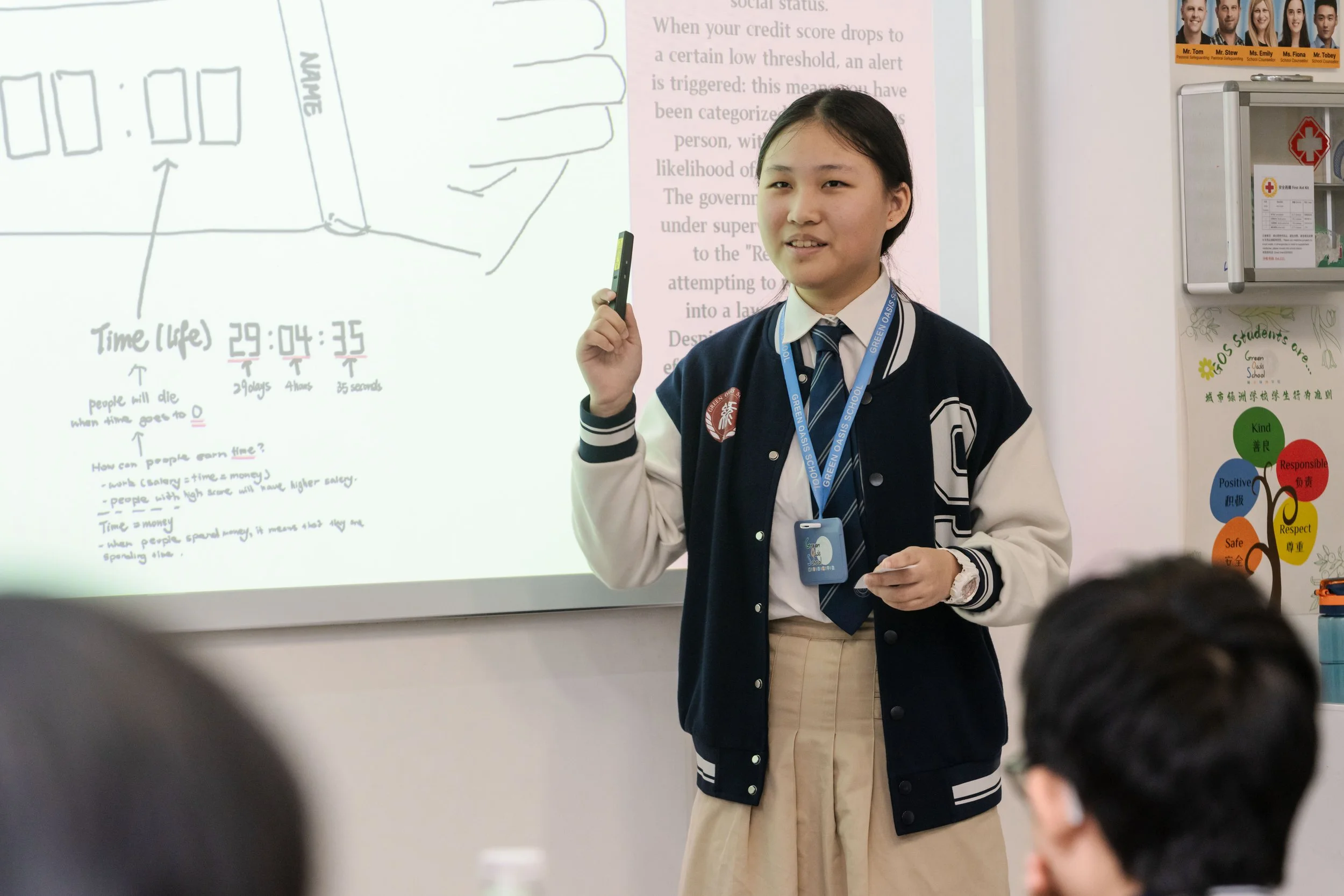
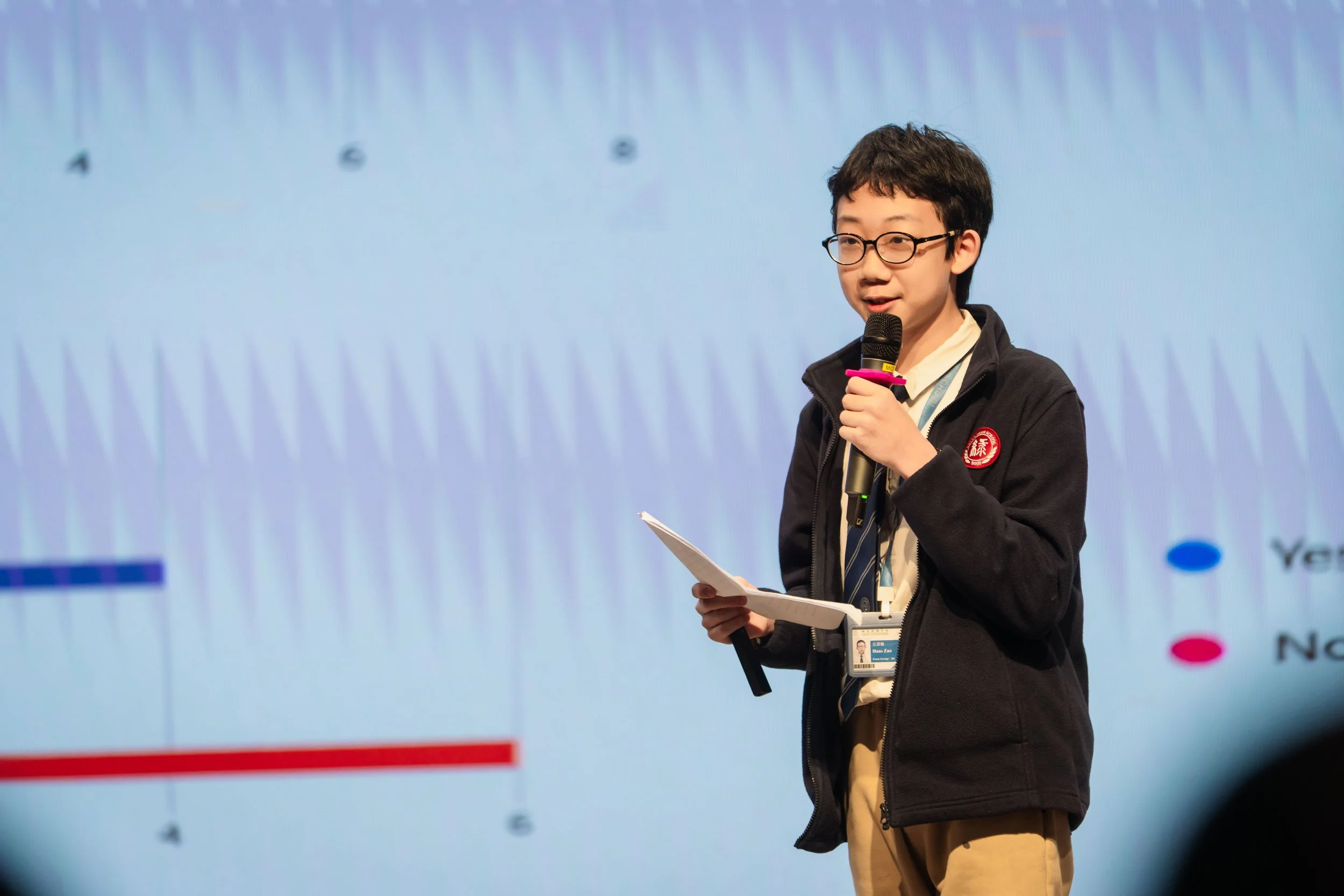
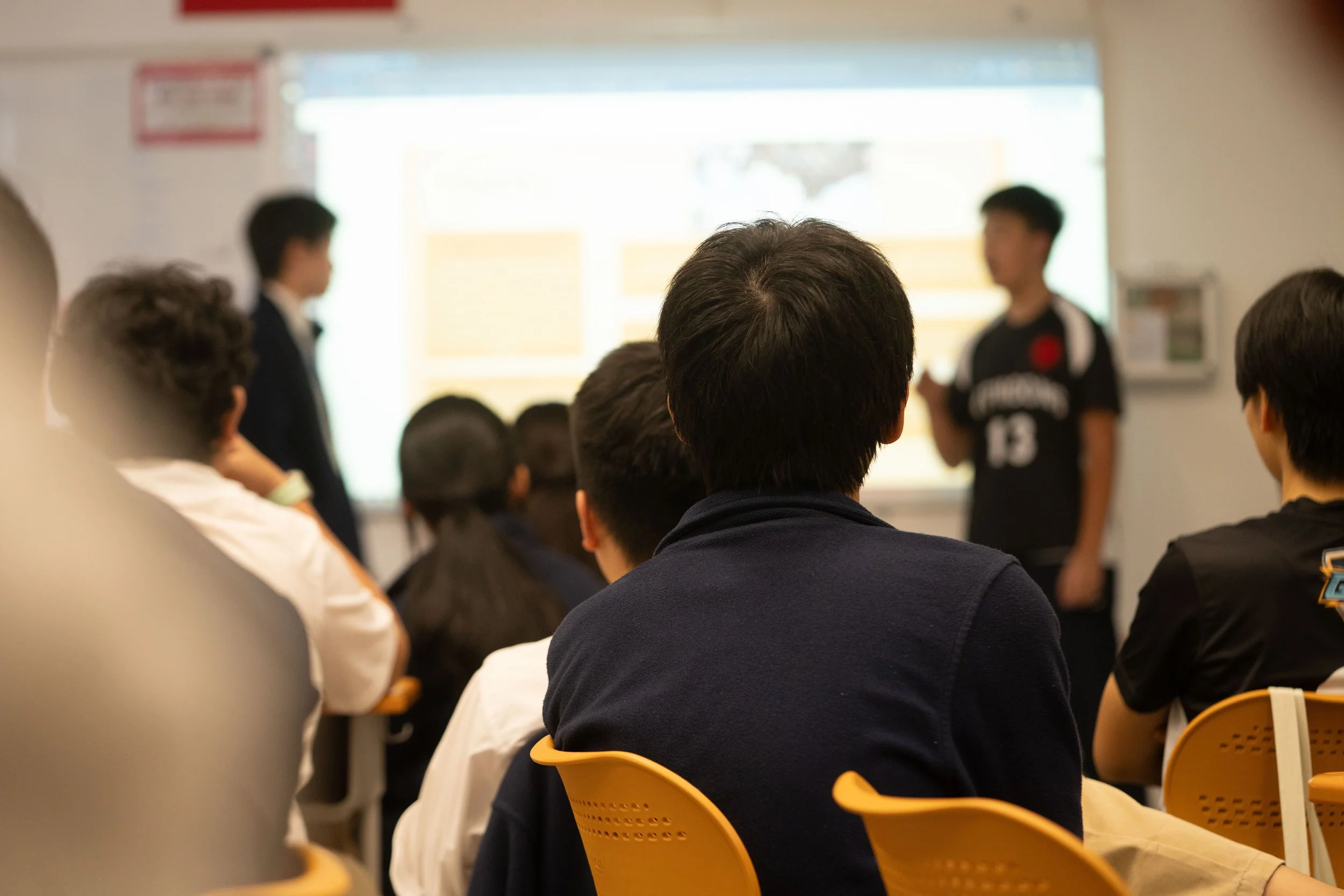
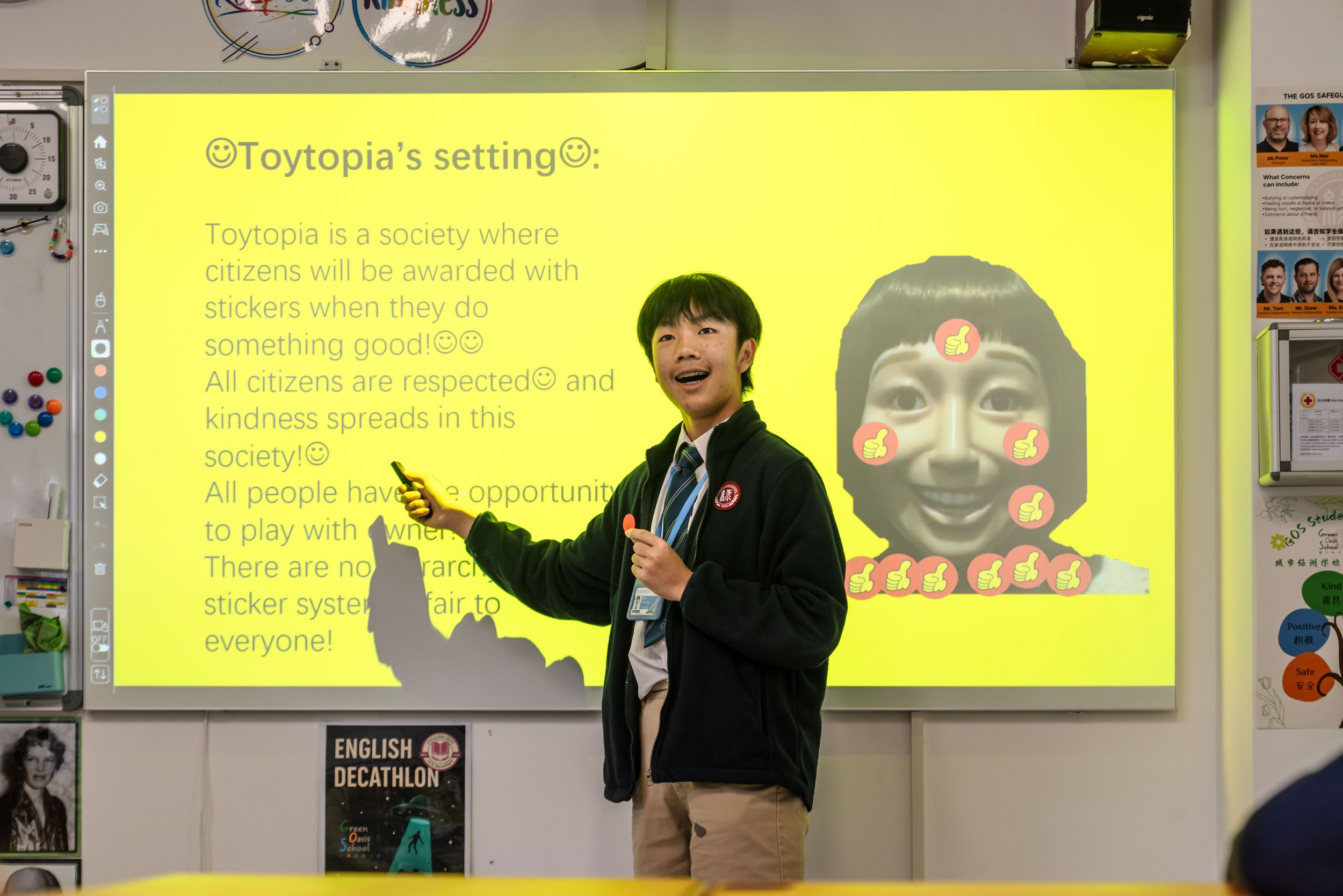
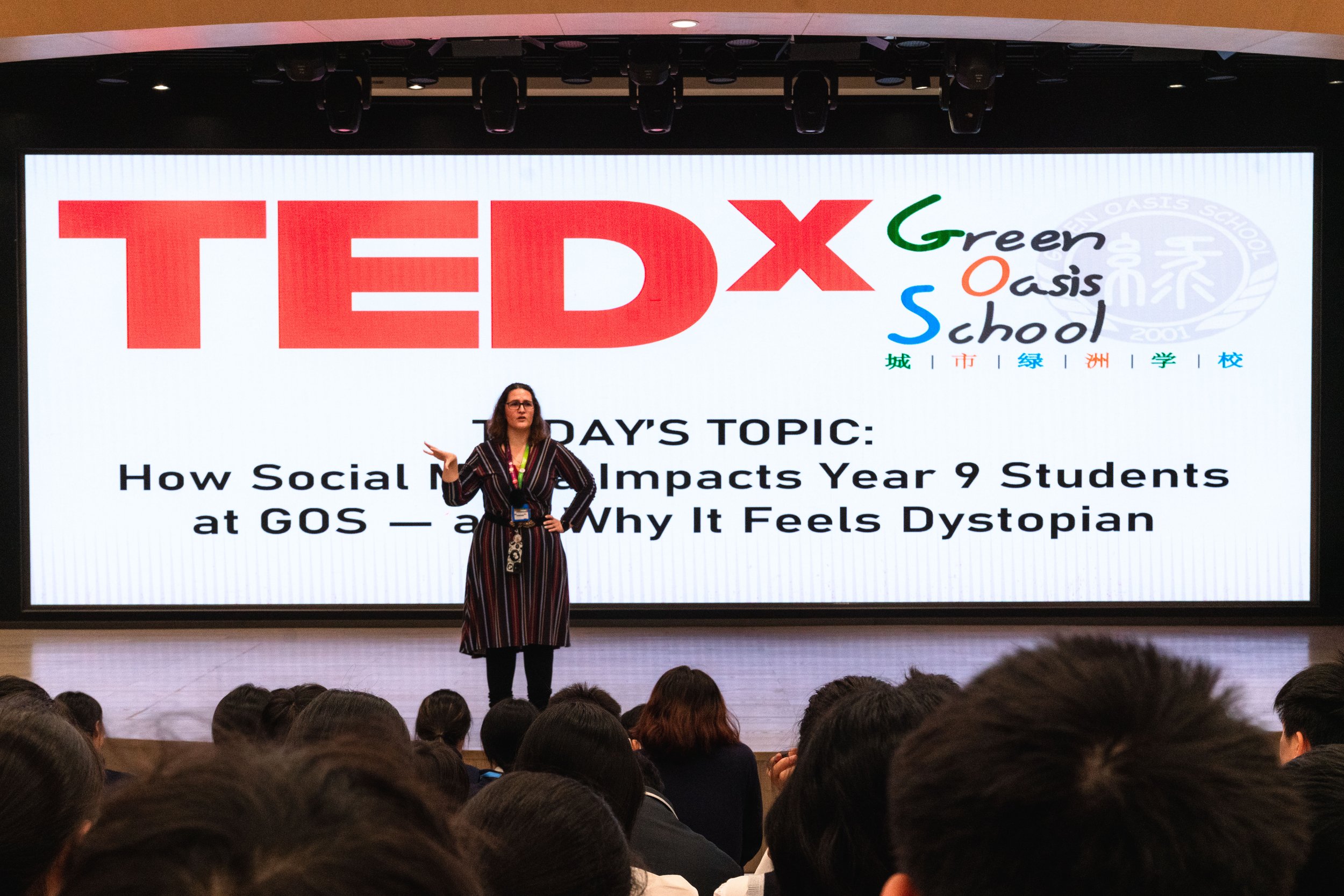
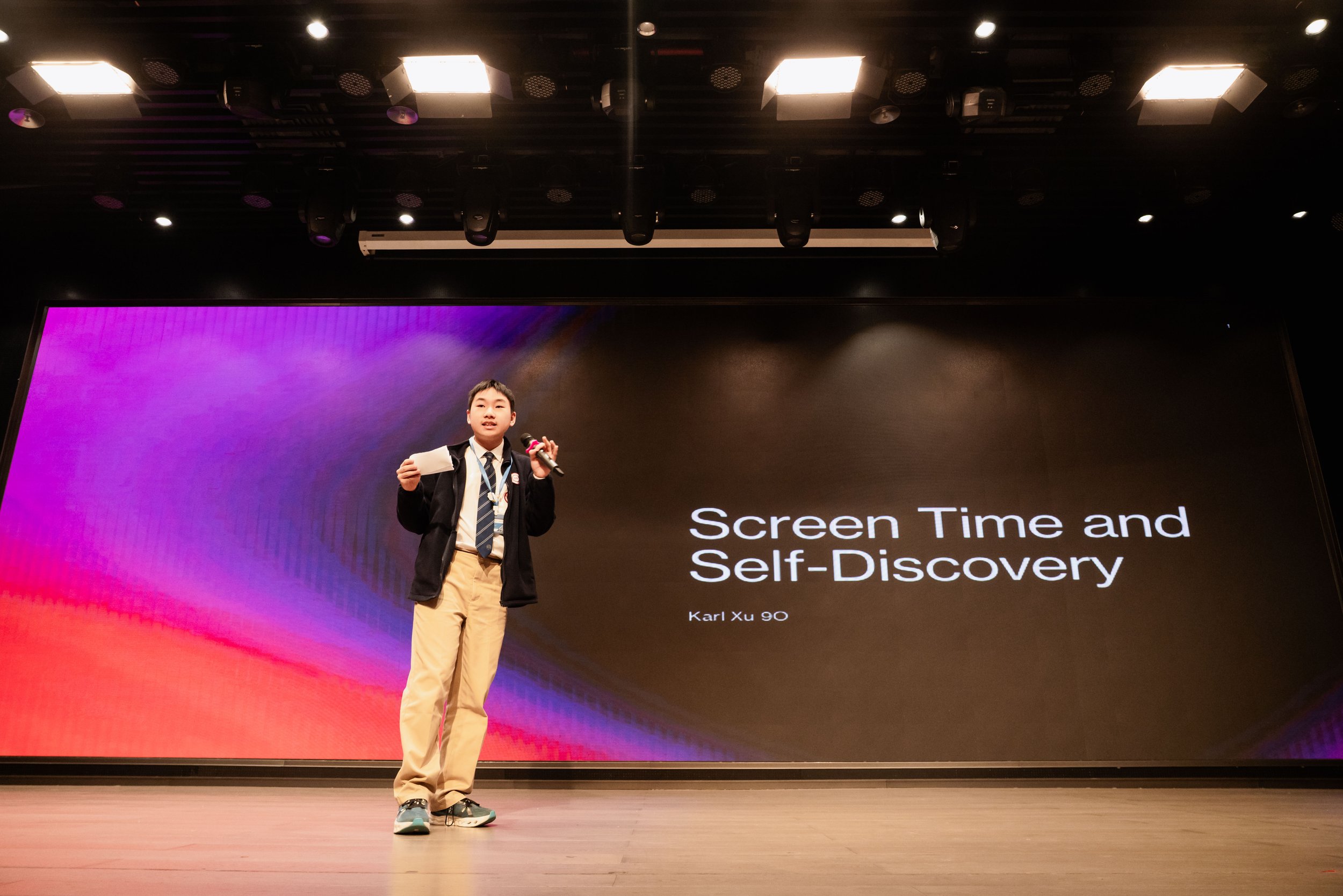
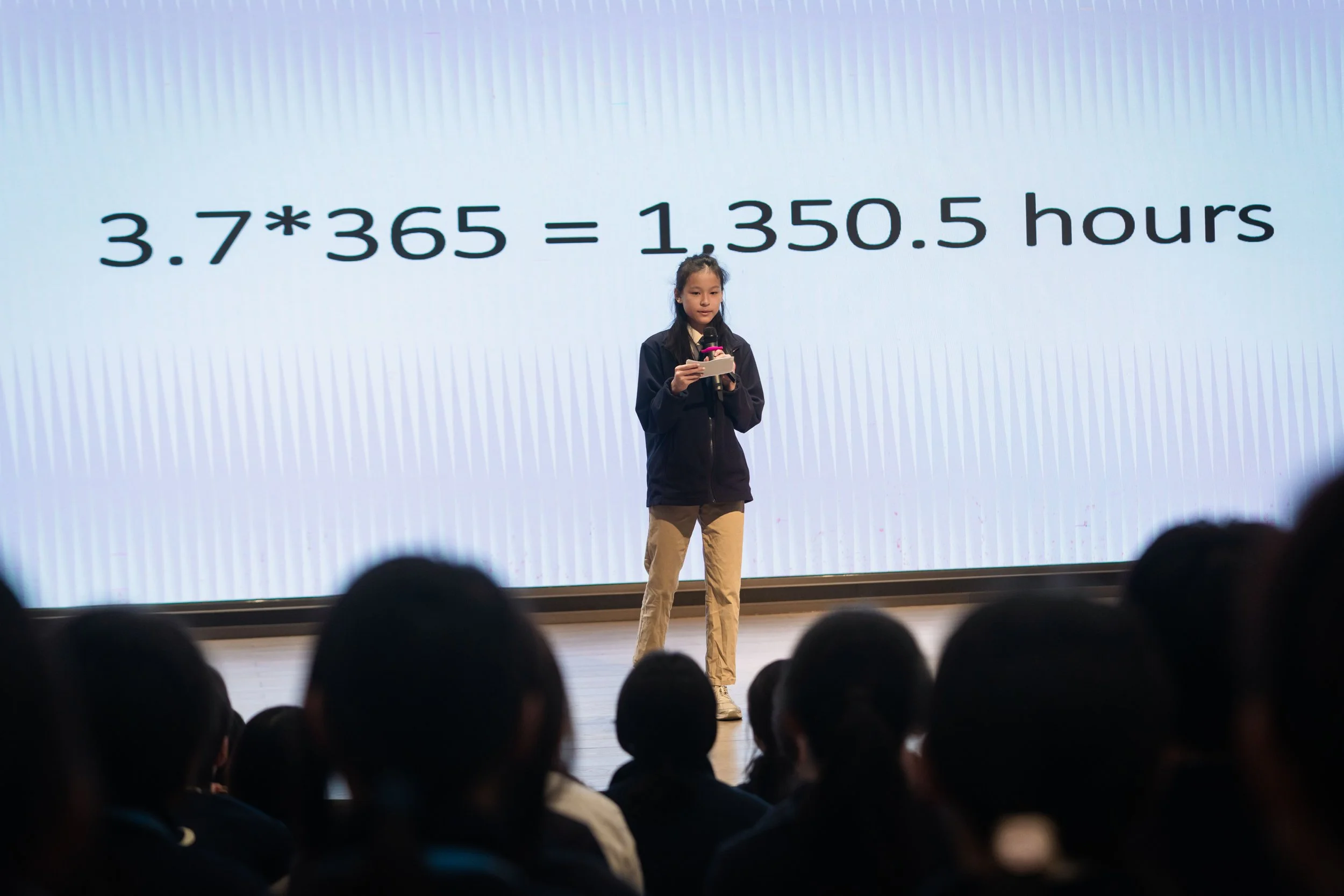
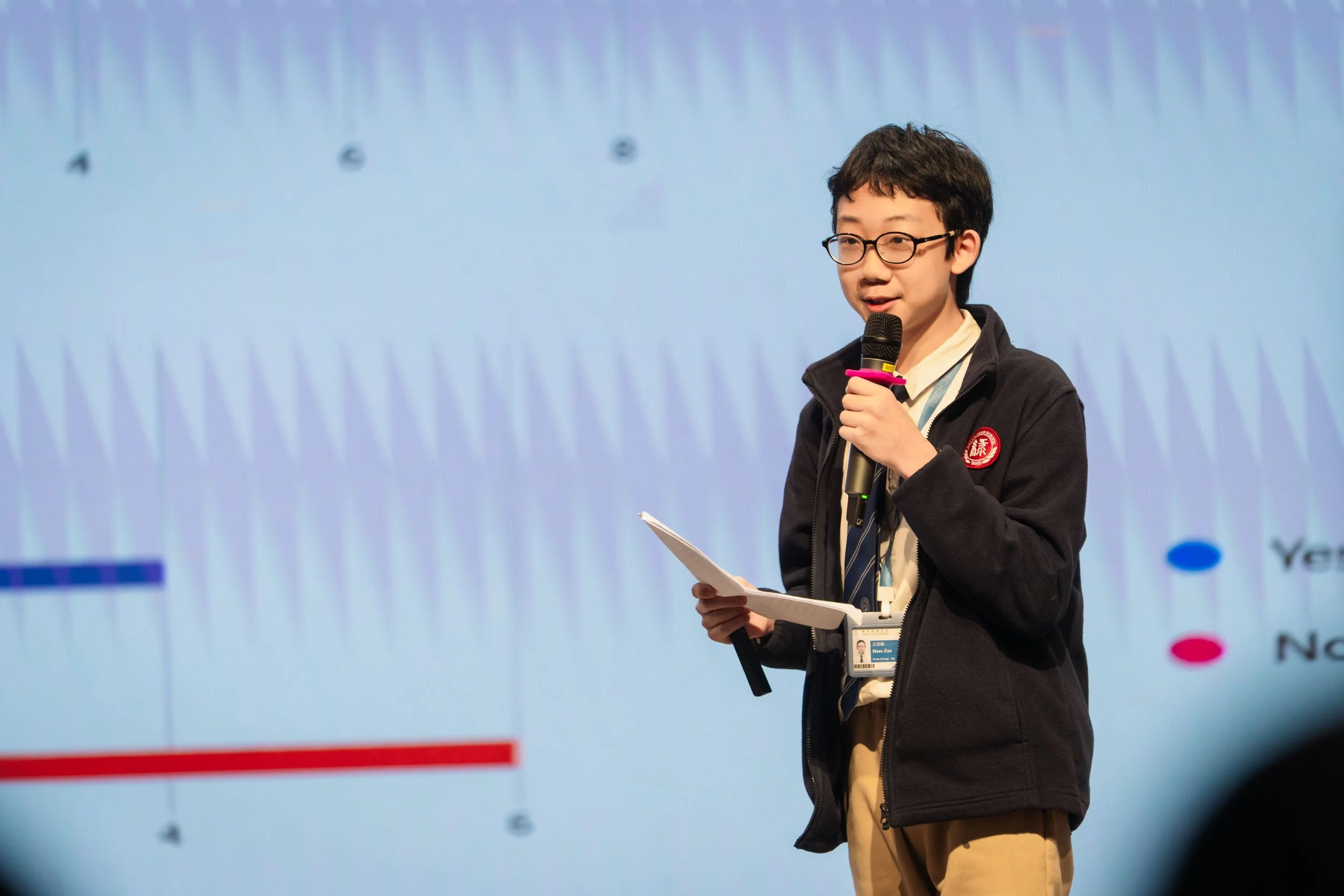
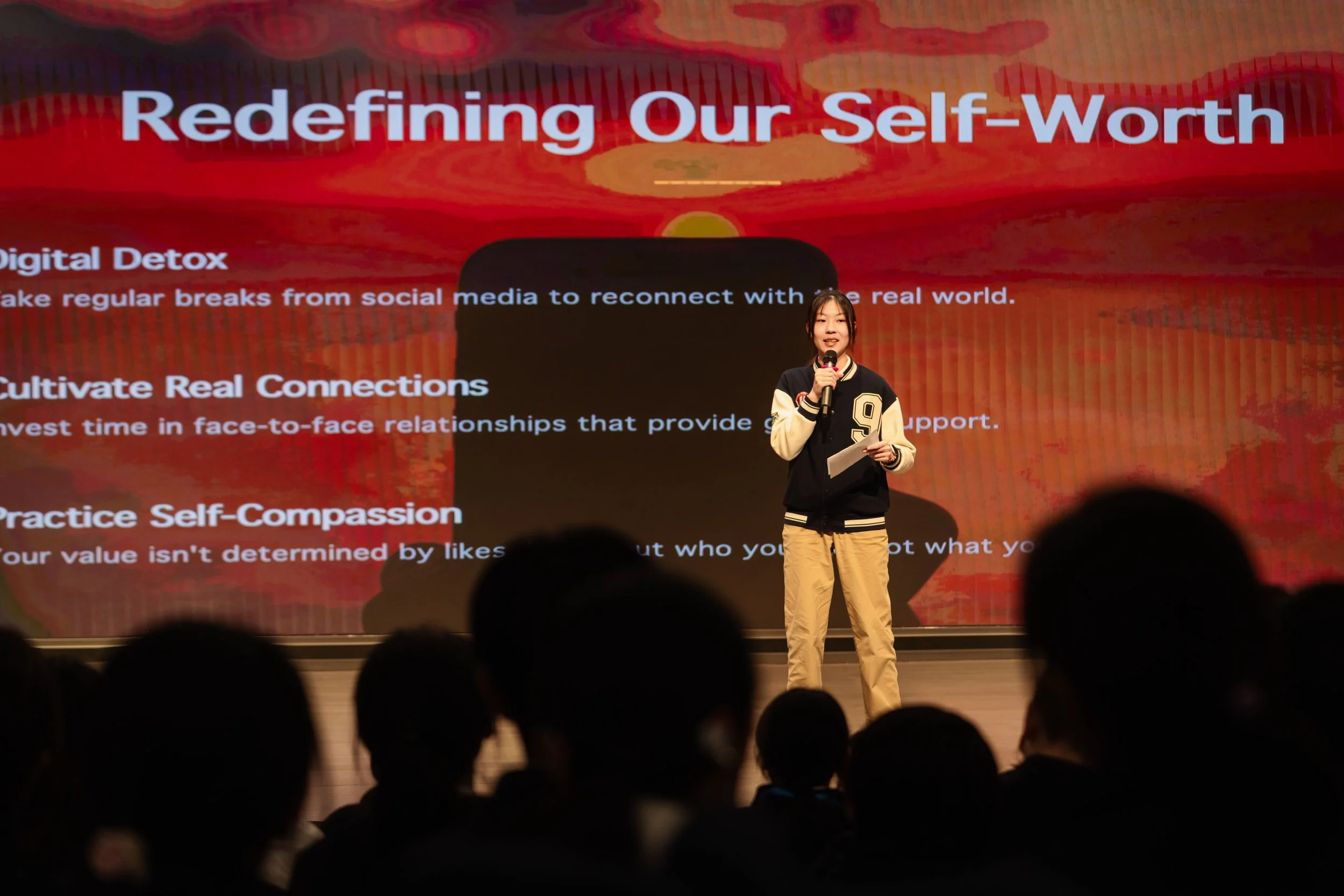
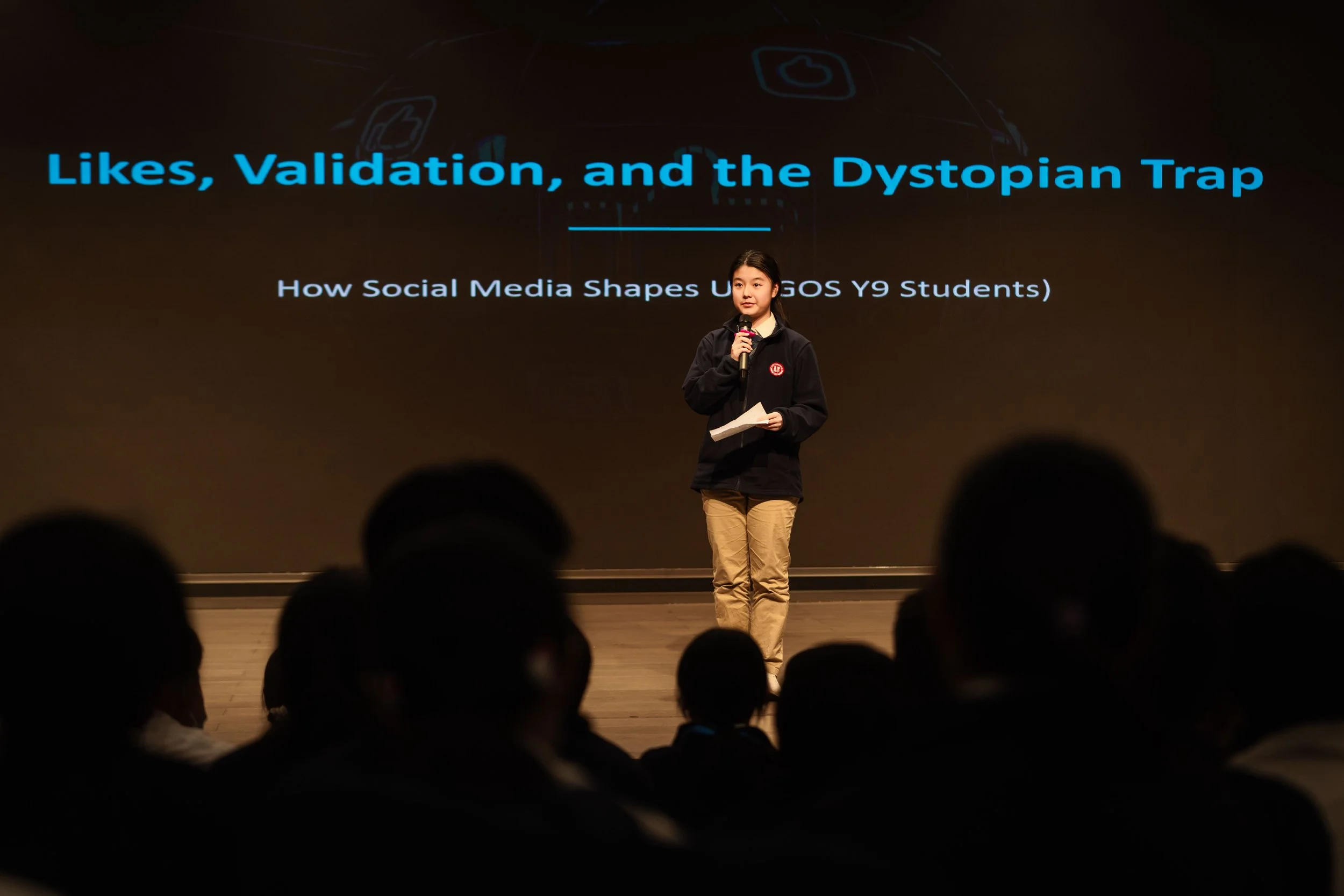
Below: students presenting their Ted Talks presentations to peers about digital habits and citizenship.

Unexpected Discoveries: When Research Reveals New Realities
One of the most interesting aspects of this first run with the redesigned unit was what the team discovered about their students' actual digital habits. Their findings didn't align with typical assumptions about teenagers and social media.
"Their experience with social media is limited very much to Chinese platforms, and the Chinese platforms are slightly different from things like Instagram or TikTok," Steph explains. Many students weren't posting their own content or scrolling through feeds in the ways we often imagine. Instead, their digital lives centred on WeChat group chats and gaming platforms.
This discovery required real-time adaptation. When teaching about conformity and cancel culture, the team needed to shift the frame.
"I swung it in terms of, all right, so if you're in these group chats and these things are happening, what is your reaction?" says grade 8 teacher Sean Burnham.
The team also broadened the scope beyond social media to include gaming communities, recognizing that digital citizenship encompasses all spaces where students interact online.
Sean noted that while some concepts like cancel culture were new to students in name, they understood them in practice once the team made the connections explicit: "It's interesting that they don't necessarily know all of the terminology, but they do know the concepts," he reflects.
The Timing Challenge: When Reality Meets the Calendar
Perhaps the biggest challenge this year was timing. The unit began in November and was interrupted by the Christmas holiday, semester 1 exams, and the Chinese New Year break.
Grade 8 teacher Matthew Smith observes: "Students have been very quiet; doing this unit at this time of year, at a very stressful time for them, means they're exhausted."
The compressed timeline meant some planned elements, such as interviews with school counsellors about online safety and bullying, and deeper data analysis of student surveys, didn't happen as envisioned. The team adapted by using videos from the school counsellors and keeping discussions more hypothetical. But the experience provided clarity for next year's planning.
The good news: starting next year, the school is moving from five units to four, which means the dystopian unit will fit into one continuous block before the semester 1 exams. "That's already going to be better,” Steph affirms, because students will have more cohesive time needed to move through investigation, research, and action without major interruptions.
Light Bulb Moments: When Connection Happens
Despite the challenges, real moments of connection emerged. Steph described her students' reactions when they examined their own screen time data: "A lot of the kids actually started looking at how much time they and their peers and teachers were spending on social media, and I think that was very eye-opening to them. Interestingly, one student found that teachers spend a lot more time on social media apps like instagram, than many of the students themselves!"
This self-awareness, with students seeing themselves in relation to dystopian themes of surveillance, control, and lost agency, was exactly what the redesign aimed for. Even if the connections didn't land strongly for all students this year, the team recognized this was about planting seeds.
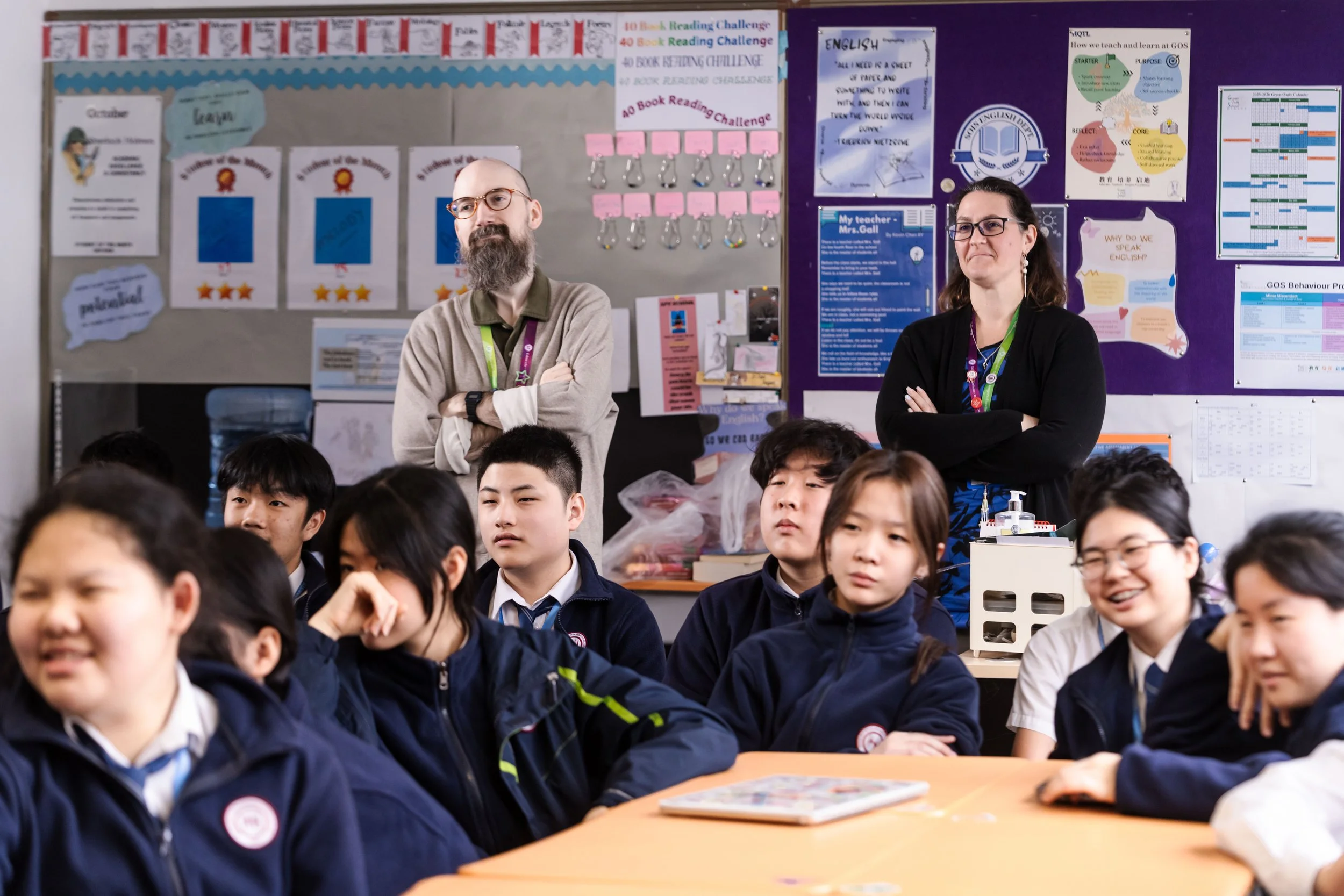
Year 9 teachers Steph (right) and Sean (left) with some of their students as the summative Ted Talks event began for the Dystopian Fiction unit.
The Showcase: Multiple Pathways for Student Voice
For their summative assessment, students had four options: create an entire dystopian world with a presentation, write a dystopian story, create a graphic novel, or deliver a TED Talk. The stories and graphic novels will be printed and bound into a book for the library. The TED Talks occurred in a special assembly where all Year 9 students came together, and the best talks were selected to present to the whole grade.
This choice-driven approach honoured different ways students could demonstrate their learning while maintaining the core requirement: connect dystopian fiction to digital citizenship and take a stance on what matters.
Looking Ahead: Building on Year One
When I asked the team to compare this year’s experience to last year's version of the unit, the consensus was clear. Sean summed it up: "If more of our units were like this, the students would just gain more understanding as learners and people. Weaving in these concepts helps our students see the story that is playing out around them."
For next year, the team identified several key improvements:
Timing and Flow: With the unit now scheduled in one continuous pre-exam block, students will have better conditions for deep engagement without exhaustion and interruption.
Research and Interviews: More time means students can actually conduct interviews with school counsellors, school leaders, and family members about digital habits, bullying impacts, and intergenerational perspectives on technology.
Broader Digital Citizenship Frame: Rather than focusing solely on social media, the unit will embrace the full range of digital life including gaming communities, and themes such as content consumption versus creation, and using digital tools for civic good.
Positive Stories: To balance the dystopian focus and navigate cultural sensitivities, the team plans to seek out positive examples of media being used for good, shifting some emphasis toward constructive digital citizenship.
21st Century Fears: Incorporating more content around AI, environmental apocalypse, and contemporary dystopian fears that resonate with students' actual anxieties and help them navigate these complex emotions and thoughts.
The Bigger Picture: What Redesign Really Means
Steph's reflection captures something essential about curriculum transformation: "Maybe if we can do this more with some of the other units, it'll become a little bit more apparent how this is relevant to their lives and will help them just grow as individuals. There is a risk of losing awareness of ourselves and our impact on everything at this point in history."
The first iteration of any redesigned unit is never perfect. There are timing challenges, cultural complexities, and unexpected discoveries about what students actually know and experience. But this Year 9/grade 8 team at Green Oasis School demonstrated something crucial: they stayed responsive, adapted in real time, documented what they learned, and used those insights to plan for stronger implementation next year.
They also recognized that shifting students from "we're learning this to go to high school" to "this connects to my life" takes time and repeated exposure. As I noted in our debrief, this first year was very much about planting seeds and laying wet cement, metaphors for creating new patterns that will strengthen as students have more of these experiences across units and years.
The dystopian fiction unit at GOS isn't finished. It's evolving. And that's exactly how curriculum transformation should work: iterative, responsive, grounded in what students actually need, and always asking how learning can be more meaningful, more connected, and more human.