Making Learning & Reflection Visible with a Story Pop-Up Event
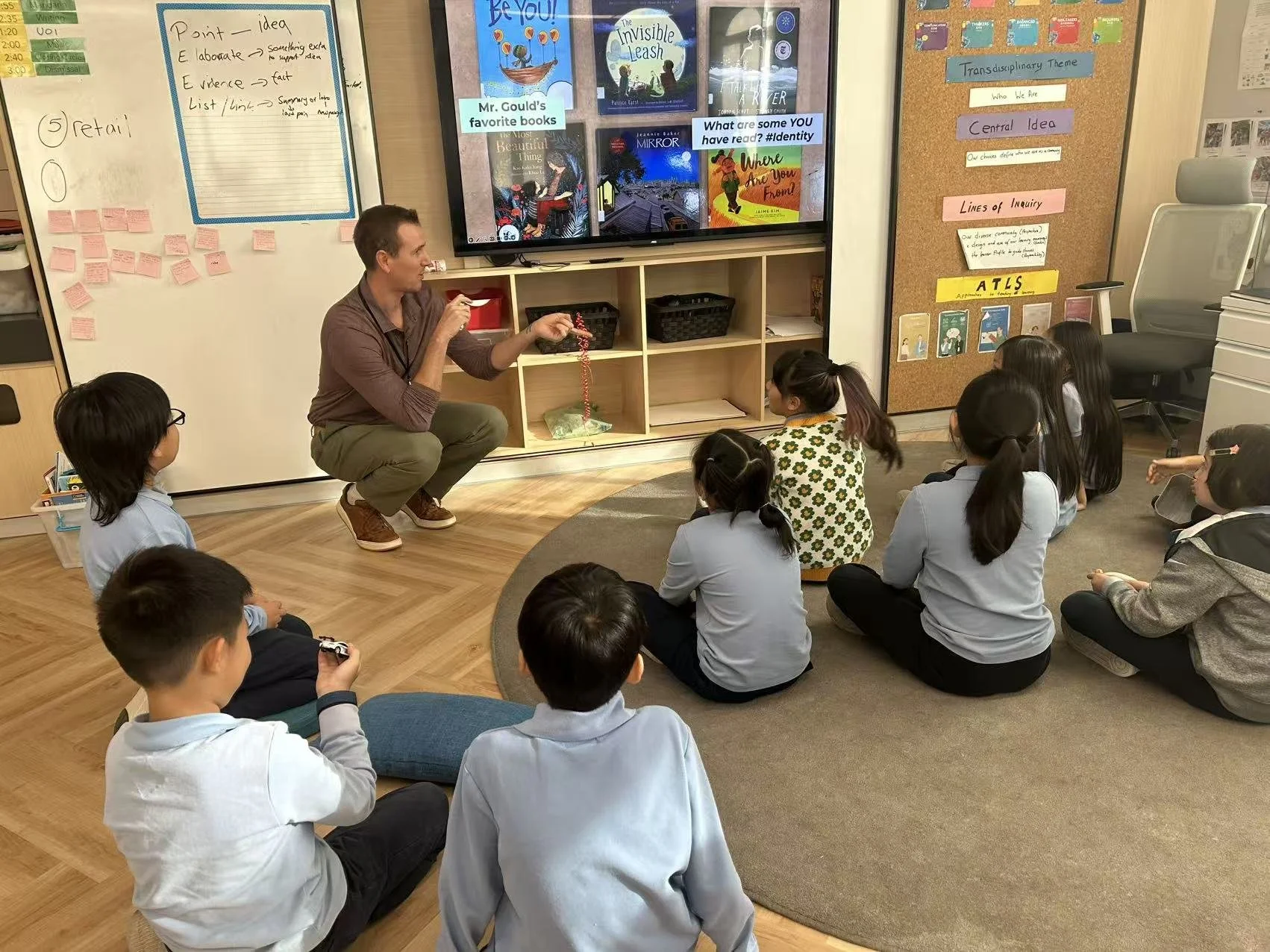
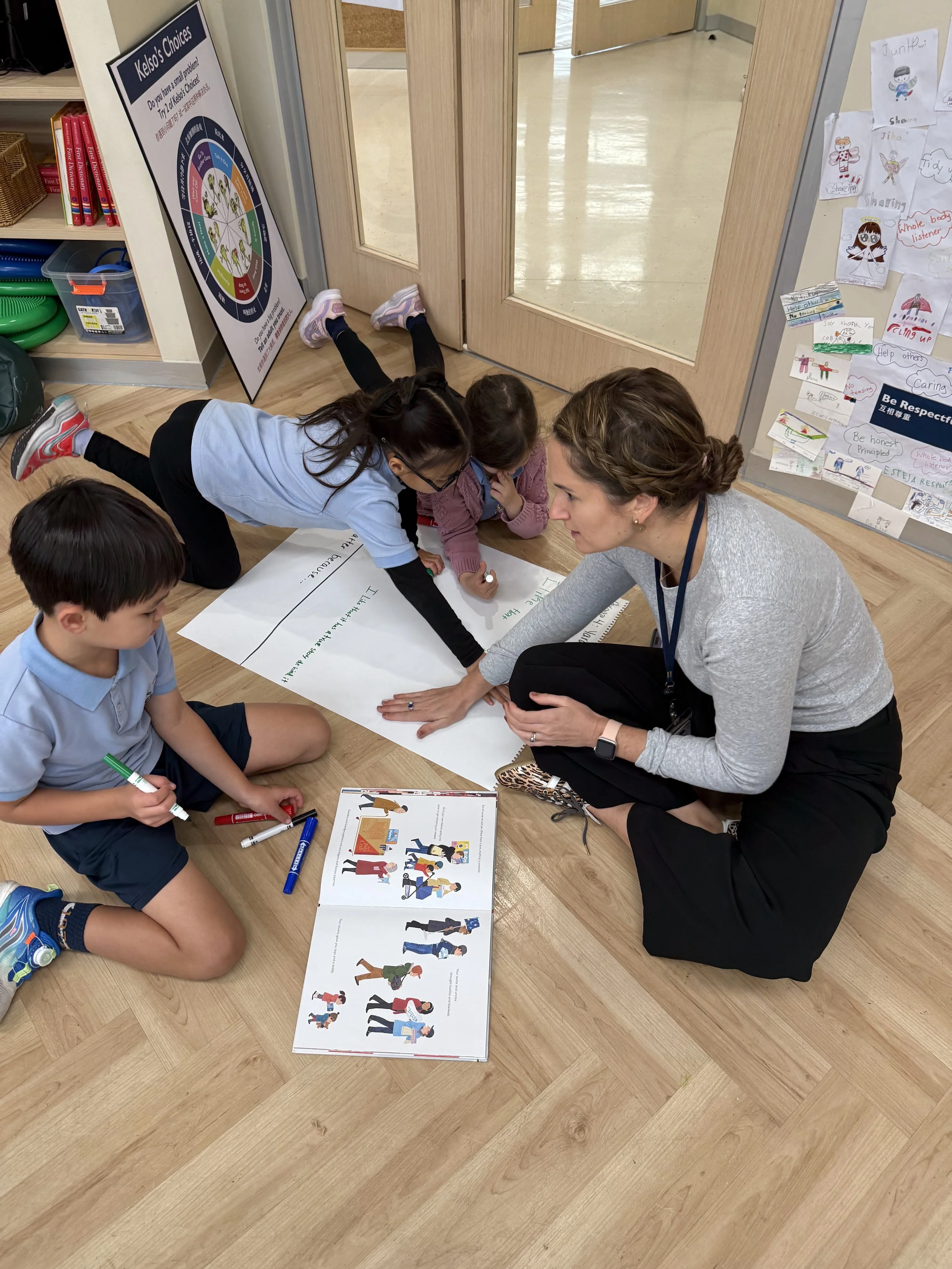
Haakon co-teaching a session with elementary students in preparation for the “Together We Shine” story pop-up event.
When Haakon Gould (the Service Learning, Community Engagement, and Outreach Coordinator at Shanghai Community International School) looked around the airport terminal during a summer visit to New York, he noticed something that stopped him in his tracks. Or rather, his daughter Sophia did.
"Look at this wall," she said, pulling Haakon’s hand toward a display covered in sticky notes, each containing small nuggets of wisdom from travellers passing through.
That moment planted a seed. By the time that the Shanghai Community International School (SCIS) Winter Carnival rolled around in December, with its theme of "Together We Shine," Haakon had transformed that inspiration into something powerful: a story pop-up exhibit to showcase student voices, celebrate community partnerships, and make the often-invisible work of community engagement, belonging, and meaningful reflection beautifully visible.
More Than Just a Carnival
Winter Carnival at SCIS is typically a lively community event with vendors, activities, and lots of festive energy for family and community members. But Haakon saw an opportunity to layer something deeper into the event this year
"We wanted to spotlight our partnerships, along with student voices and their experiences," he explains. "The pop-up exhibit was a way to make that more present and visible."
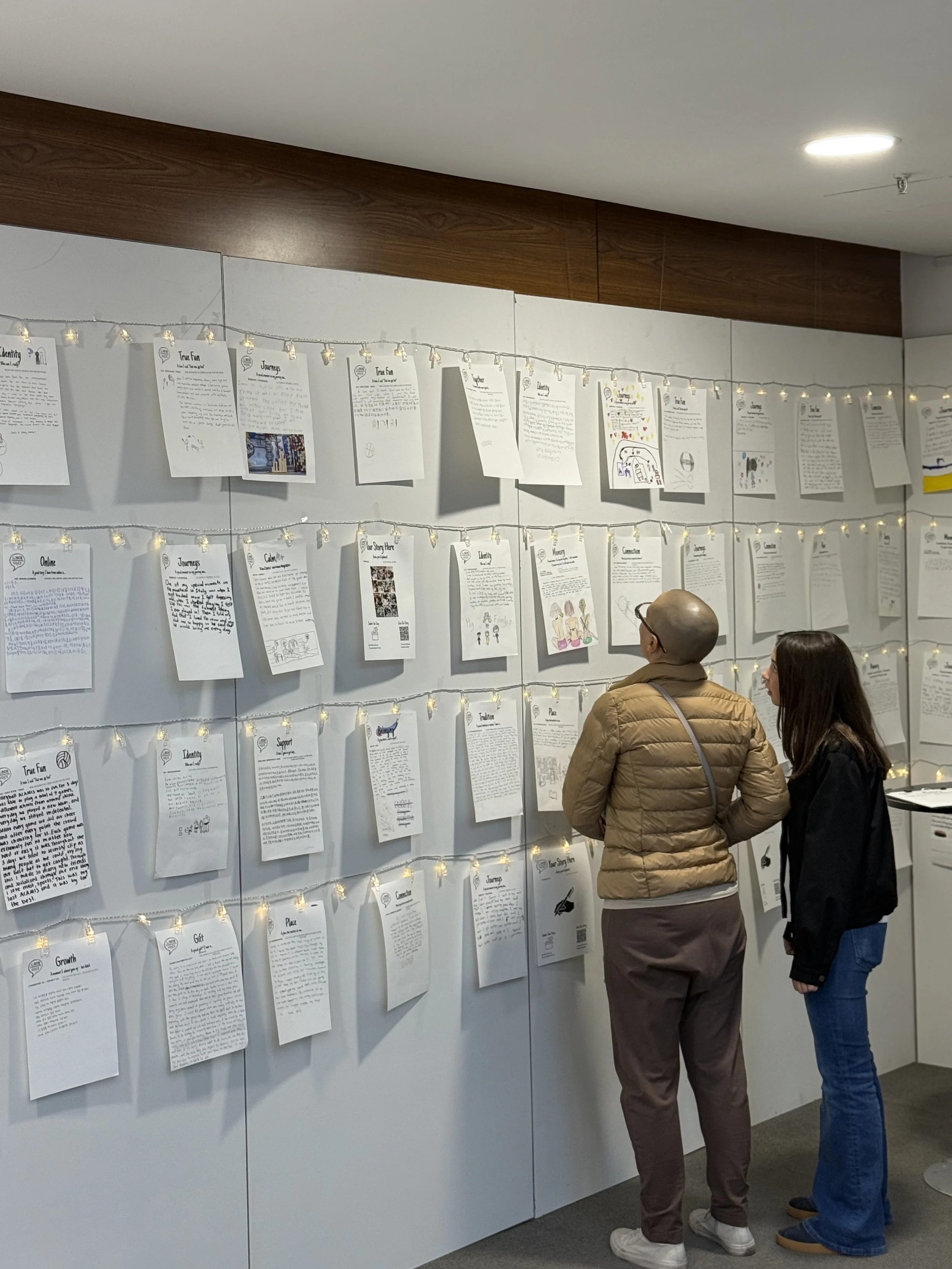
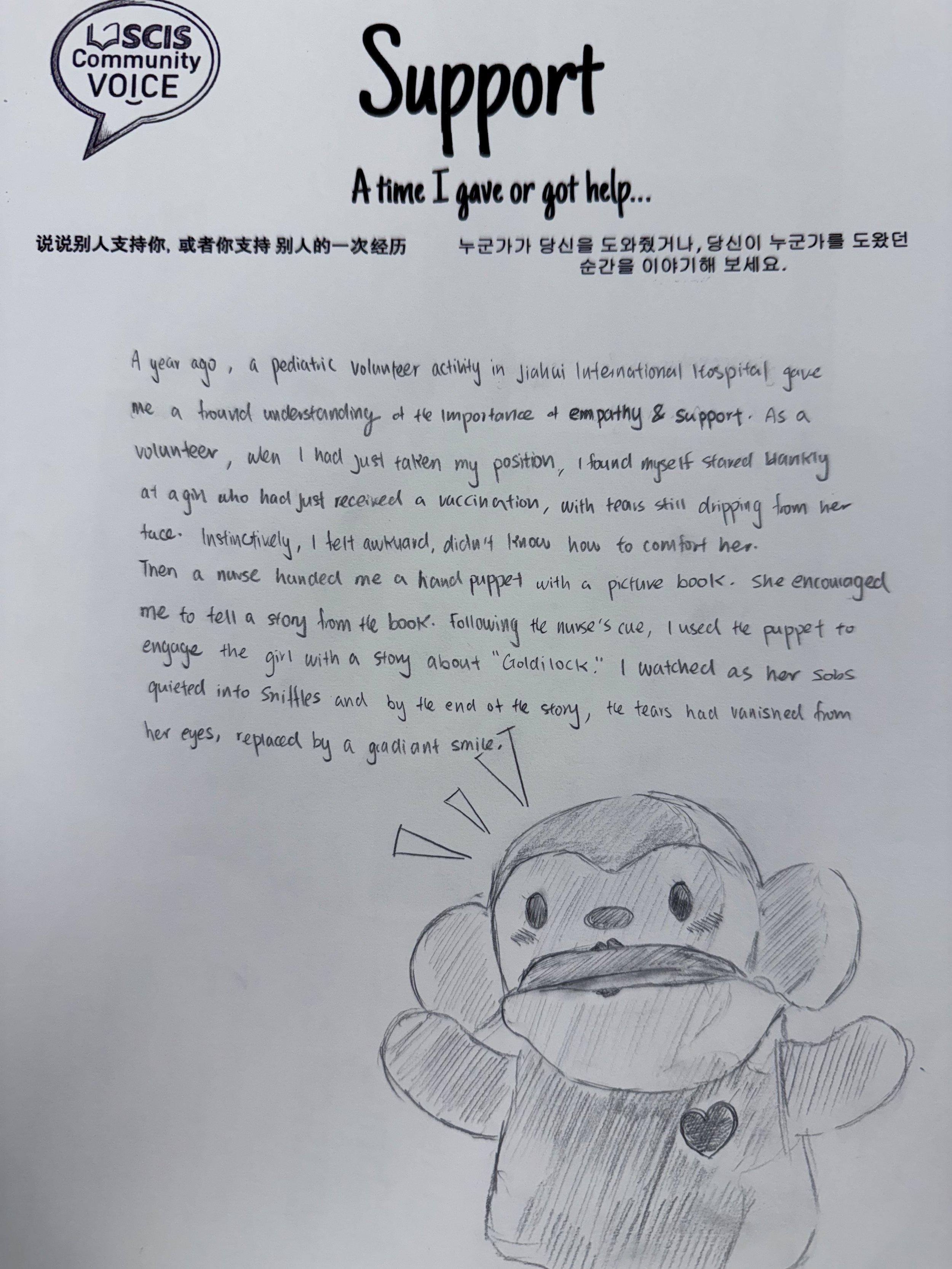
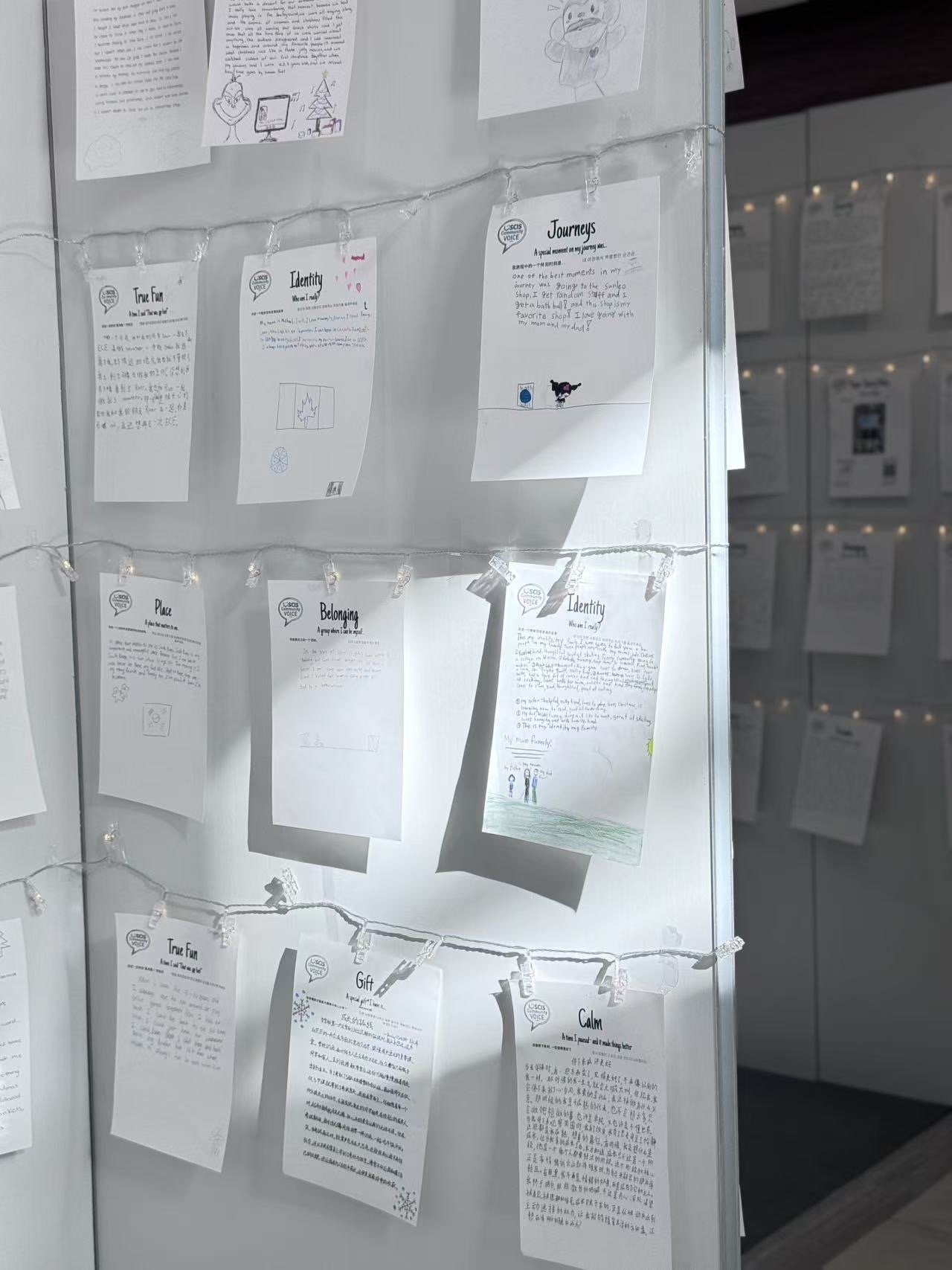
Drawing inspiration from projects like Humans of New York and the Empathy Museum, Haakon created an experience where stories (over 400 of them!) were displayed throughout the carnival space, creating quiet bubbles of reflection amid the boisterous celebration. The story “nooks” gave community members space to pause, read, and reflect.
The Power of Picture Books
For primary students in grades 2 and 3, the entry point for participating in the Story Pop-Up Event was perfectly suited to their developmental stage and some picture books and read-alouds connected to belonging. Working within their existing units of inquiry (with themes of “journeys” for grade 2 and “identity” for grade 3), Haakon co-taught lessons with classroom teachers using these read-alouds.
"We used the mirrors, windows, and sliding glass doors framework, but scaled it down for eight- and nine-year-olds," Haakon says. "They identified what elements of the story connected to them and their experience, what was different, and how they could reflect on their learning journey with these aspects in mind."
After unpacking the stories in their books, students were invited to share their own stories. The picture books became the scaffold that helped young learners articulate their experiences in ways that connected to the "Together We Shine" theme.
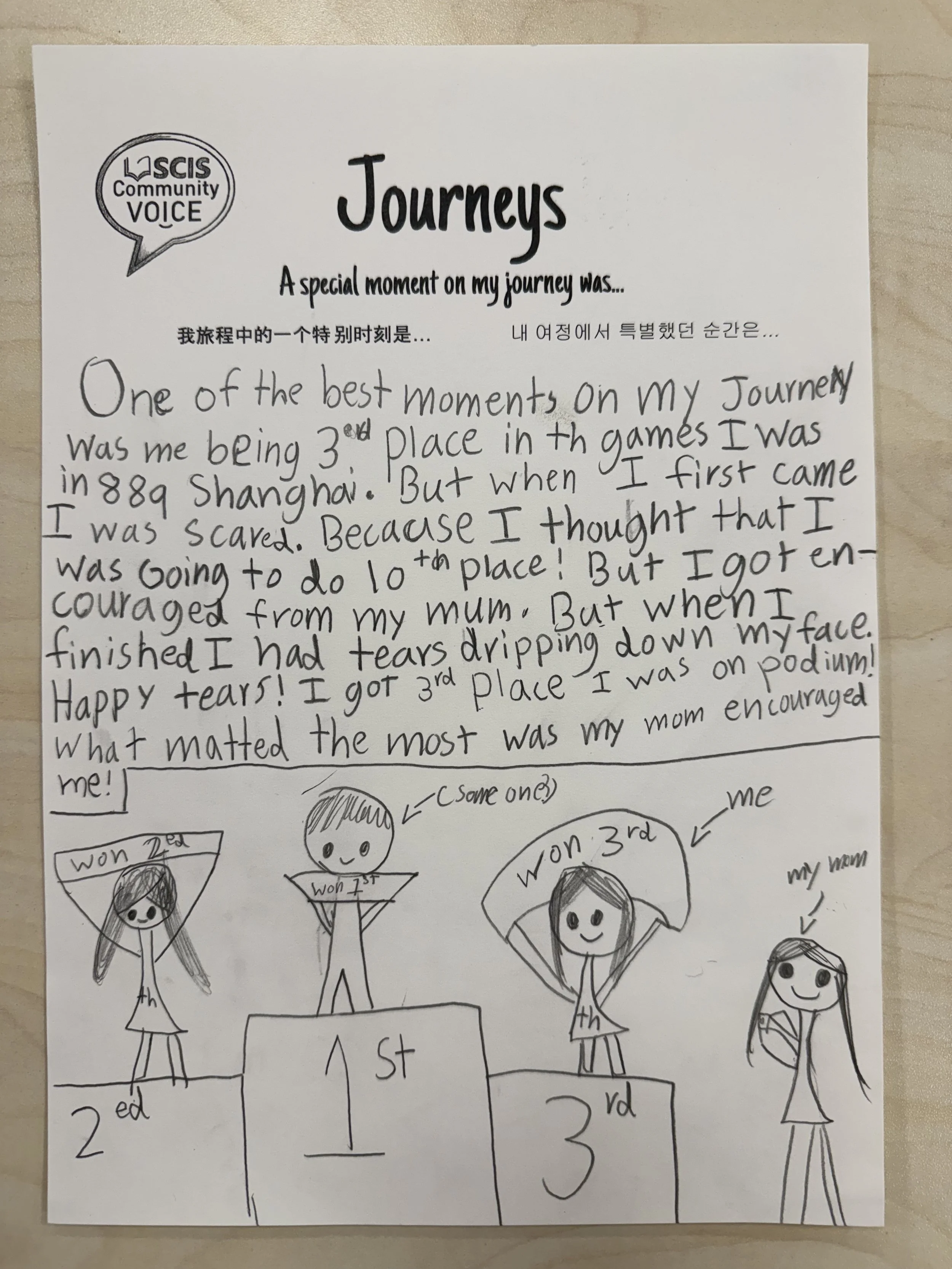
Eight Prompts, Infinite Stories
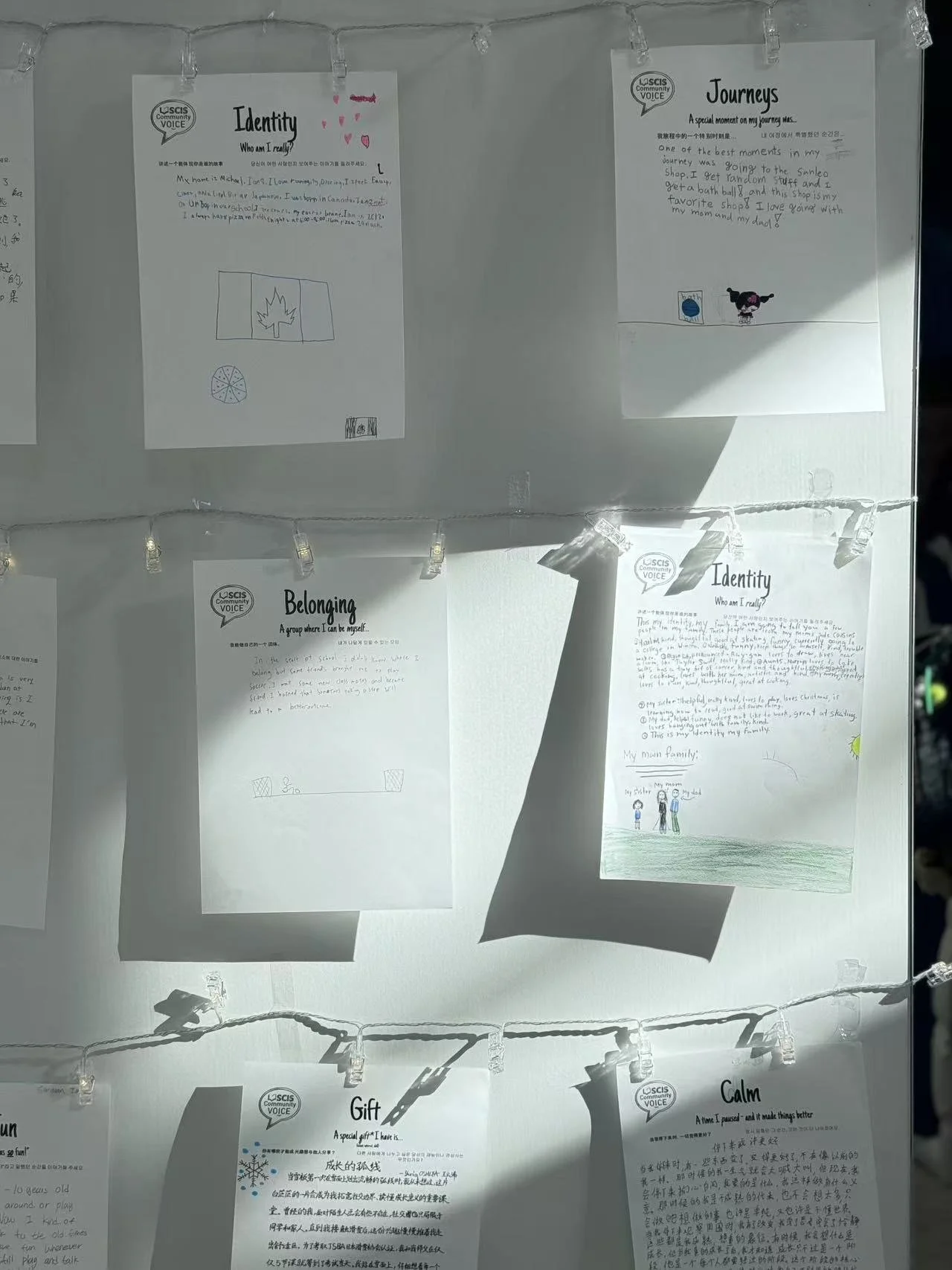
For middle and upper school students (grades 6-12), the approach was different but equally thoughtful. Students were given eight to ten different prompts, each unpacking a different dimension of what "Together We Shine" might mean: journeys, identity, belonging, gifts, traditions, support, and connection.
"I wanted students to have choice about which prompt they might choose, and what personal story they might create," Haakon explains. "When you put all of these stories together, the 'Together We Shine' theme comes to life in different ways."
For grades 6-10, the storytelling process happened during advisory lessons. For grades 11 and 12, it became part of their CAS experience, as a way to pause and reflect on key moments that had shaped them.
The stories were submitted anonymously and written in multiple languages, which created a rich tapestry of voices rooted in unique perspectives.
What the Stories Revealed
When Haakon stepped back to read through the 400+ stories collected, patterns emerged that spoke directly to the school's mission and values. Stories about belonging connected to the school's anti-bullying work. Stories about support and togetherness revealed the lived experience of the school's contributor and inquirer pillars from the IB learner profile.
"All those words that are on the walls of our school… here is how it's lived," Haakon reflects. "The only way to see this is through stories. Now we have 400+ stories across grades that say, 'Here is one story,' and we can only hope that after this is repeated, we can collect even more stories."
This is powerful data in the form of qualitative evidence of mission in action, and of values taking root.
Community partners also contributed stories, adding their perspectives on how the partnerships had affected them, which added another layer of reciprocity and shared voice.
The Experience of Encounter
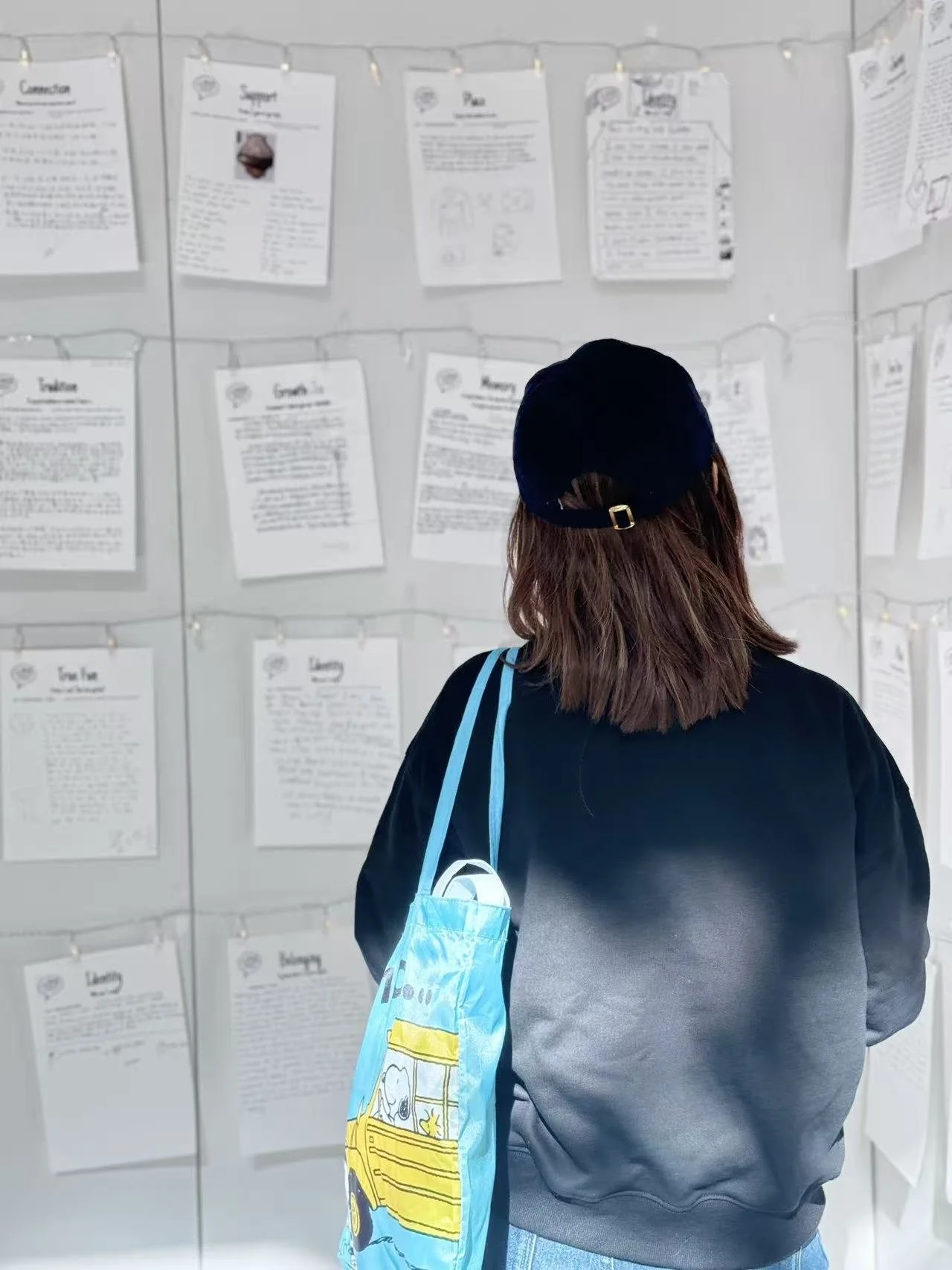
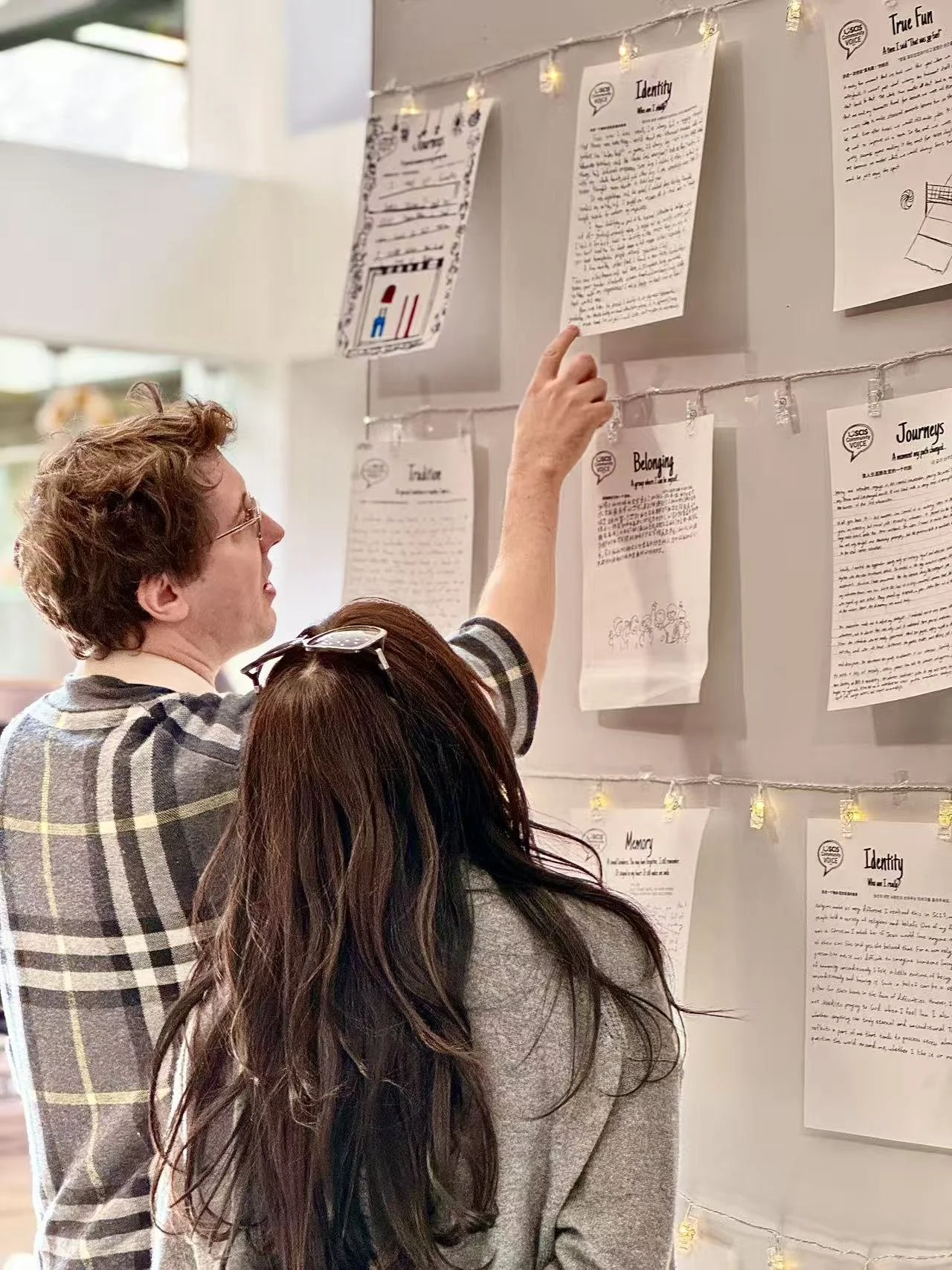
As the annual SCIS Winter Carnival was in full swing, bustling with activity, the pop-up exhibit space offered quiet corners. Strings of lights illuminated story cards hanging at different heights. Parents and students moved slowly through the space.
"You could see parents and students helping each other read stories in different languages," Haakon describes. "And students saying, 'That one's mine!' Even if that particular story wasn’t theirs, the power of stories is that some experiences and feelings are universal."
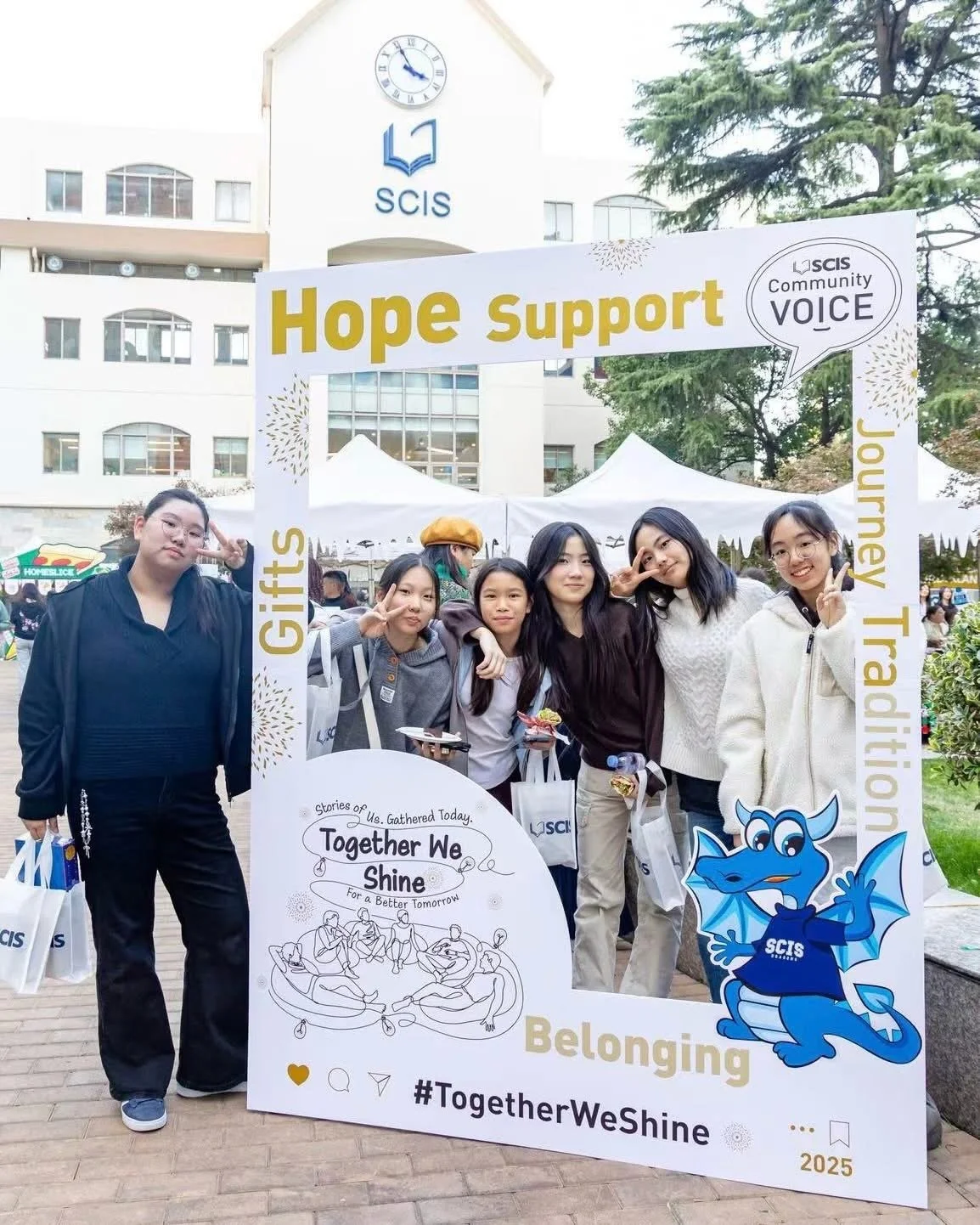
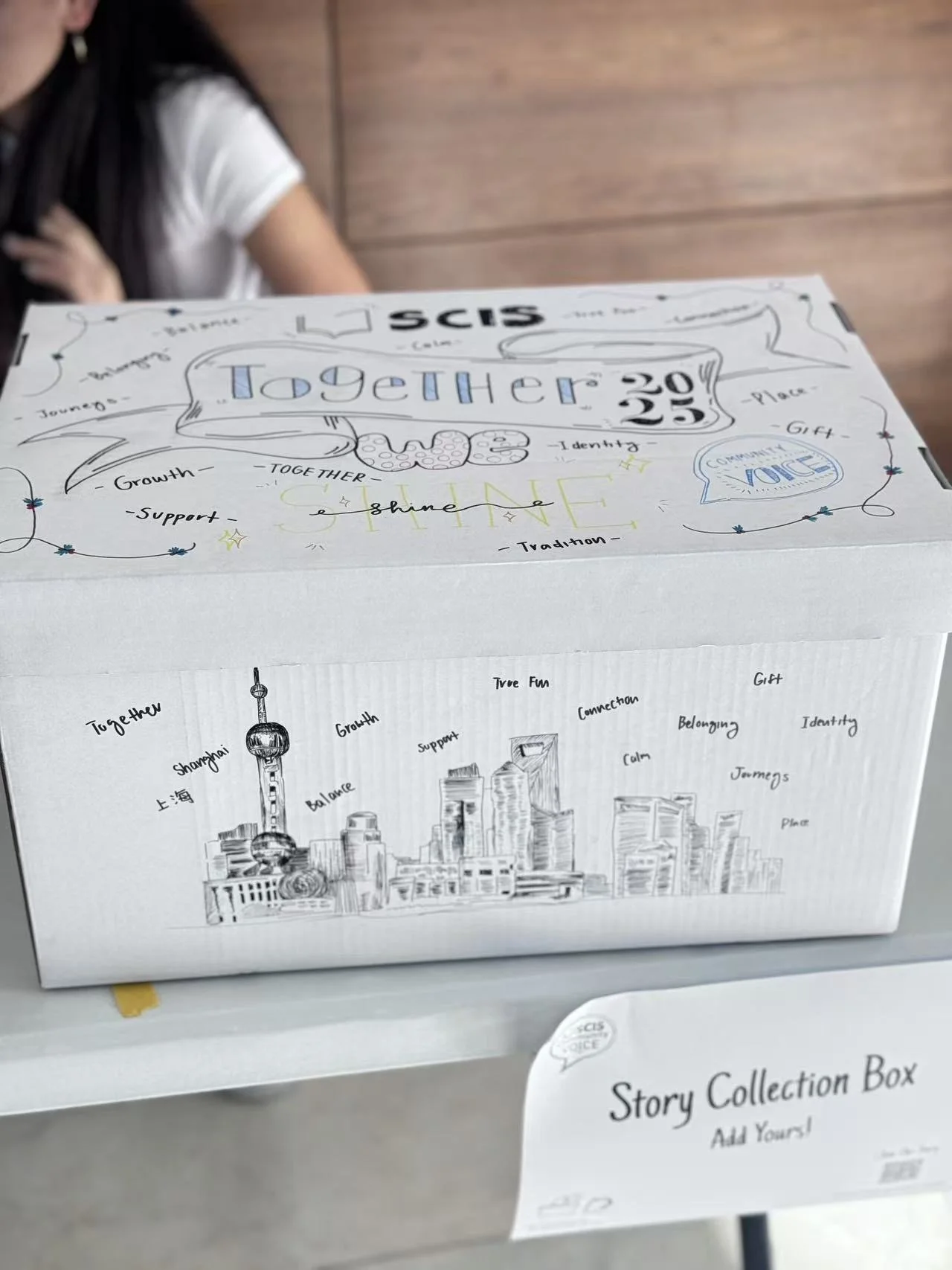
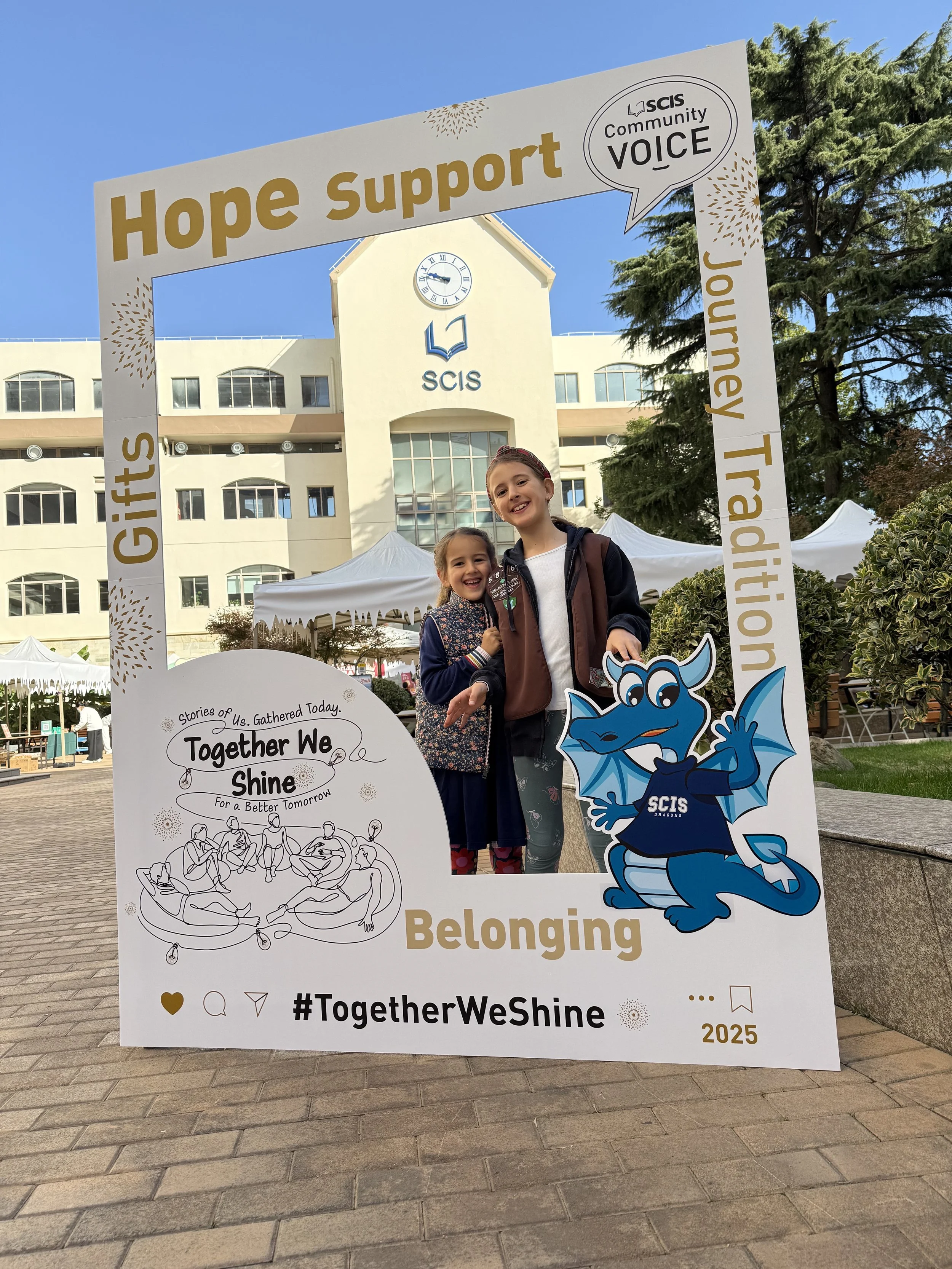
Below: photos from the “Together We Shine” story pop-up event.
Beyond the Event
So what happens to 400+ stories after the pop-up comes down? Haakon sees multiple possibilities. The stories can inspire future advisory lessons and CAS (Creativity, Activity, Service) reflections. They can be revisited as examples for future students learning to articulate their own experiences.
Most importantly, they represent a baseline, a snapshot captured at a pivotal moment as SCIS embarks on a new strategic plan.
"We've been doing all this work," Haakon says. "This was almost a perfect opportunity to pause and say, here's what we've accomplished, and here's the impact it's had."
The stories could even inform that strategic planning process itself, with student voices helping shape what comes next. Imagine students synthesizing themes from the stories, engaging in design thinking with educators and stakeholders about the school's future direction. The data is there, rich and ready.
An Accessible Model
This Story Pop-up Event could be replicated at any international school that has large community events. As all community engagement and global citizenship programs benefit from visibility in creating a shared sense of purpose, direction, and school culture, the pop-up model leverages existing structures rather than creating something entirely new.
"Community events like the Winter Carnival are already happening, and we can use these windows to make sure that hard work in the classroom is shared," reflects Haakon.
For coordinators wondering how to build toward larger end-of-year celebrations or showcases, a story pop-up offers a manageable first step. It creates culture, makes learning visible, and centers student voice, all without requiring massive resources or elaborate planning.
Hear from Haakon in the recording below about more details of the story pop-up and how these stories provide valuable data about student experiences, feelings, and thoughts about community, belonging, and active global citizenship.