
Building Bridges Through History with a Reciprocal Partnership
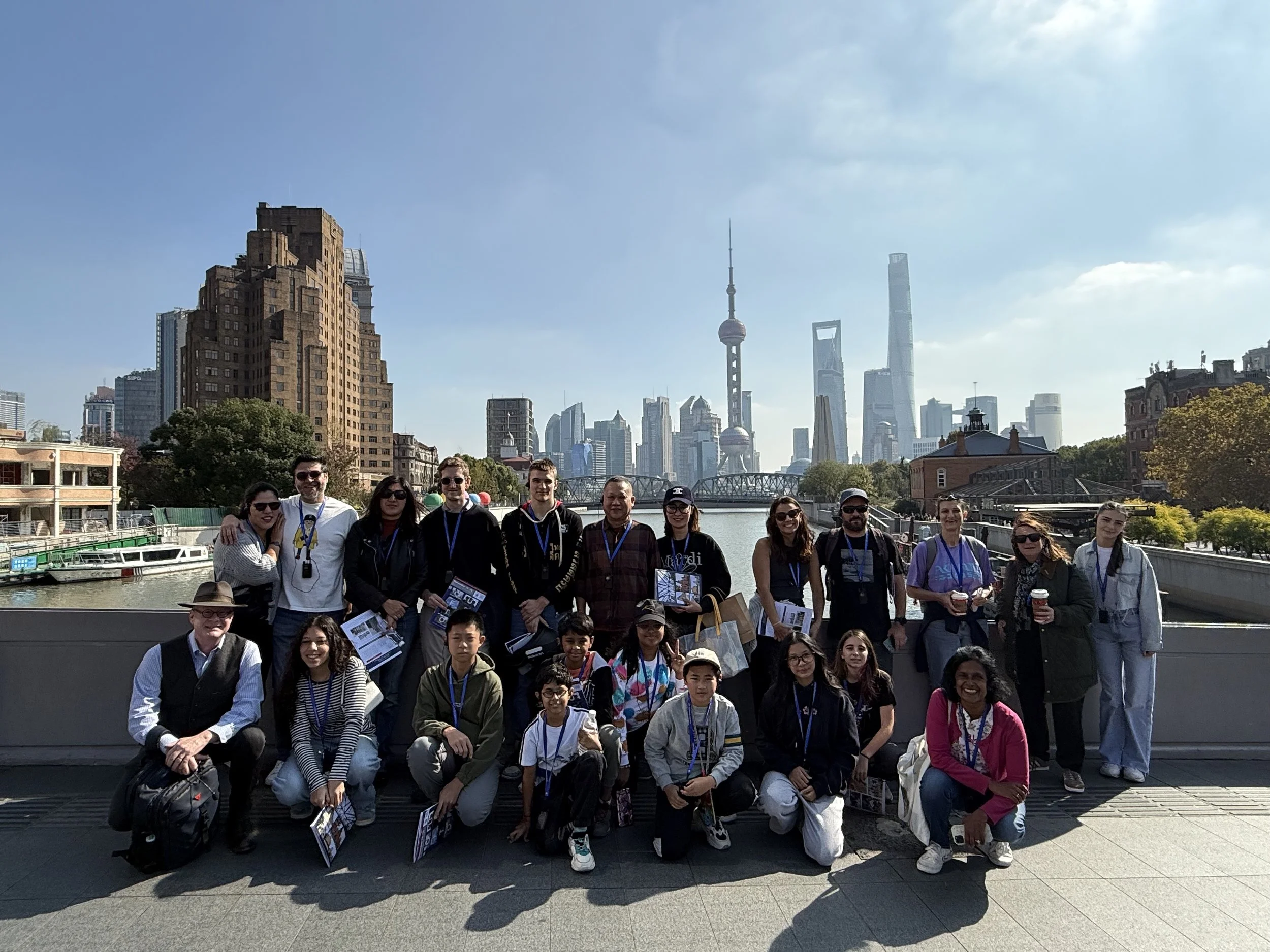
Students, teachers, parents, and community members from the SCIS/Historic Shanghai walk in November 2025.
When Haakon Gould, the Service Learning, Community Engagement, and Outreach Coordinator at Shanghai Community International School, began thinking about how to get more teachers engaged in experiential learning, he wasn't initially thinking about history walks. He was thinking about connection.
"I noticed that in the upper school, departments can feel kind of isolated," Haakon explains. "I was wondering, how can I bring everyone together and explore how we can all work together?"
That question led him to Patrick and Tina from Historic Shanghai, an organization that has been leading walks through Shanghai's neighbourhoods for over 25 years. What started as a simple idea - bringing learning out of the classroom and into the community - has evolved into a robust, interdisciplinary partnership that exemplifies what reciprocal community engagement looks like when it moves beyond charity models.
Starting with a Single Word: Connect
The first Historic Shanghai walk at SCIS was anchored by one powerful word: connect. Haakon invited teachers from all departments to participate, using a classic spider diagram approach to explore how their subject areas could link to this theme. The intentional simplicity of this entry point was key.
"It was that first anchor piece," Haakon says. "Whether it was science or math or any other subject area, the word 'connect' gave everyone a way in."
From there, the walks evolved with different anchor words tied to the school's mission. The second walk focused on the word contribute, bringing in grade 9 media students who created mini-documentaries about local changemakers and grade 5 students who led stops on the walk as part of their IB Primary Years Program exhibition inquiry and research. The most recent walk centred on the word question, a perfect framing for deep inquiry for multiple year groups.
What Reciprocity Really Looks Like
This partnership offers a compelling alternative to traditional service relationships. There's no fundraising and no volunteering. Instead, Patrick and Tina bring their deep expertise in Shanghai's history and neighbourhoods to the partnership, while SCIS brings fresh perspectives, student energy, and new ways of experiencing the city.
"They [Patrick and Tina] are used to leading tours with adults every weekend," Haakon notes. "They're not used to grade 5, 10-year-olds, or even our grade 11 and 12 students who are still learning. On each walk, we debrief what we could have done differently, and together we’re reshaping what a historic walk can look like."
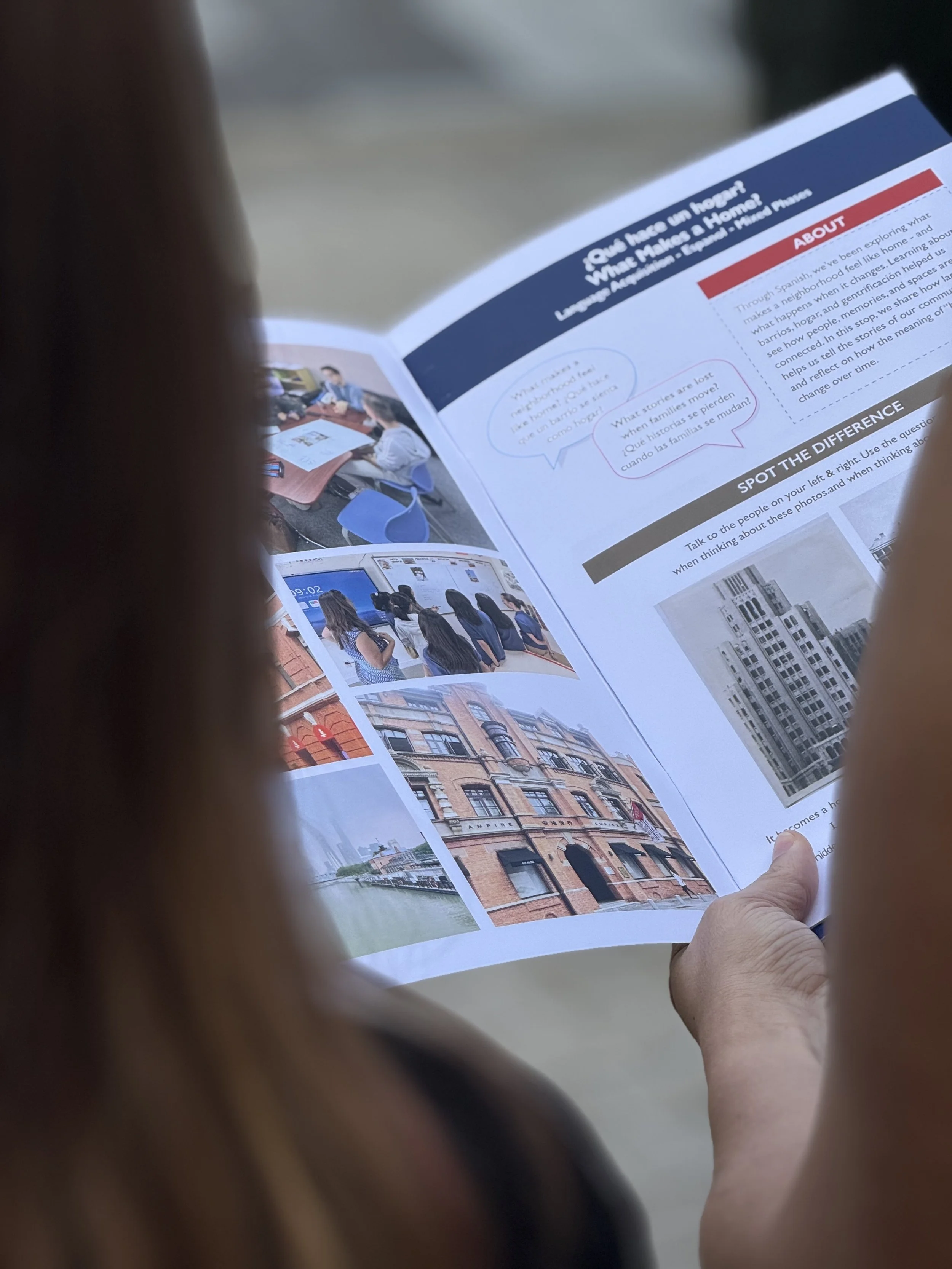
For students, the impact is profound. In the most recent walk, grade 6 students learning vocabulary and concepts about "home" and "neighbourhood" were paired with grade 12 students exploring gentrification and displacement. Standing together in authentic Shanghai neighbourhoods where communities have been displaced and/or where development has substantially reshaped architecture and the nature of urban spaces, the students led learning experiences with parents and community members, creating intergenerational dialogue about what home means.
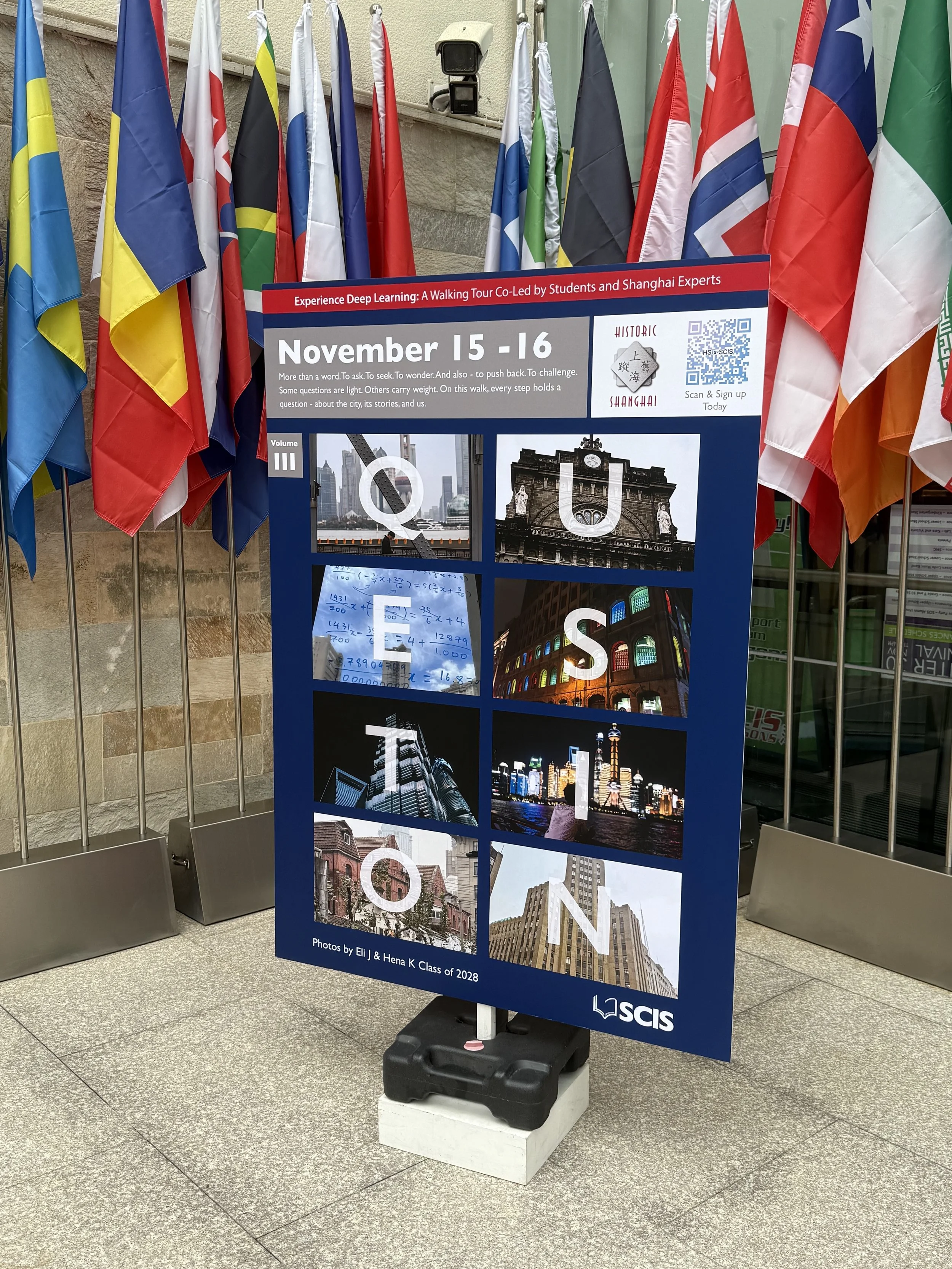
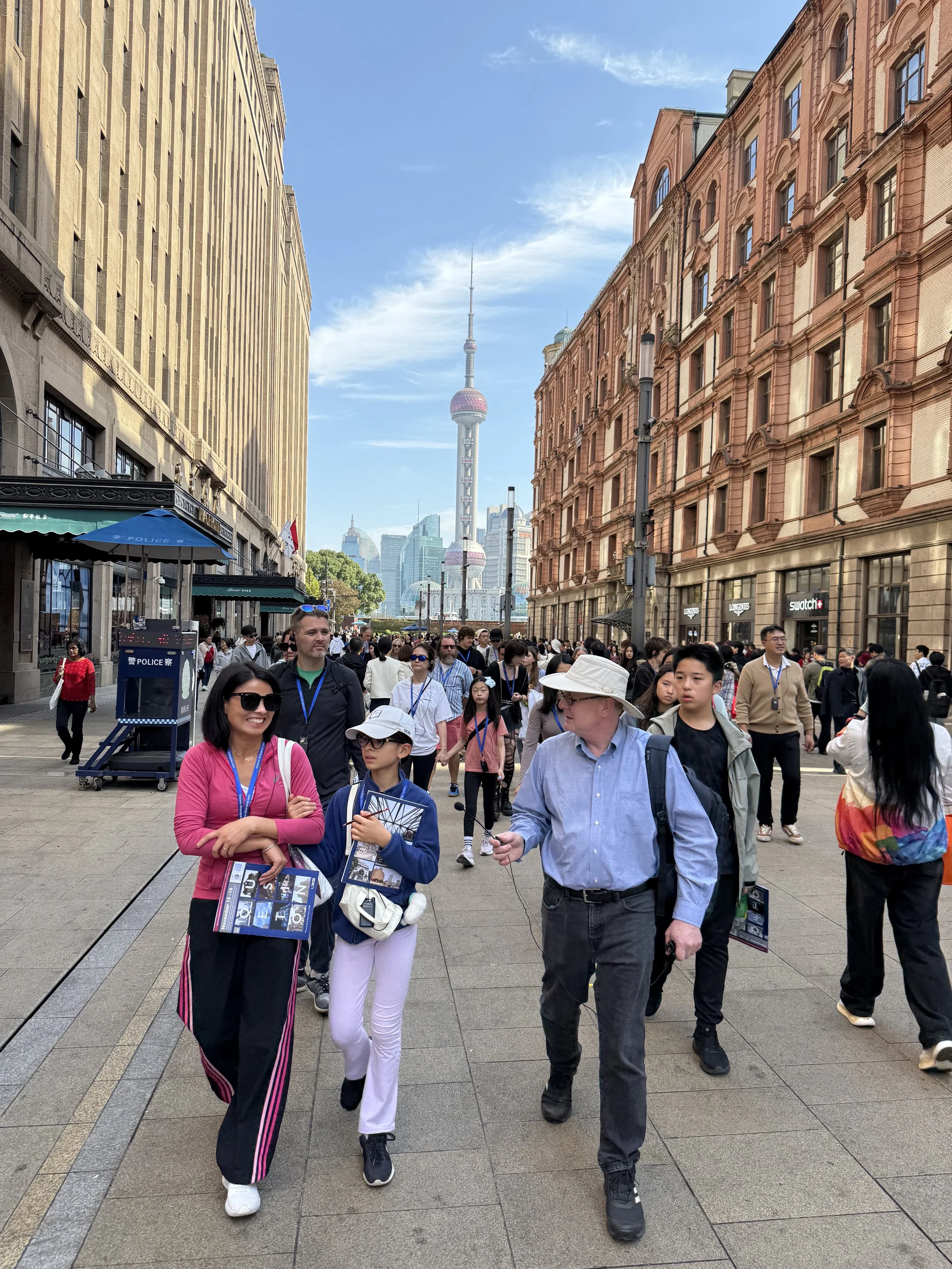
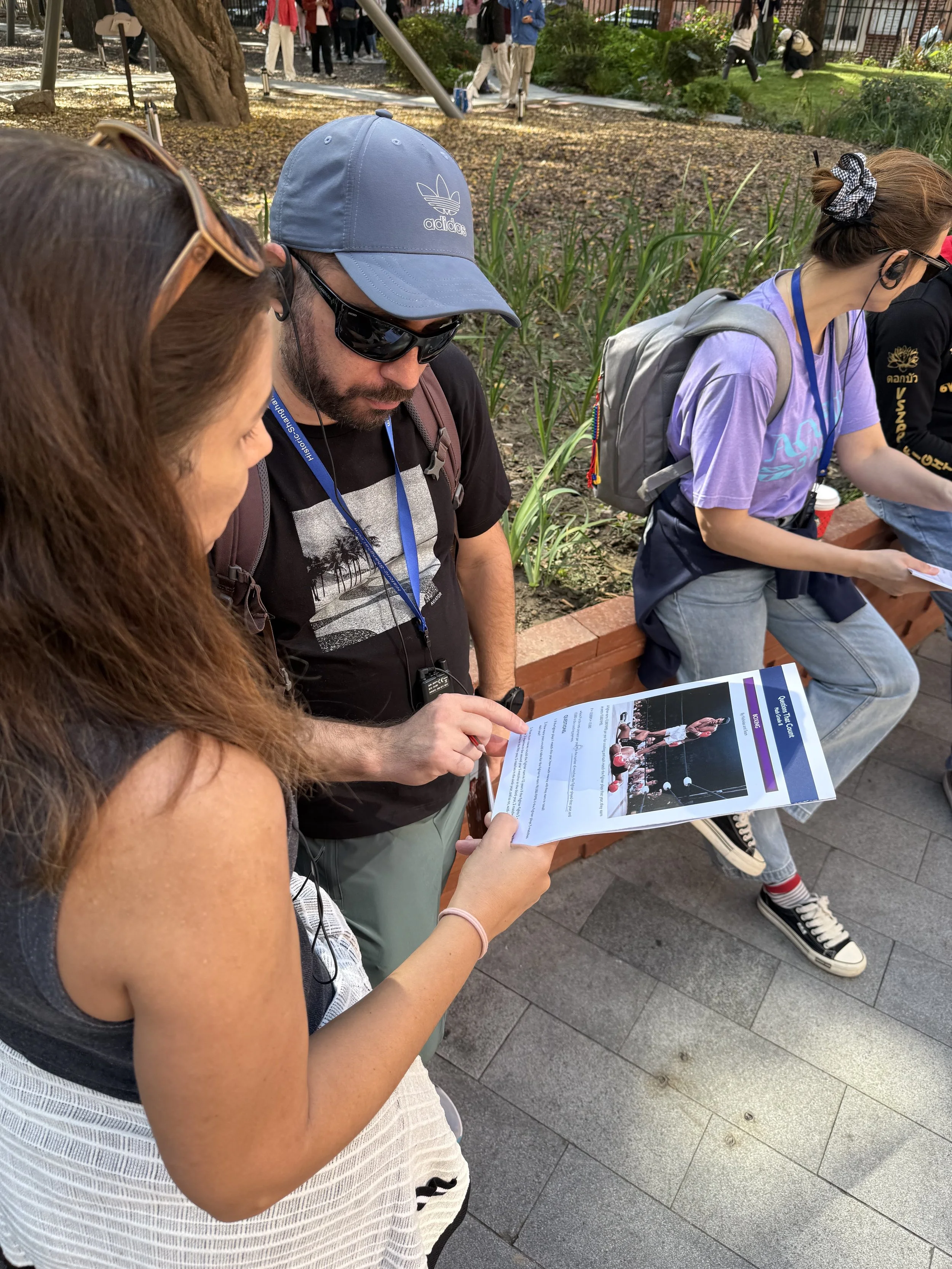
Photos from the November 2025 SCIS/Historic Shanghai community walk.
The Co-Design Process
The logistics aren't always easy, and Haakon is refreshingly honest about this. School schedules, coordination across departments, and the challenge of involving multiple classes require careful planning. Here's how the process typically unfolds:
Curriculum Mapping: Haakon shares relevant curriculum with Patrick and Tina, who suggest potential walking routes that align with what students are learning.
Introduction Session: All participating students meet Patrick and Tina for a broad introduction to their work.
Student Selection: From the larger group (often 180+ students across classes), about 20 students volunteer to become walk leaders.
Co-Teaching: Haakon co-teaches with classroom teachers, integrating preparation for the experiential learning walk into existing units.
Deep Dive Sessions: Student leaders have three or four additional sessions with Patrick and Tina to co-design specific stops and activities on the walk.
Interactive Elements: Over time, the walks have evolved beyond stops where students make simple presentations. Math students now create equation-based activities for participants. Grade 5 students design interactive sticker book activities. Parents and students work together during stops, learning simultaneously.
The walks now happen twice per weekend, and these weekends happen twice per year; about 10-12 student leaders and 25-30 participants are involved in each community walk.
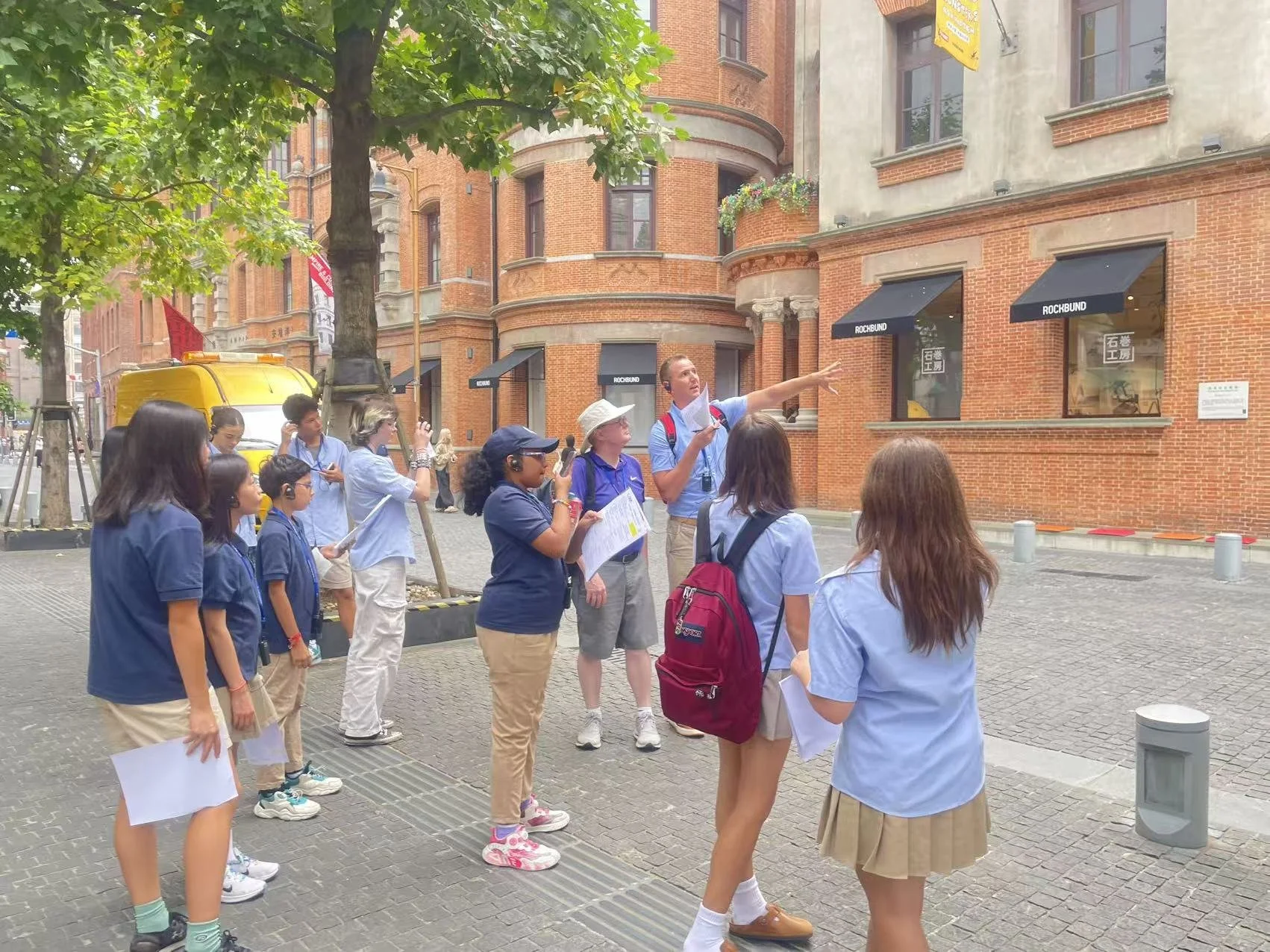
Haakon (back, right), Patrick from Historic Shanghai (on Haakon’s left) and students at a stop on the November walk.
The Ripple Effects
Perhaps most exciting are the unexpected outcomes of this meaningful partnership. When grade 9 media students created documentaries about local organizations before their Historic Shanghai walk (featuring a café employing people with intellectual disabilities, an urban apiary, and MustardTEK, a champion of accessible design in Shanghai), something remarkable happened.
"The students shared how the filmmaking process impacted them, and parents were moved by the human connection," Haakon explains. "But then these partnerships spread. Now our DP (Diploma Program) Design class works with MustardTEK. It all started from a grade 9 documentary made in the grade 9 Design class."
This is sustainability in action, not because the evolution of curricular connections and partnership possibilities was meticulously planned, but because authentic student engagement created momentum that inspired teachers and peers.
Check out the student documentary about MustardTEK directly below.
Beyond History Lessons
For many SCIS students, these walks transform how they see Shanghai. Whether it's home for one year or many, the city becomes layered with stories, connections, and deeper understanding. Parents gain insight into their children's learning while discovering their own city anew. And Patrick and Tina continue evolving their practice, learning how to engage younger audiences and reshape their traditional walks.
"Anyone who feels they can take that learning leap can get involved," Haakon says. "It's been a nice way to get a different group of teachers involved each term."
That openness, combined with the natural interdisciplinary connections that emerge when you anchor learning in a meaningful sense of place, makes this partnership a model worth exploring. It's not about layering community engagement onto existing curriculum; rather, it’s about discovering the connections that already exist when we step outside our classroom walls and into our communities.
Check out the detailed booklets from the SCIS/Historic Shanghai walk in November 2025 and Spring 2025. The booklets include the theme of the walk, as well as learning experiences designed and led by SCIS students during each experience. Through the booklets, you get a real sense of the curricular and interdisciplinary connections and learning that are the foundation of this community partnership.
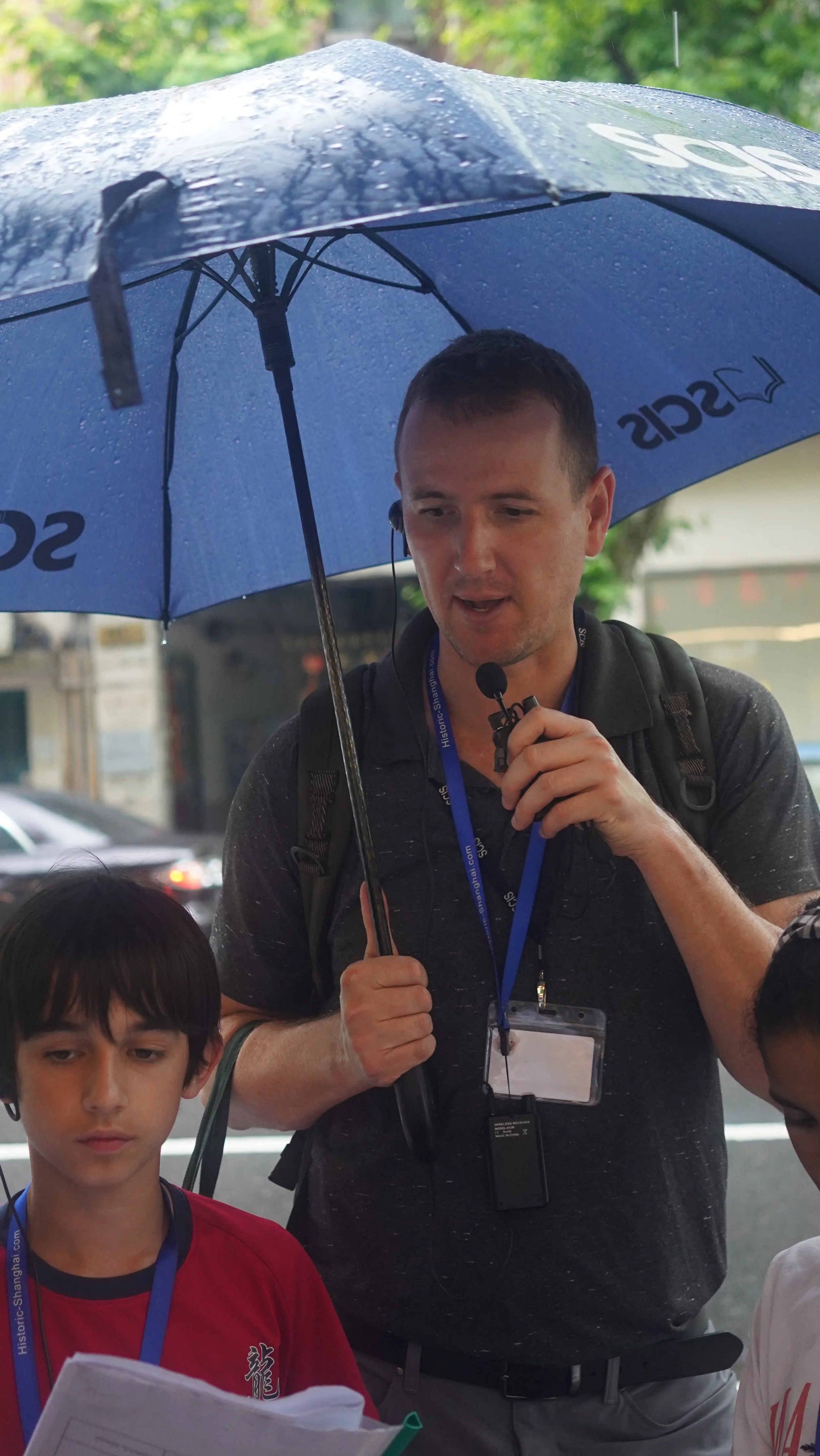
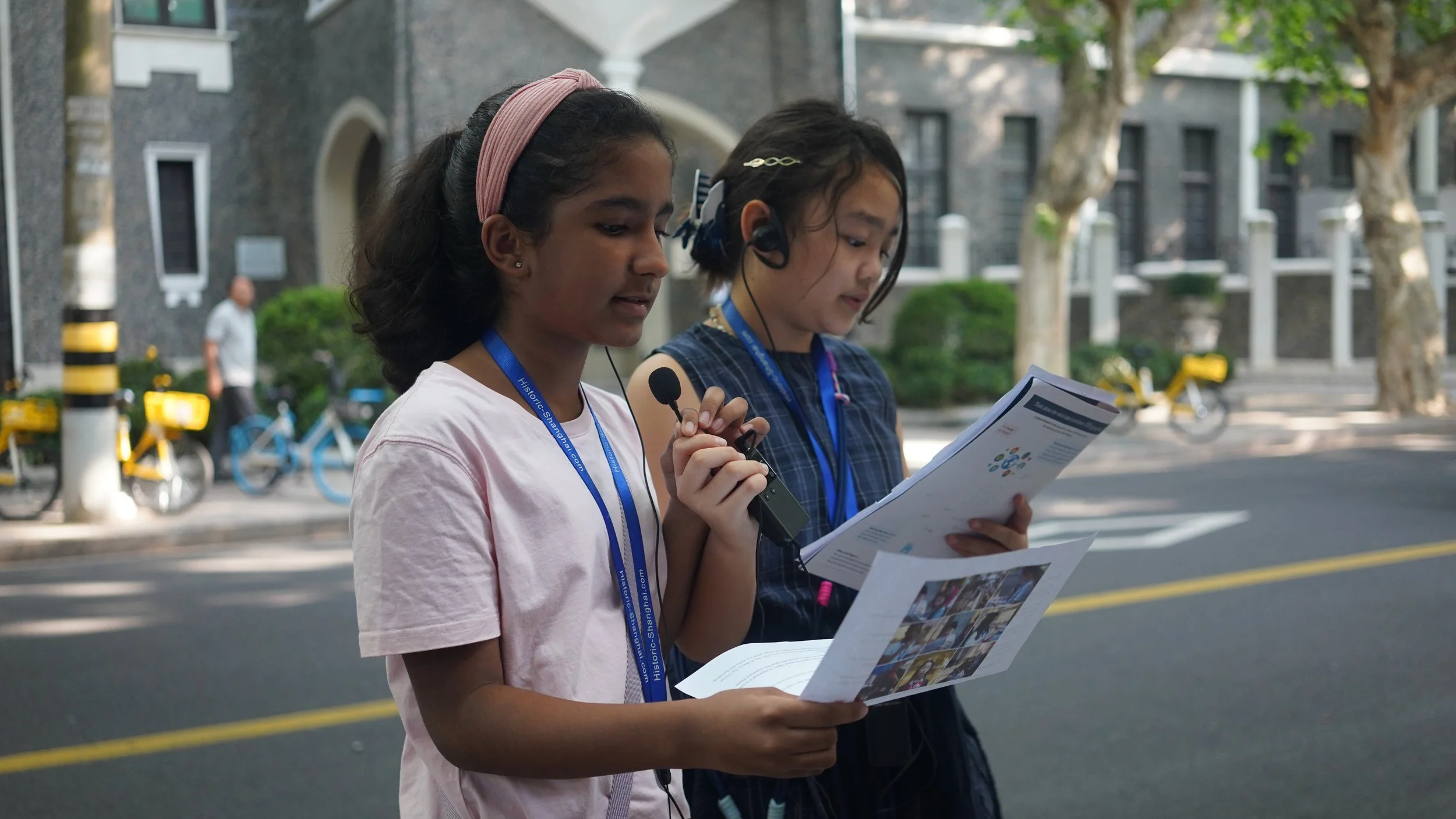
Below: More photos from the November walk rooted in the word “Question”.
Please enjoy highlights from my interview with Haakon about the power of this deeply reciprocal community partnership between SCIS and Historic Shanghai.