Resources to support your work as an impactful community engagement educator
I have created these resources for you to use in your classroom or program, and I hope they are useful and positive. Thank you for giving credit to me when you use these resources, and I’d love to hear about how they support your ongoing work.
For Planning Curriculum, Assessments & Learning Experiences
Use these resources as you redesign units, assessments, or learning experiences.
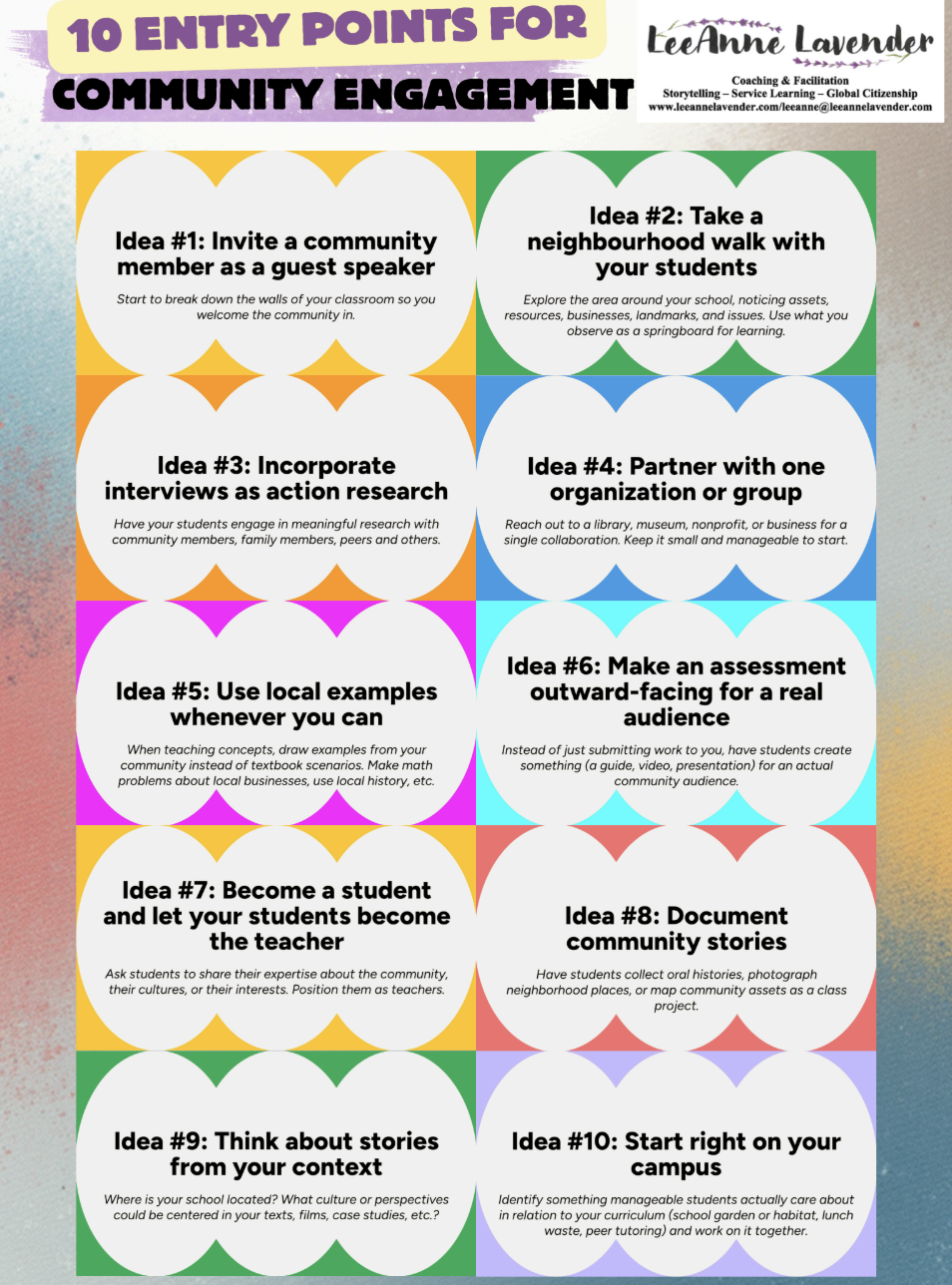
10 Entry Points for Community Engagement
Starting points for community engagement to connect your curriculum to varied components of your local and global communities.
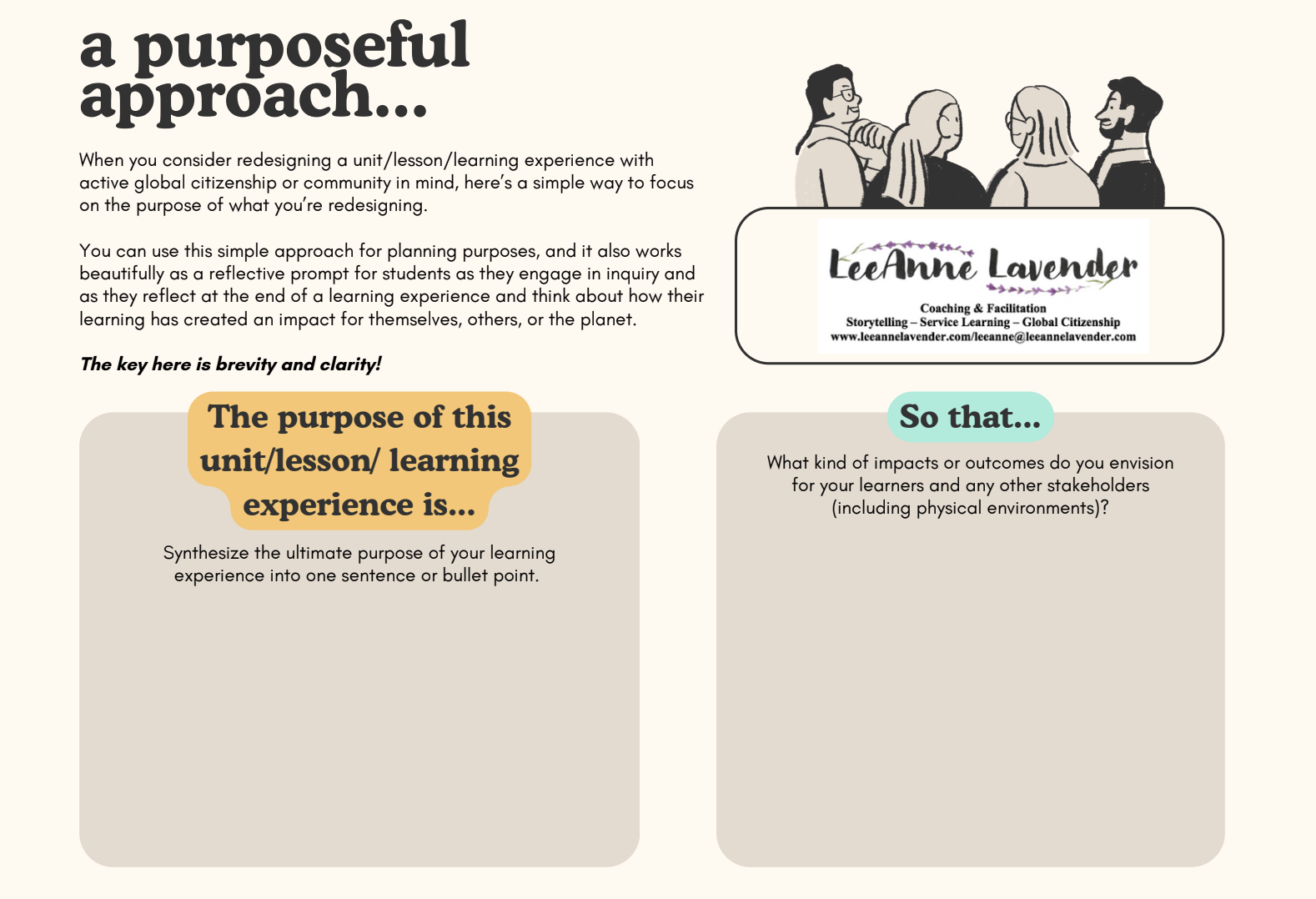
A Purposeful Approach
This template will clarify your purpose for a unit, assessment or learning experience.
Posters: Stages of Service Learning/Community Engagement & Reflection Questions
3 Simple Posters to help plan inquiry, planning, action, and reflection in your units or assessments.
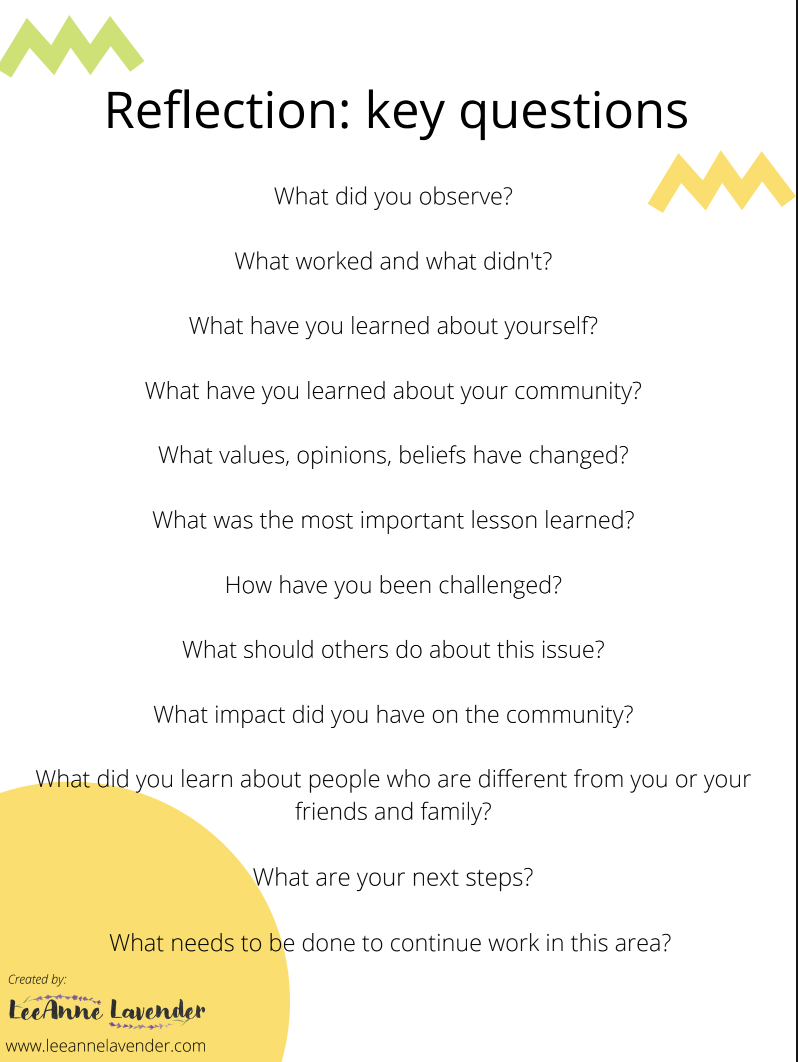
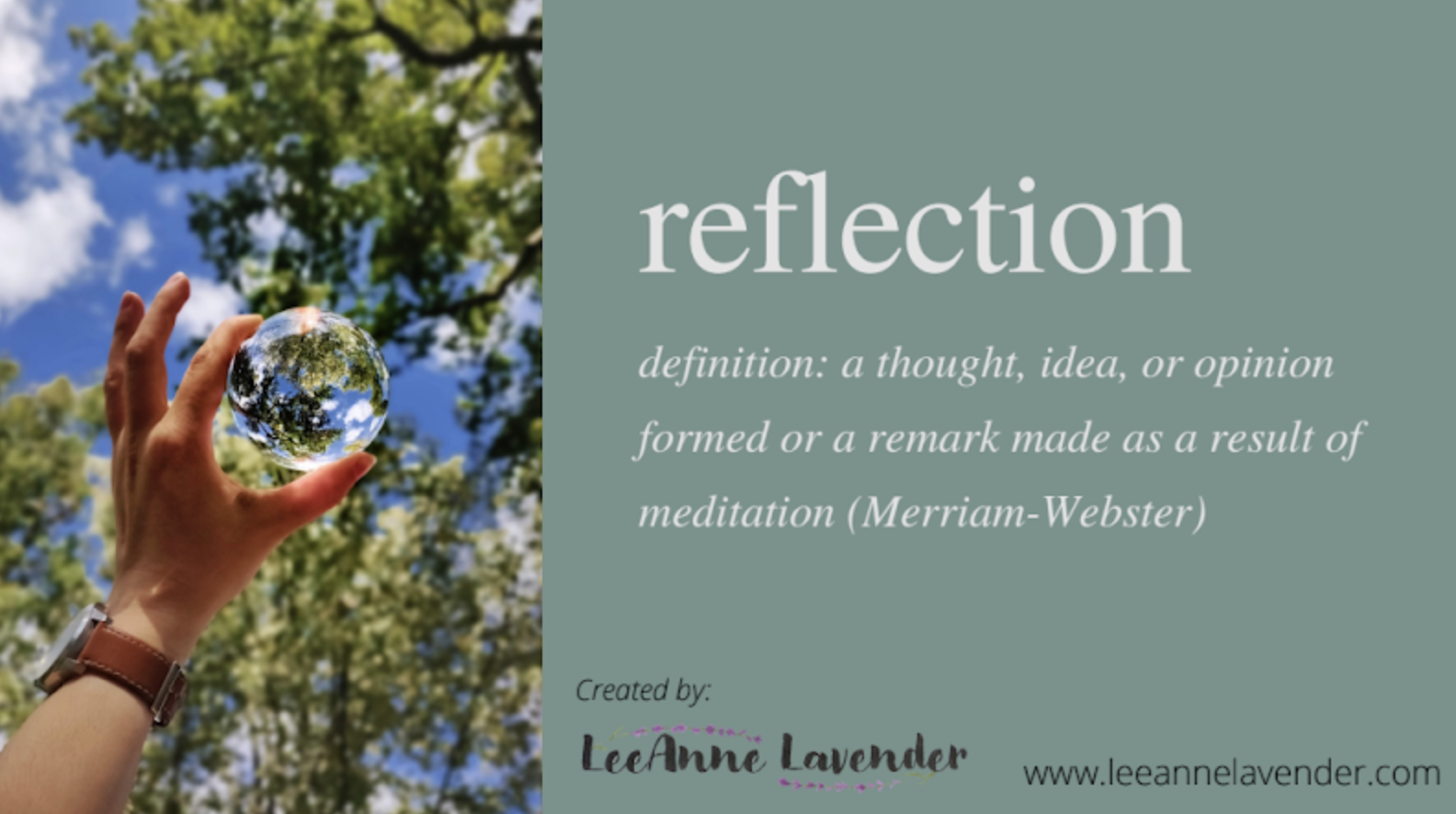
Reflection Guide
We all know that meaningful reflection is essential to deep learning and growth (personal and collective). In this guide, you’ll find ideas and examples for designing reflection that is engaging, meaningful, and relevant for all learners, and for a variety of learning styles/approaches.
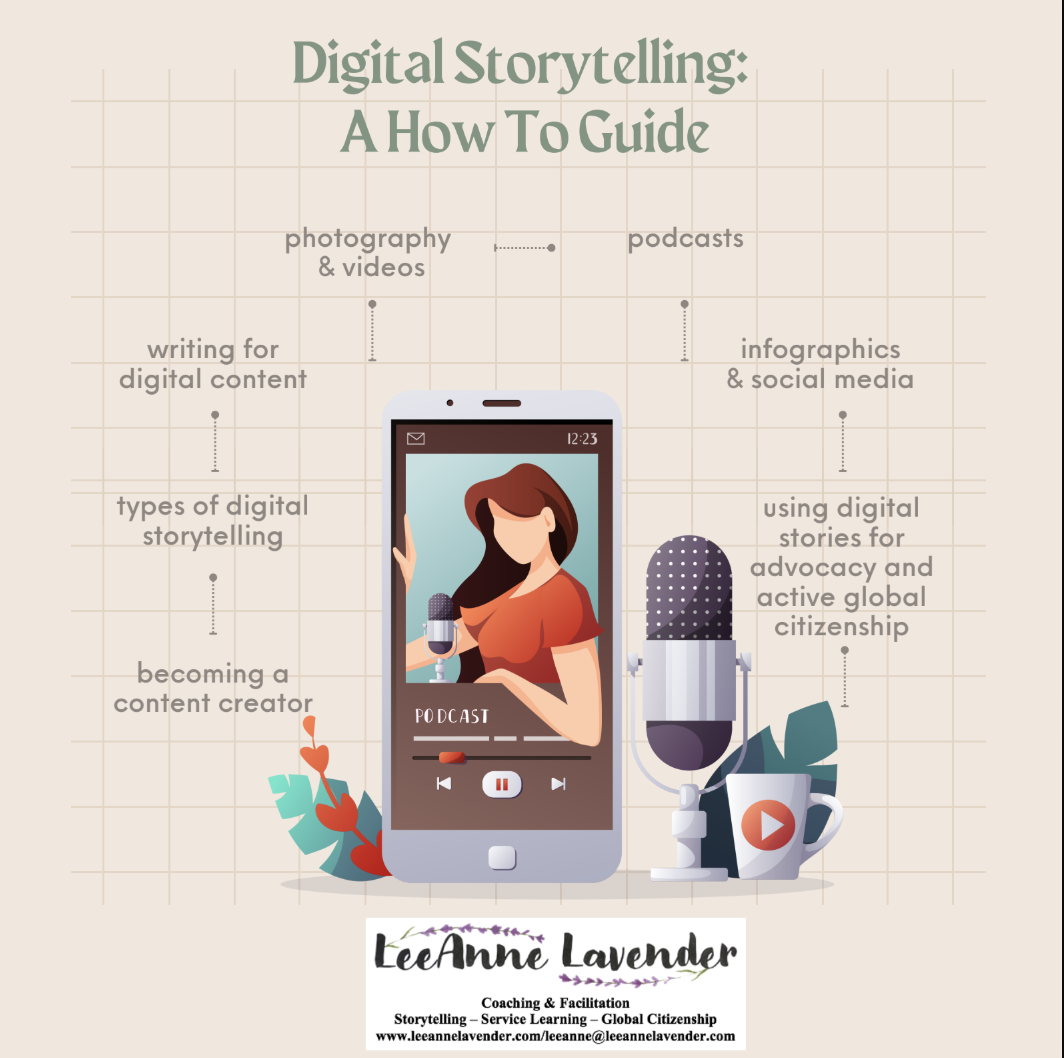
Digital Storytelling Guide for Educators
A detailed guide to embedding purposeful digital storytelling for citizenship and positive community impacts into your units, assessments, and learning experiences.
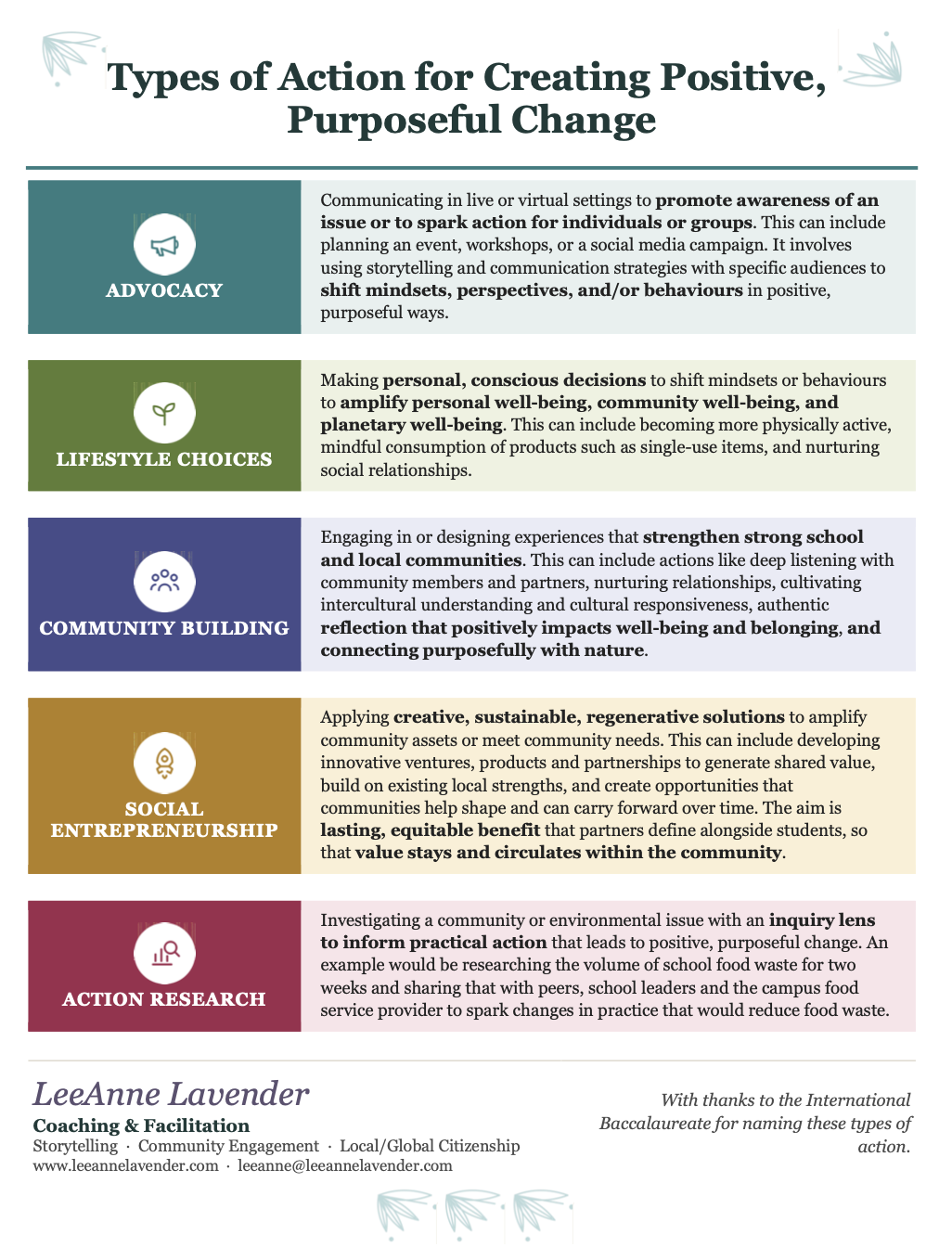
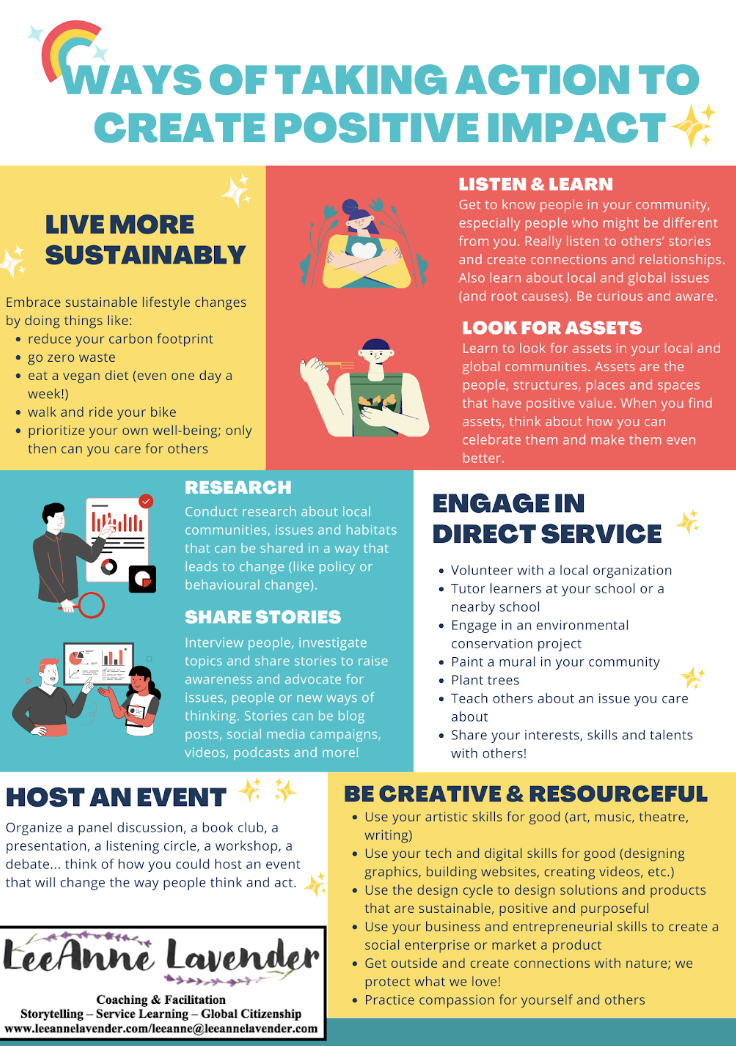
Types of Action: How to Ideate with Students about Taking Action to Create Positive, Purposeful Change
Educators and students can use this poster to ideate ways to take authentic, informed, thoughtful, and purposeful action.
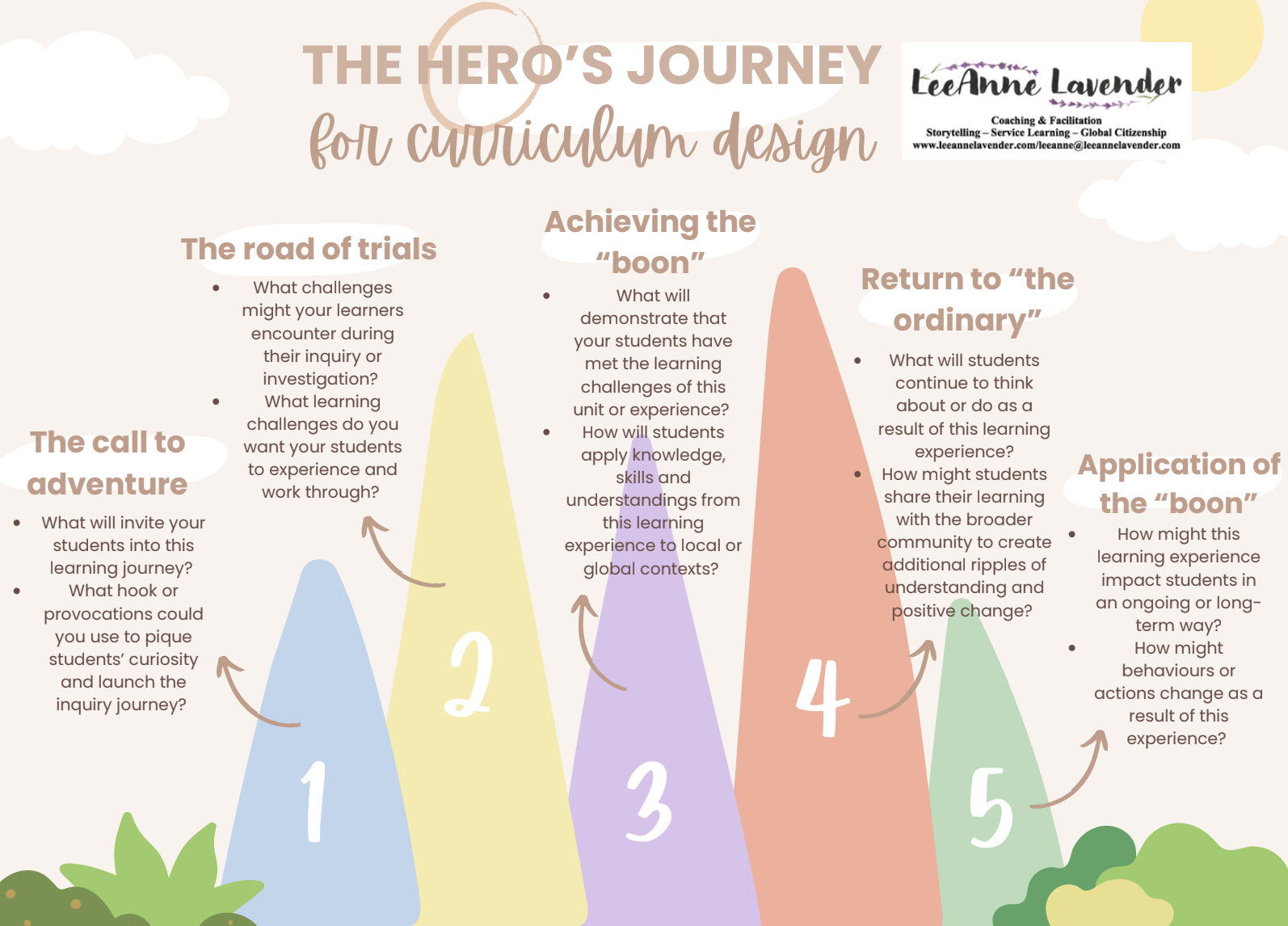
Planning with the Hero’s Journey in Mind
Harness the universal power of the Hero’s Journey to plan a unit with deep learning and meaningful impacts in mind. This is a powerful way to reconsider the “WHY” of your unit and how to anchor it in applied learning that transfers students’ knowledge and skills to tangible local and global contexts.
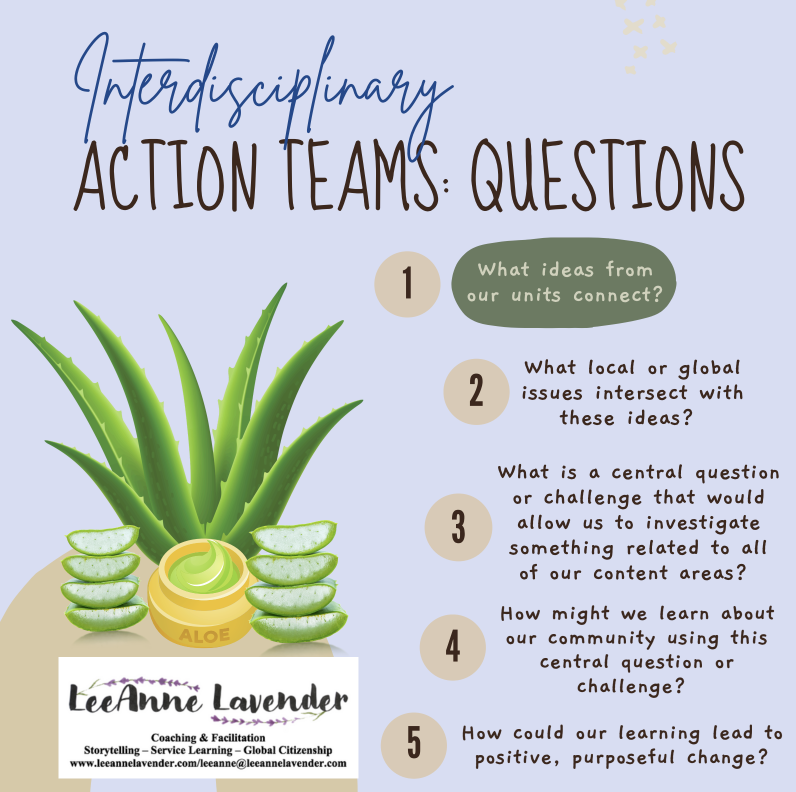
Interdisciplinary Planning: Approaches to Embed Community Engagement
Interdisciplinary learning is a powerful way to support students in making connections, applying learning in experiential and relevant ways, and thinking about issues in local/global contexts that matter. Use these questions to guide you and your teams as you plan interdisciplinary experiences with learning transfer, deep learning, and community impacts in mind.
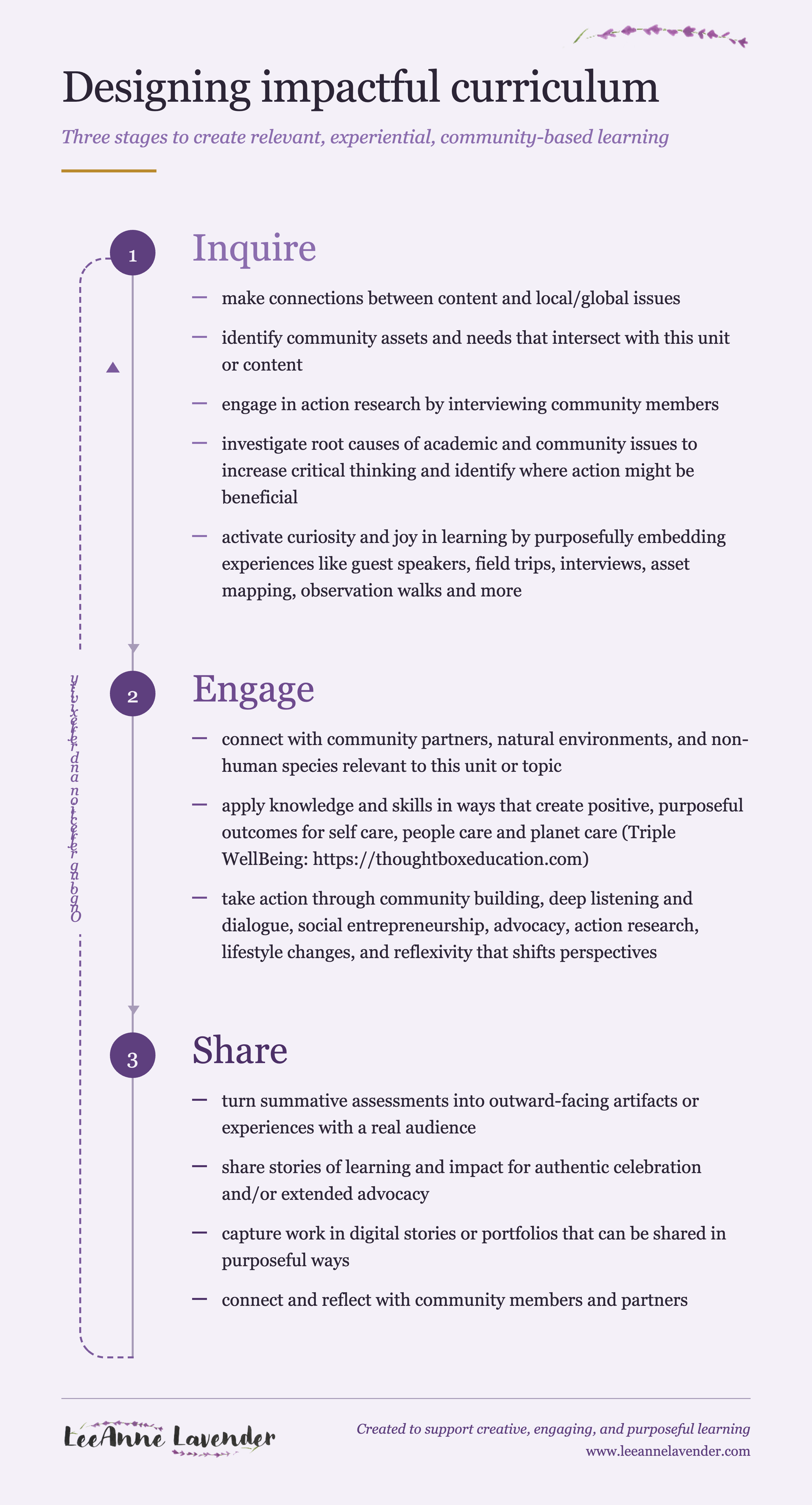
Inquire, Engage, Share: a 3-part framework for designing impactful curriculum rooted in community engagement
This three-part cycle can be used to design and reframe curriculum and assessment with a process-driven community engagement approach. Use this as you plan and sketch out your unit with these stages in mind. Magic will ensue! :)
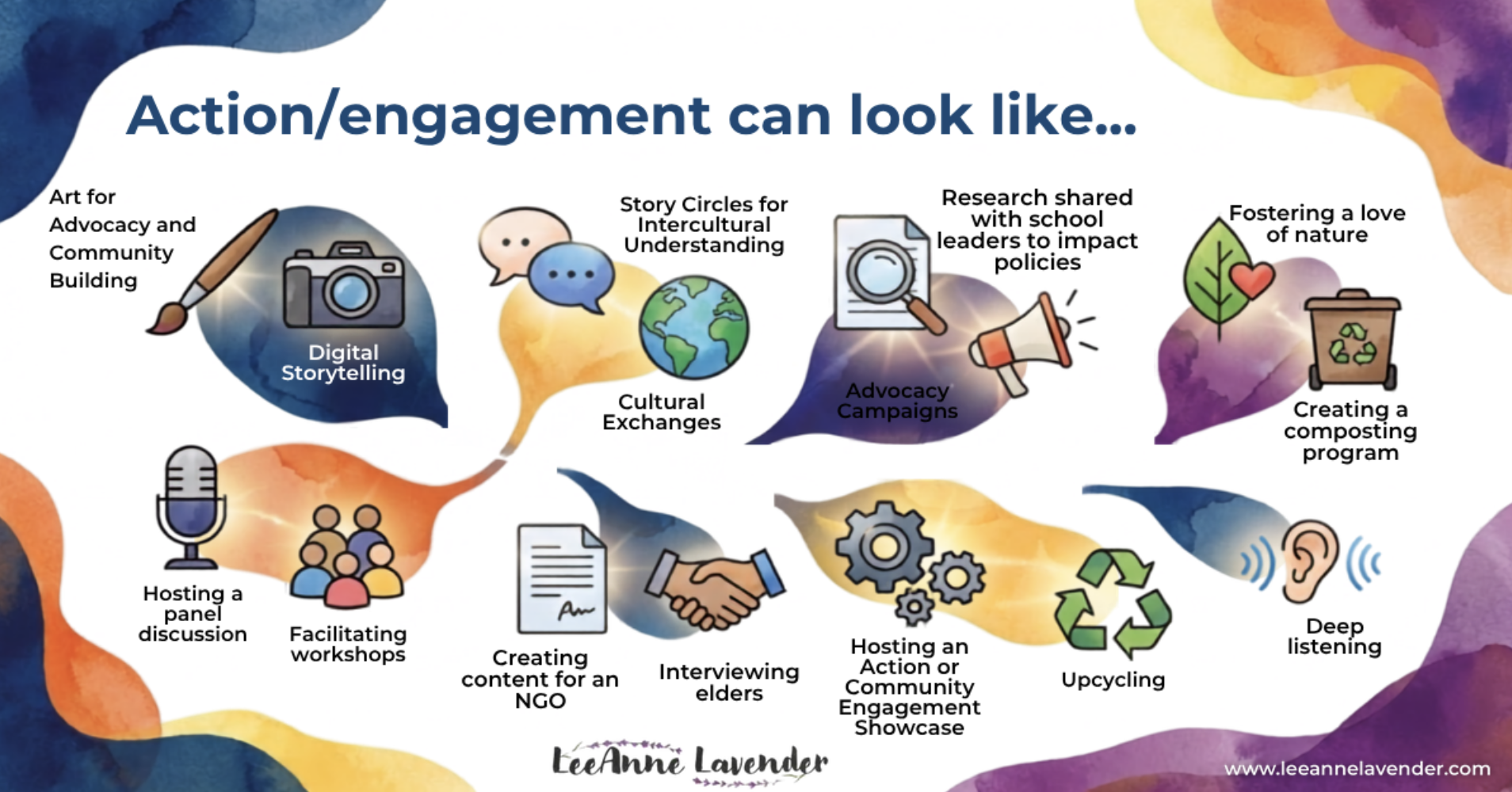
What Action & Engagement Can Look Like
Use this poster or graphic organizer to inspire your students to think about varied types/forms of action, and use it for curriculum planning to ideate how your assessments might incorporate meaningful and impactful action rooted in the knowledge and skills of your unit in the context of your community’s assets and needs. The ideas in this poster are a starting point, as the sky’s the limit for designing impactful action and community engagement that is suited to your curriculum, your students’ interests, skills and talents, and your community and context.
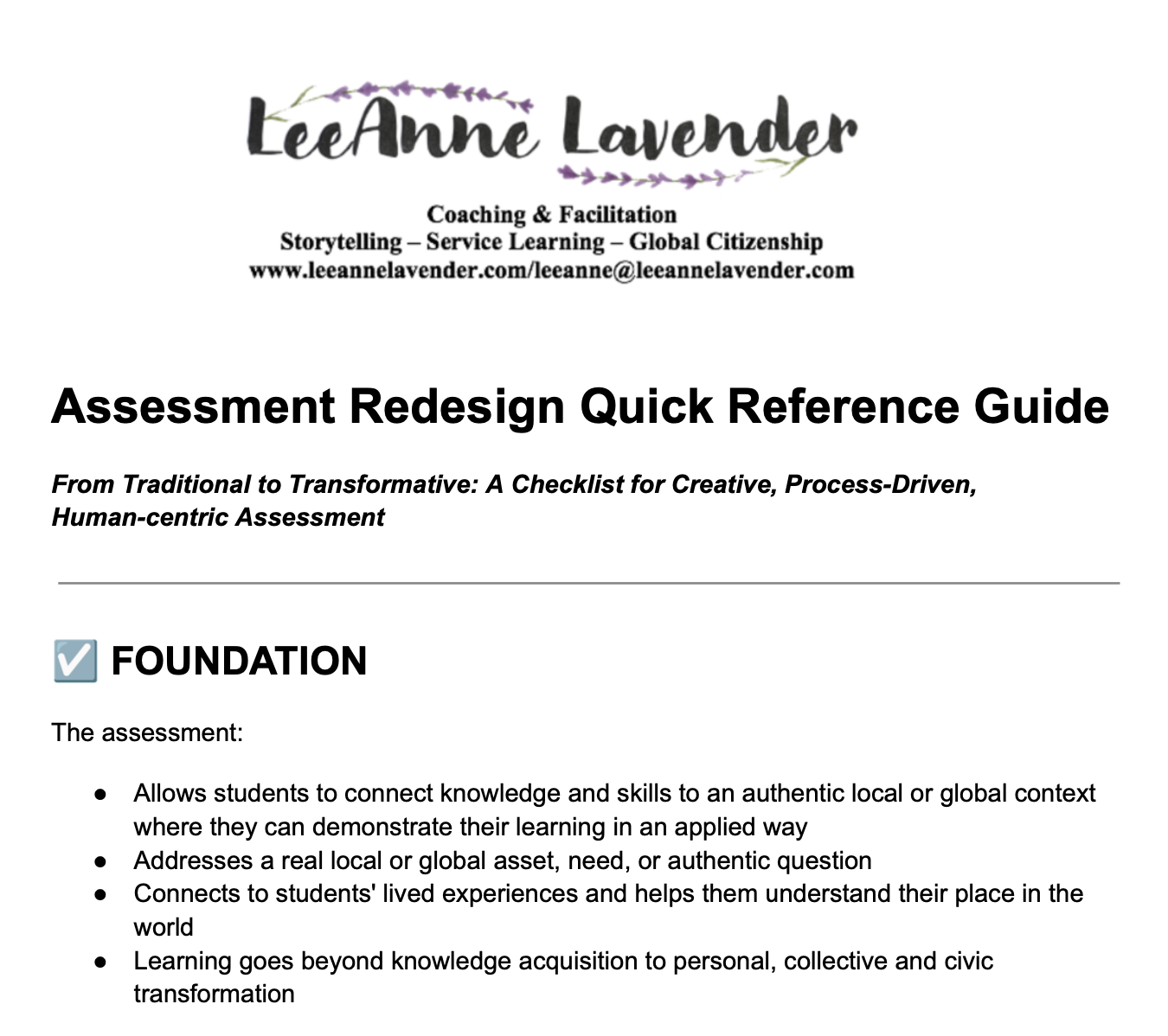
A Guide to Redesigning Assessments that are Process-Driven, Authentic, Meaningful, Relevant and Impactful (yes, all those things!) :)
Use bullet-point lists to guide the design of authentic assessments rooted in deep inquiry, engagement, and reflexivity. The guide features three central questions:
If you removed the grade, would students still find this assessment experience to be meaningful?
Will students remember this for what it meant to them personally, not just for a grade?
Does this feel more like authentic work than a traditional task?
For Storytelling & Deep Impacts in your School Community and Beyond
Storytelling strategies are a powerful foundation for community building, community engagement, and purposeful action. These resources can be used with students in a variety of ways as they plan for action, reflect on community engagement experiences, and embrace self-care, other-care, and planet-care as essential aspects of well-being.
Poster: How to Take Action
This poster can be a useful visual guide for students in your classroom as they plan and engage with a variety of types of action and community partnerships.
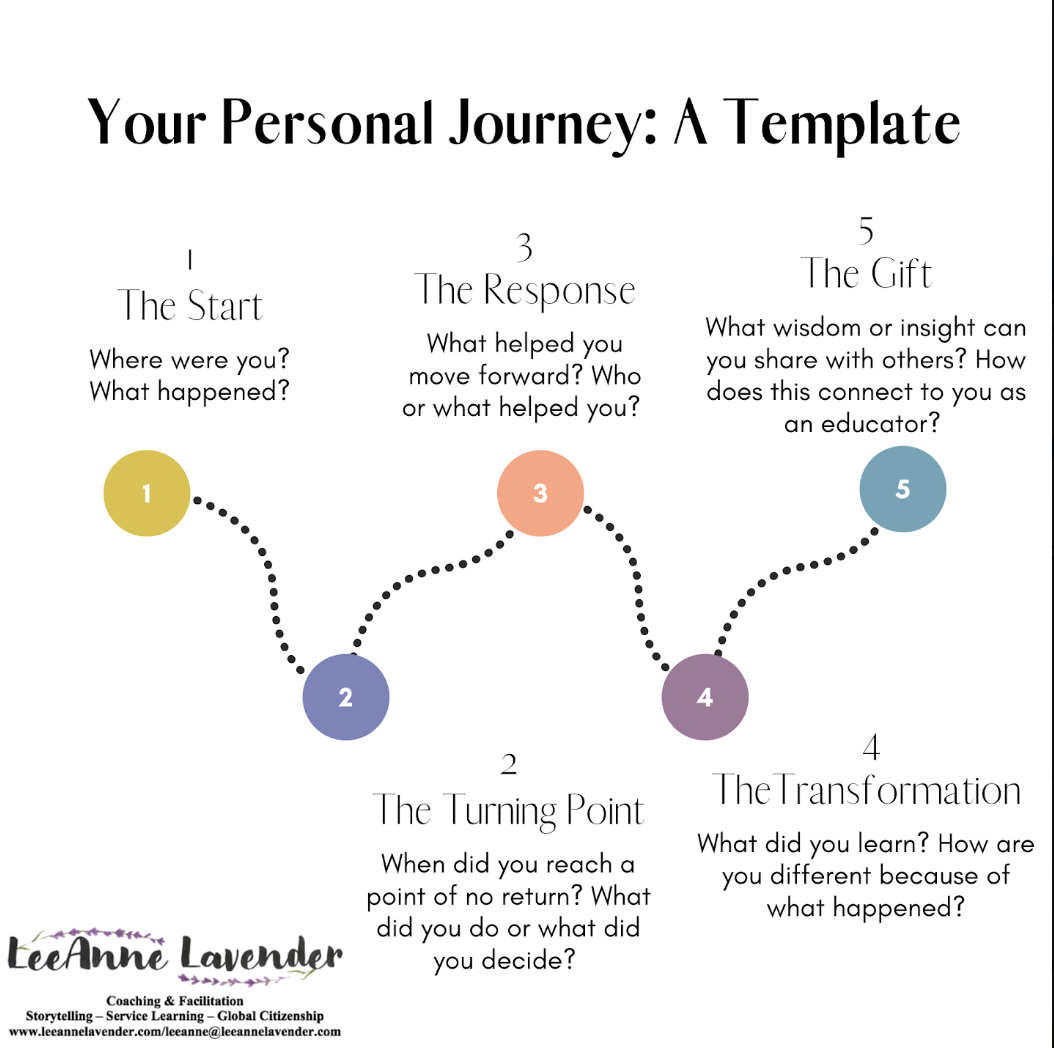
Reflection Tool: A Personal Learning Journey
This reflection tool is also anchored in the power of the universal Hero’s Journey. At the end of a unit, or after a community engagement experience, you can use this framework to guide students toward a deeper contextual understanding of what they learned and why it matters.
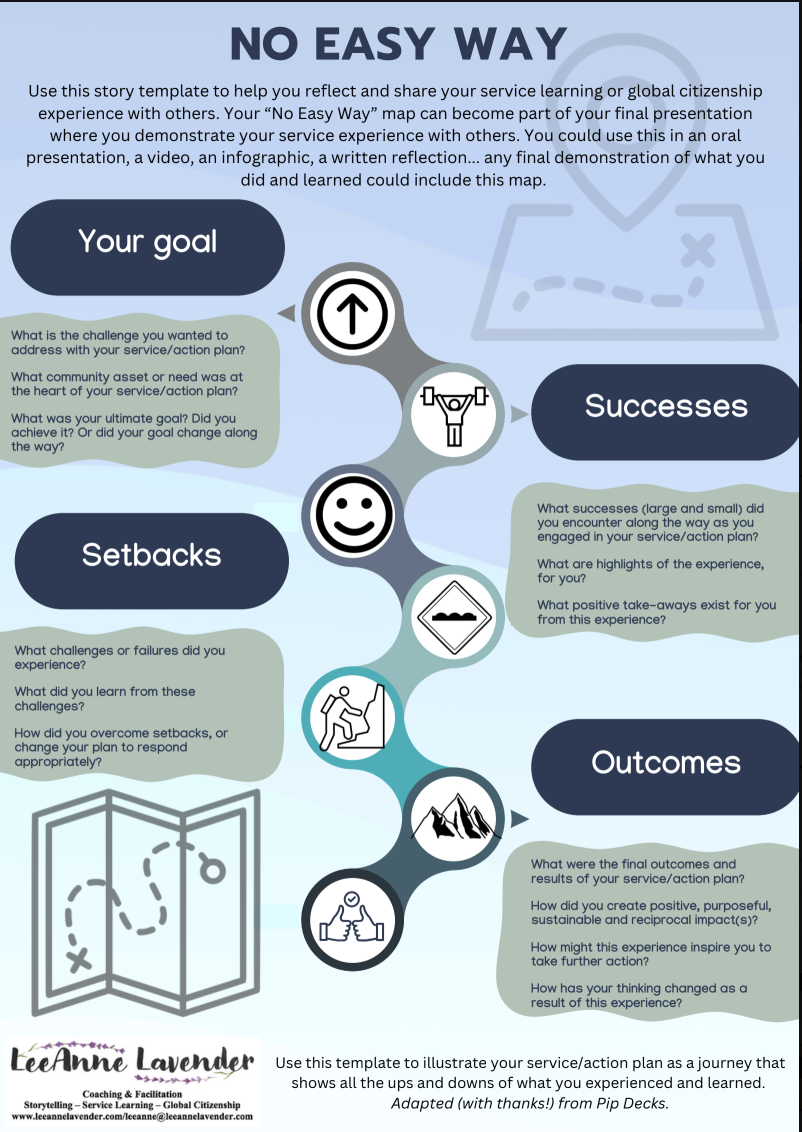
Reflecting on Community Engagement and/or Other Types of Learning: No Easy Way
This is a storytelling tool that can support students in reflecting on their learning journey at the end of a unit or a community engagement experience. It can support students in envisioning their learning as a journey with clear goals, successes, challenges, and outcomes.
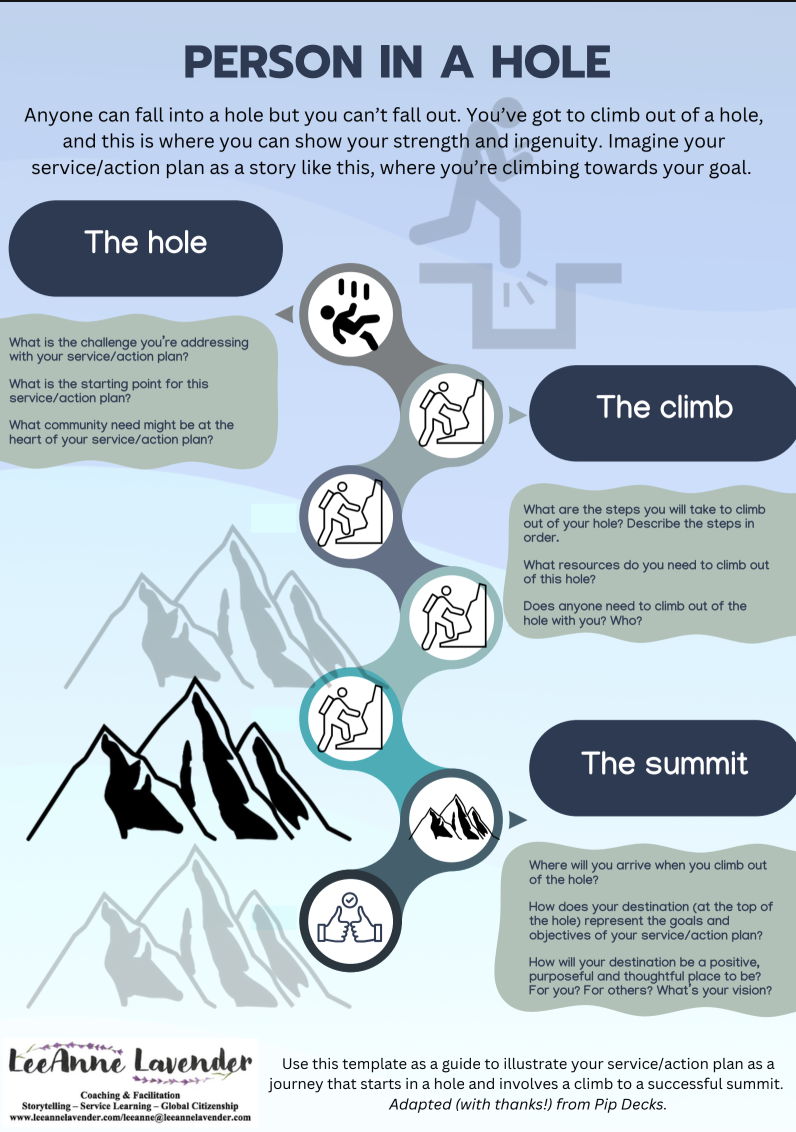
Planning for Community Engagement: Person in a Hole
This storytelling tool is another narrative approach to ideating and planning potential forms of action. Students can use this framework to consider ways they might engage with purposeful action in their school or local communities, and this can be done collaboratively with a community partner.
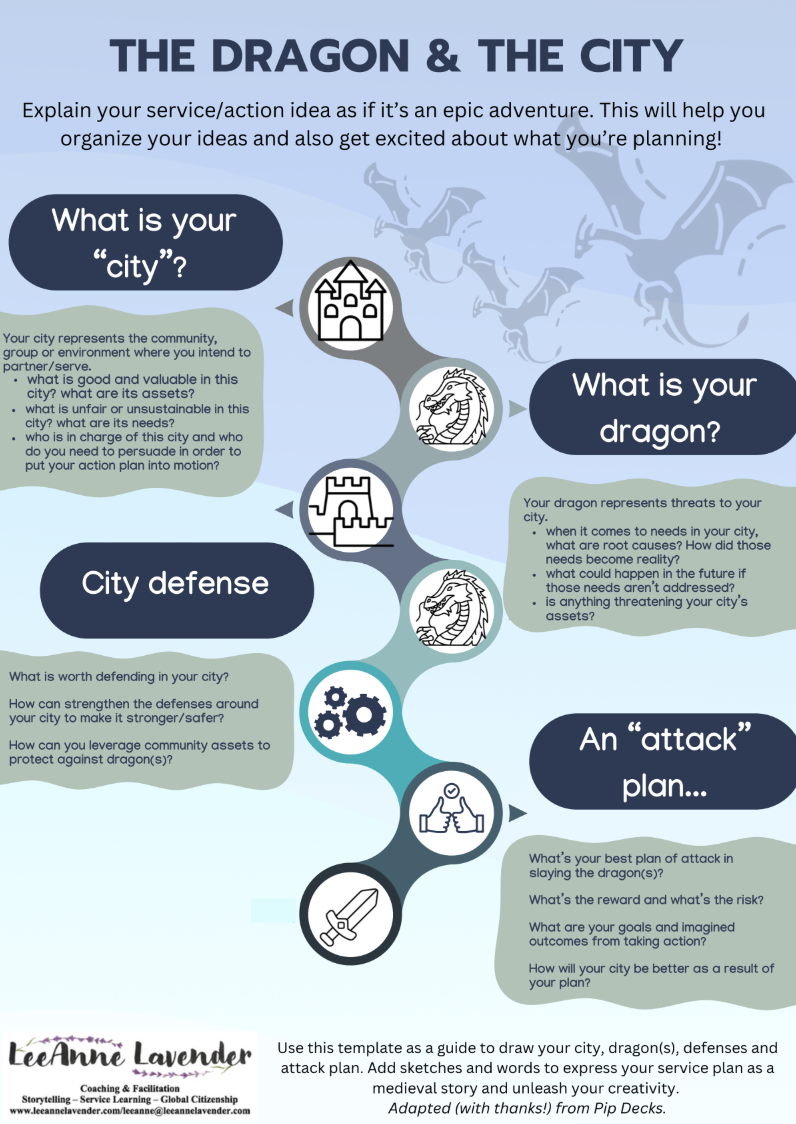
Planning for Community Engagement: Dragon & the City
This is a storytelling tool that uses a medieval dragon and city to help students envision how they might want to take action. Ideally, this ideation would take place with a community partner (if there’s a partner involved). For any culture where dragons are spiritually and symbolically positive, you could replace the dragon in this model with any other idea that would be appropriate.
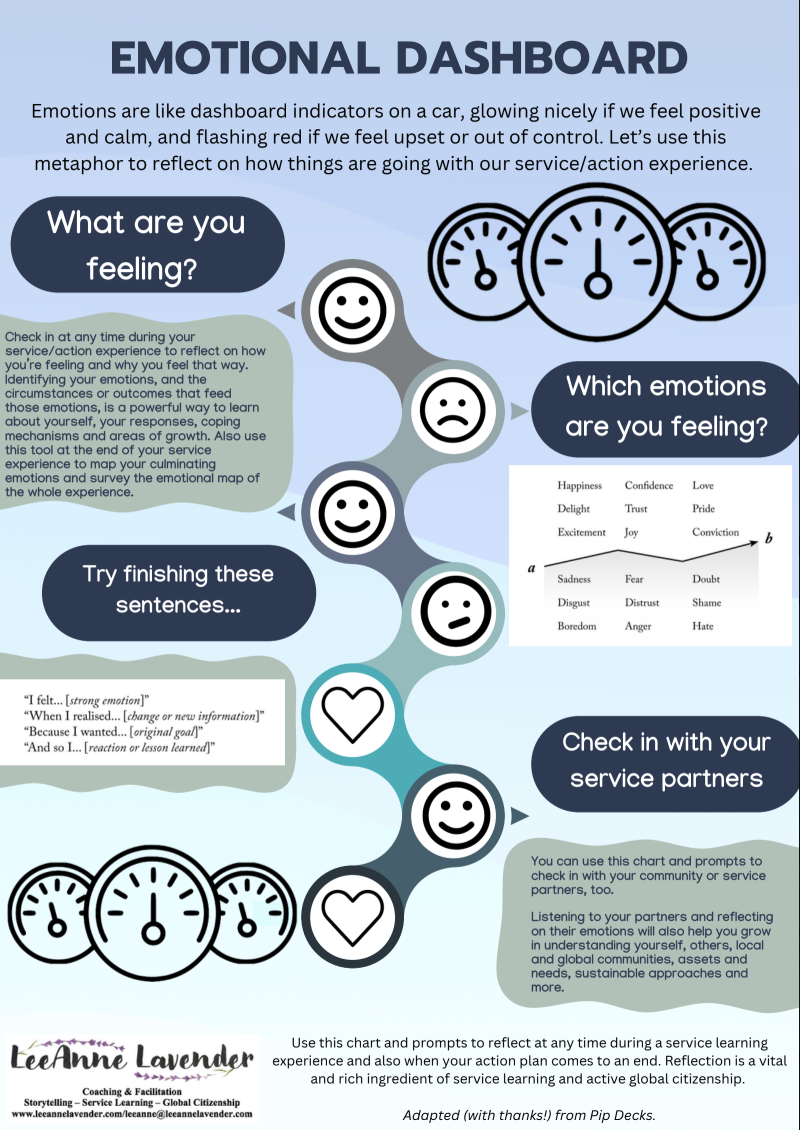
Reflecting on Community Engagement and/or Other Types of Learning: Emotional Dashboard
This is a storytelling tool that can support student reflections during and after a community engagement experience, or at any point during a unit or learning experience. It helps students become aware of how they’re feeling, what those feelings mean in terms of self-care, self-awareness, and personal growth, and how they might be intentional about proceeding positively with learning and engagement.
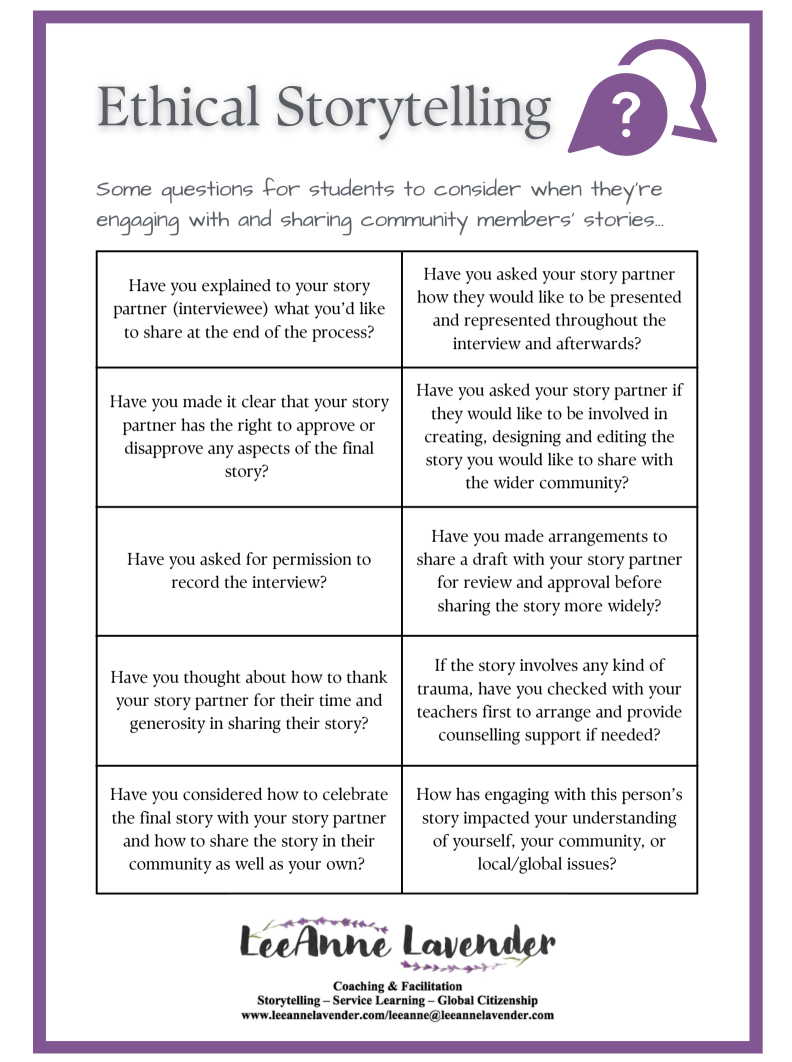
How to Engage in Ethical Storytelling: Key Questions to Consider
Use these questions with students as they interact with community members, gather and share stories, and consider how to hold or carry the stories of others. This is complex work, and the questions in this resource are important to consider at various stages of community engagement experiences that involve deep listening, story curation and the use of stories for advocacy.
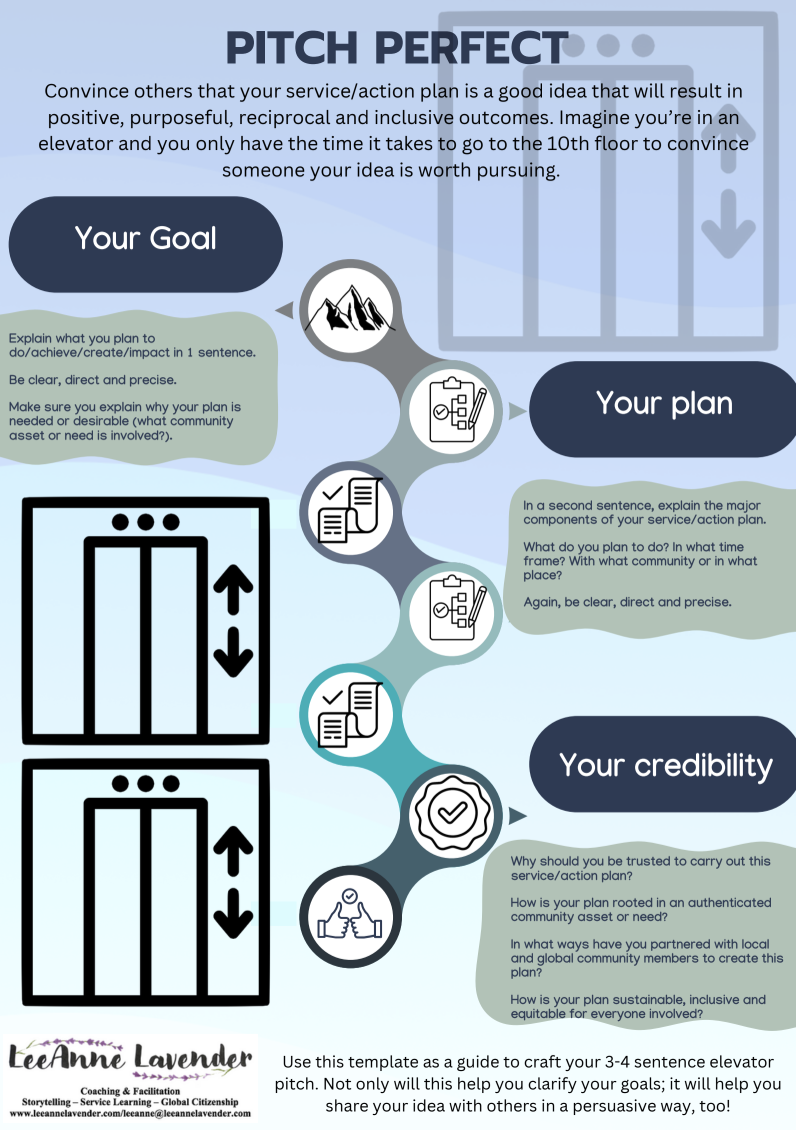
Planning for Community Engagement: Pitch Perfect
This storytelling tool supports students in synthesizing and articulating their community engagement, service, or action plans. Creating a clear and successful elevator pitch distills core ideas and helps students clearly summarize their intentions.
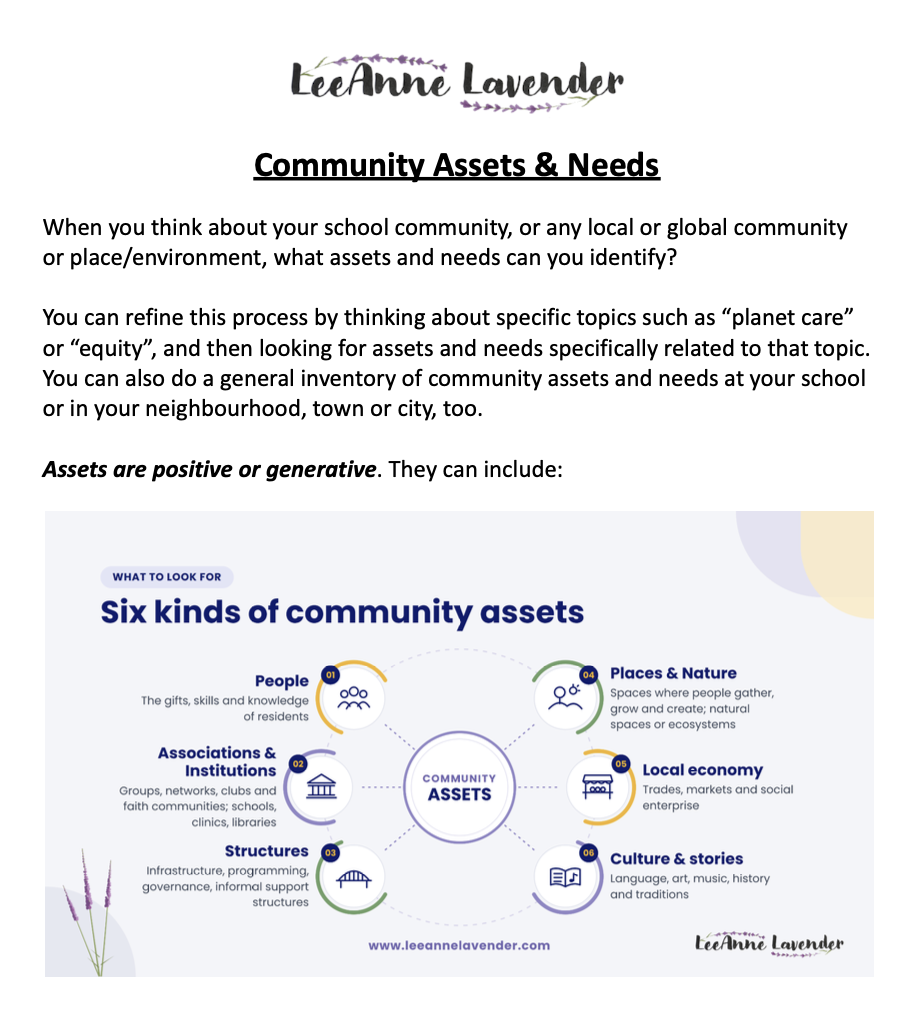
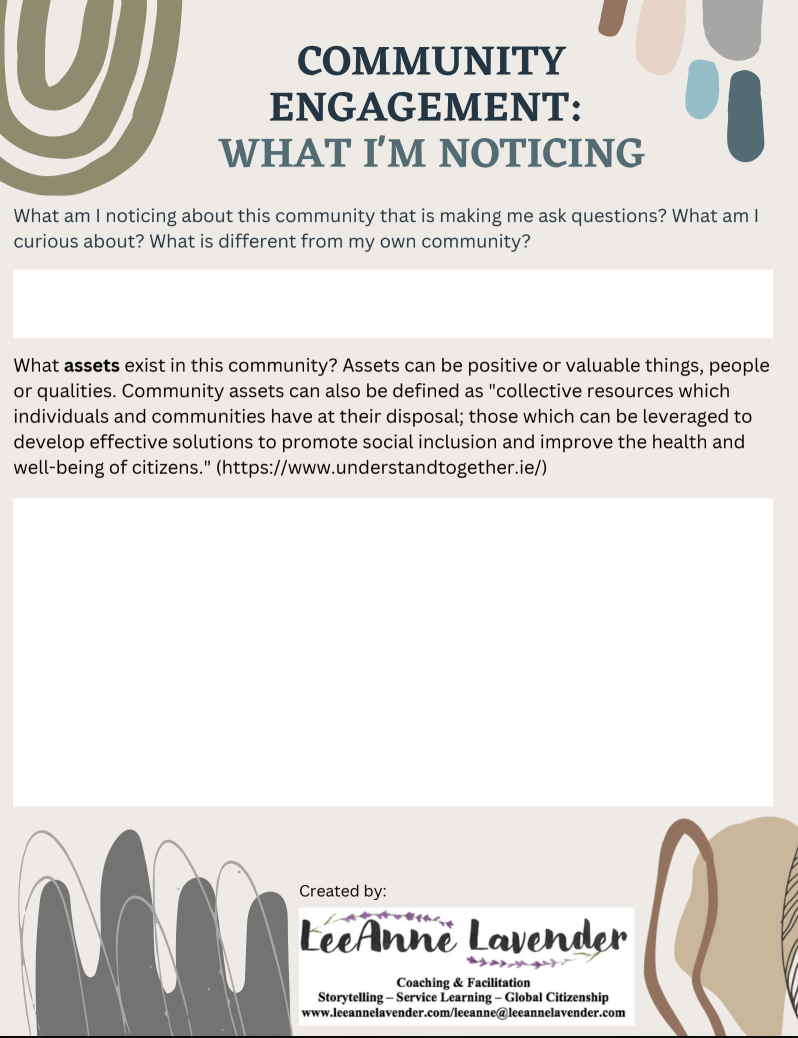
This guide to community assets and needs can be used with students to support reflection, develop critical and open mindsets, consider community stakeholders and stories, and evaluate the root causes of a variety of community issues.
Free course for students and teachers: Creating and Sharing a Digital Story
This free course will guide teachers and students through the process of planning, creating and sharing a digital story, evaluating the authentic audience and desired impacts, as well.
A Guide for Mapping Community Assets and Needs
Please use this 4-page guide to support students in mapping community assets and needs at your school and/or in your local communities (which is often rooted in stories and people). This can be used in relation to specific assets and needs connected to your curriculum, and as a more general tool for considering what is strong and vibrant in your school and in the communities of your partners or in local natural ecosystems and environments. There are many ways to use this impactful guide!
For Authentic Community Engagement & Partnerships
These resources can be used with students, community partners, and varied stakeholders to build strong communities and to engage in authentic relationship-building, intercultural understanding, and reflection (of self, others, and nature).
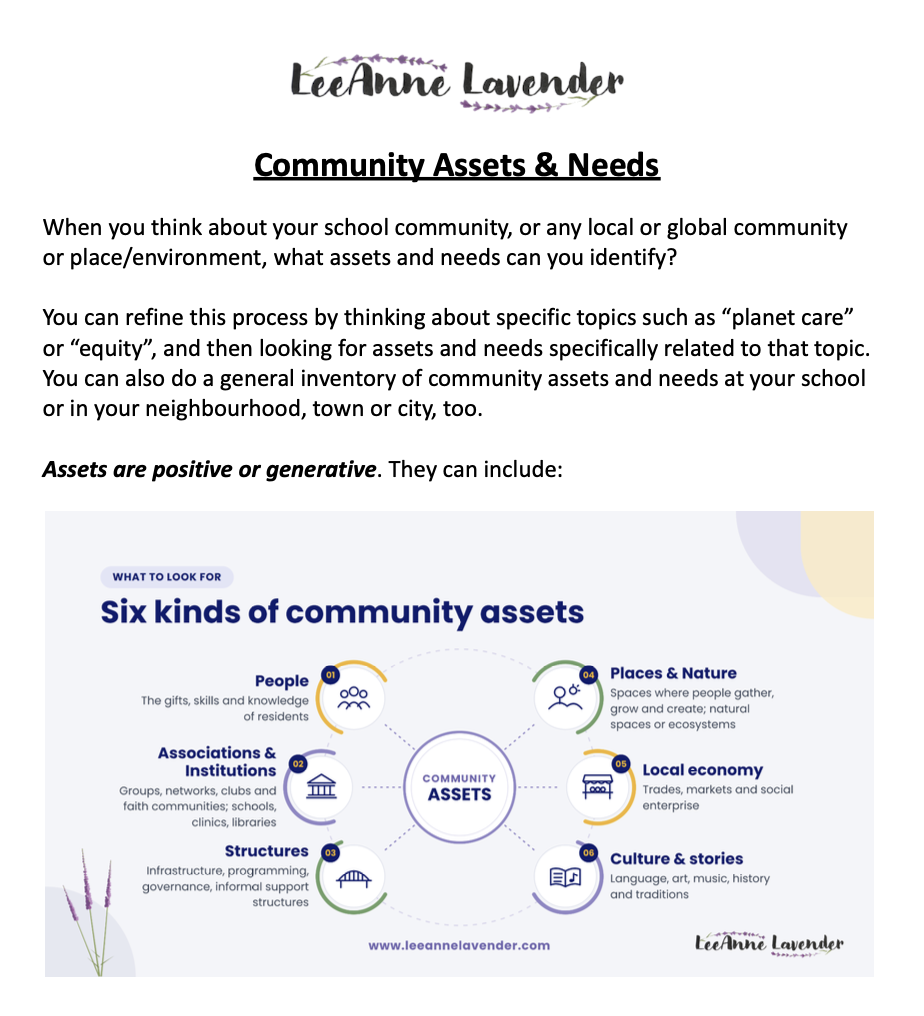
Mapping Community Assets & Needs
Please use this 4-page guide to support students in mapping community assets and needs at your school and/or in your local communities (which is often rooted in stories and people). This can be used in relation to specific assets and needs connected to your curriculum, and as a more general tool for considering what is strong and vibrant in your school and in the communities of your partners or in local natural ecosystems and environments. There are many ways to use this impactful guide!
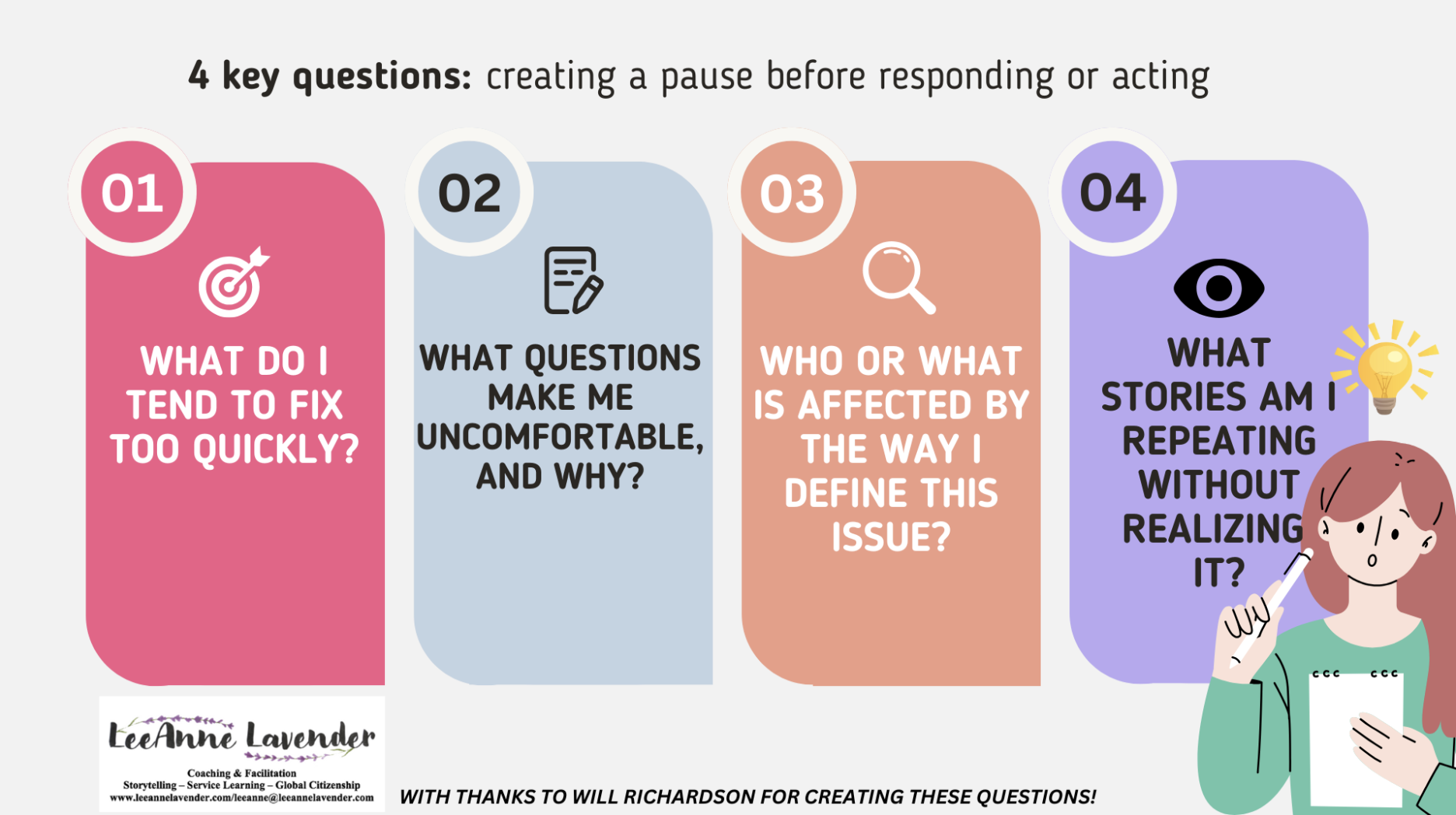
Key Questions: Pause Before Taking Thoughtful Action
These four questions are important to consider while planning action or community engagement, and can be used in collaboration with community partners or with students before they engage with partners. These questions are also useful reflection prompts during and after community engagement, as well, to support students in developing critical, thoughtful and humble approaches to working with others.
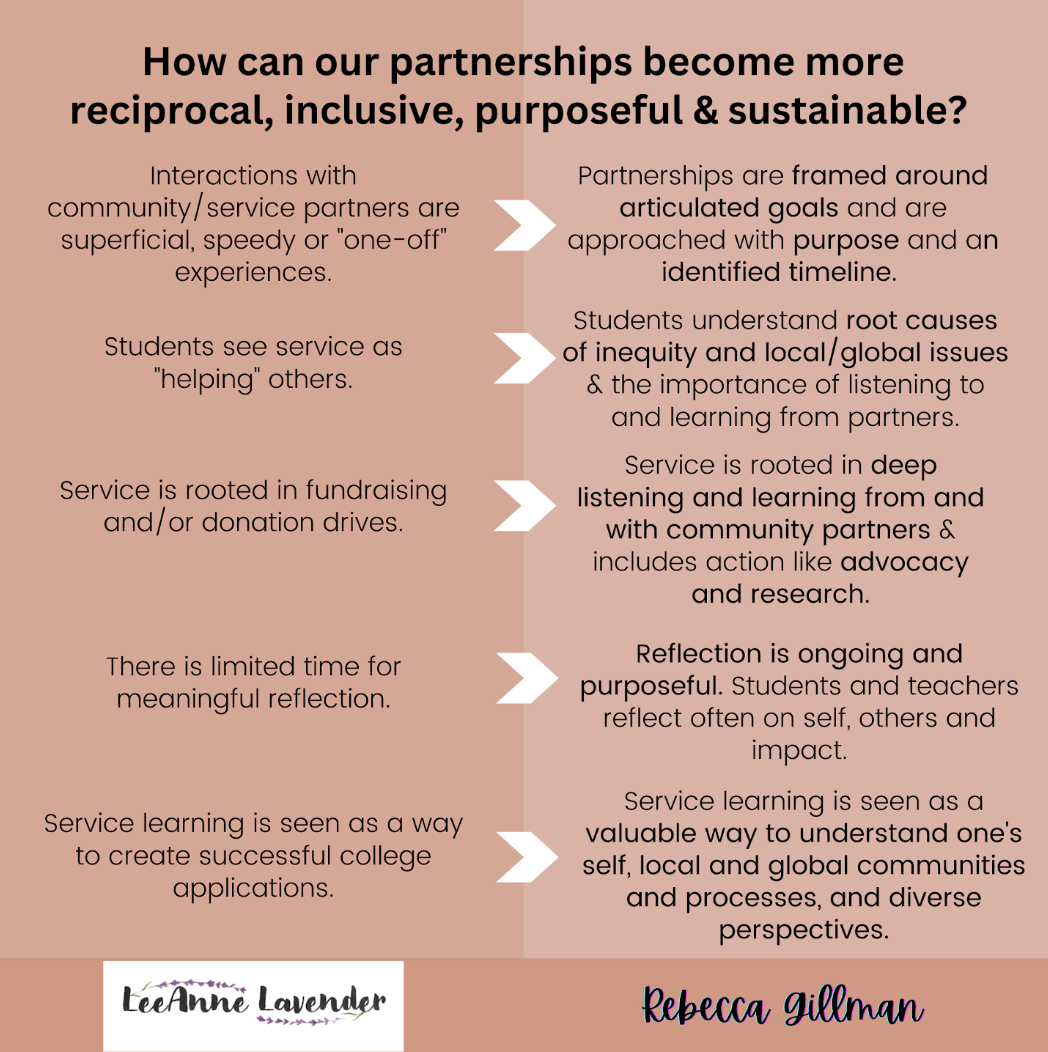
Deepening Reciprocal Community Partnerships
This visual representation of what reciprocal, collaborative and inclusive community partnerships look like can be helpful as you evaluate your own partnerships and where there is room for growth and depth.
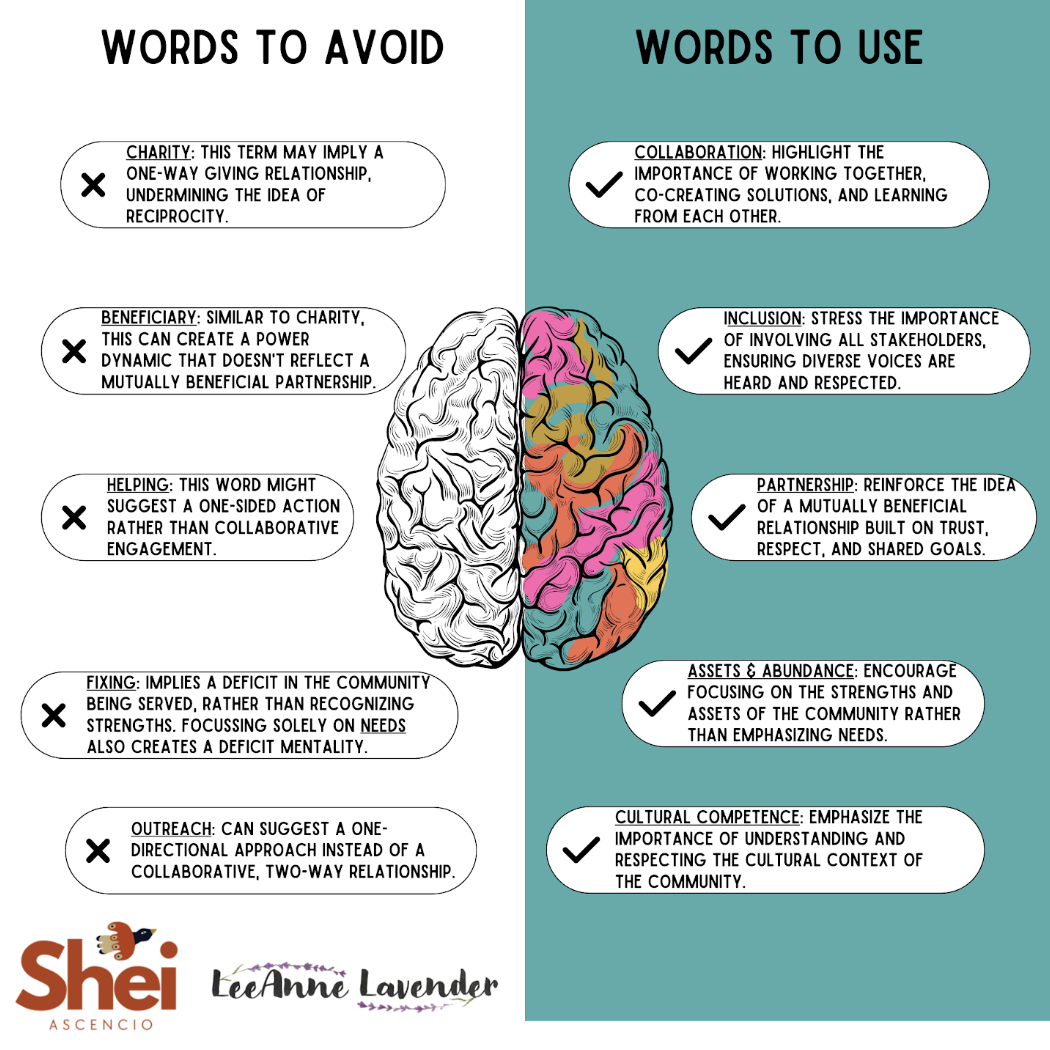
Language for Reciprocity and an Assets-Based Approach
The language we use in our partnerships, programs, and learning experiences with community partners can shape mindsets and understandings of self and others in powerful ways. Use this graphic as a guide to consider what words and terms you’re using, and how to shift language into a more open, inclusive, and equitable space.
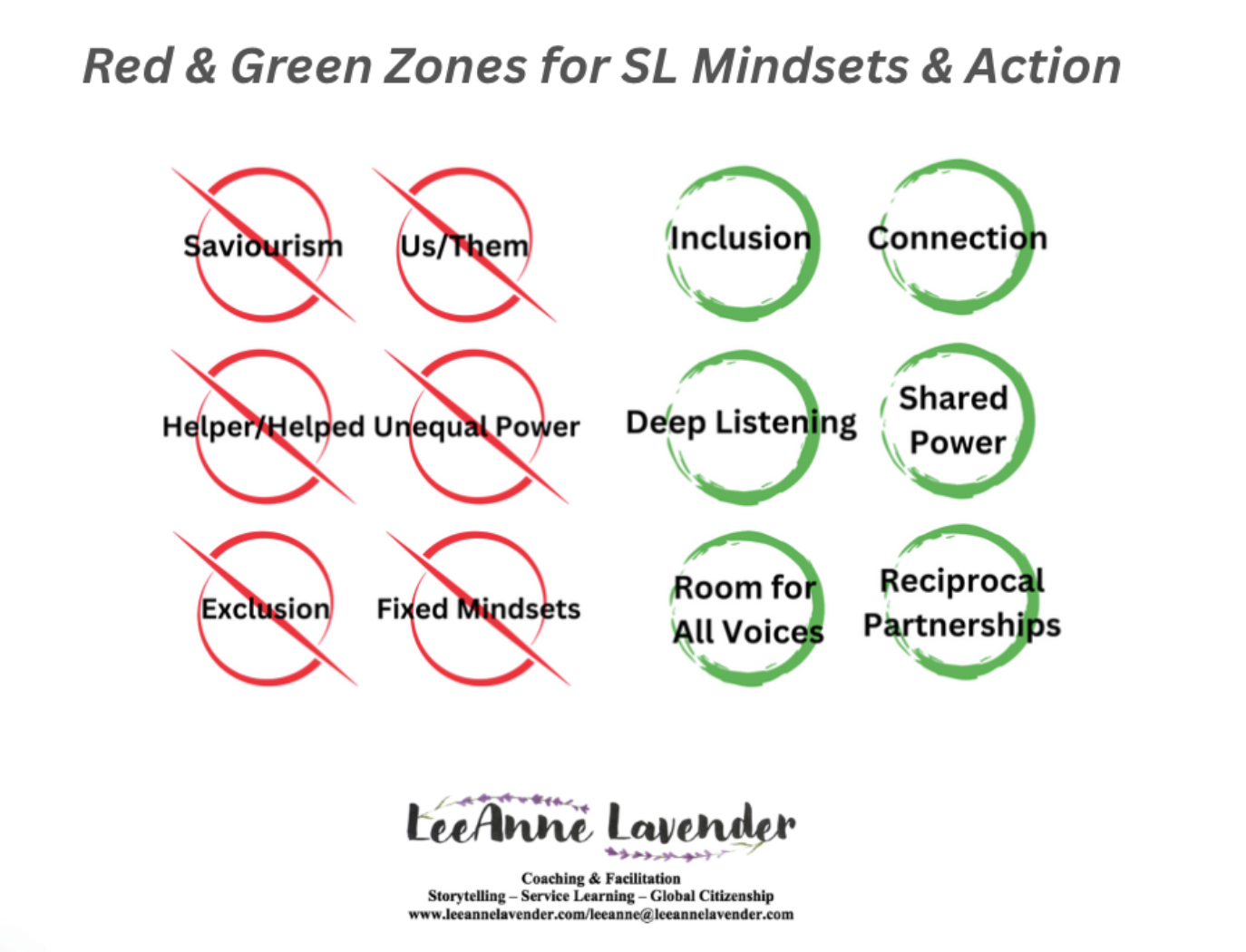
Community Engagement Red & Green Zones
Whenever we engage with communities and/or partners, there are some essential foundations to consider in terms of behaviours and mindsets we want to foster or avoid. Savourism, tokenism, and othering need to be avoided at all costs, and this simple graphic can serve as an ongoing reminder of key principles to guide our community engagement practices.
Unpacking the root causes of local/global issues
This slide deck introduces four approaches (root cause analysis tree, iceberg model, sustainability compass, and pyramid model) you can use with students to investigate and unpack the root causes of a variety of local or global issues, needs, or contexts. Each approach has a source attributed in the slides, as well as examples I have created, and using these strategies regularly with students will help them grapple with the complexities of their local and global communities. These strategies will also impact the way students design action and/or community engagement and partnerships.
Memorandum of Understanding Template for Community Partnerships
This sample MOU template can be adapted for use with your community partners. As part of onboarding new partners or deepening the clarity of your partnerships, co-creating an MOU is an excellent way of ensuring everyone is on the same page and that reciprocity is built into your partnership at every stage. An MOU can also centre child safeguarding, which is essential when our students are engaging with adults on or off campus.
Photo by Sebastian Bill on Unsplash.
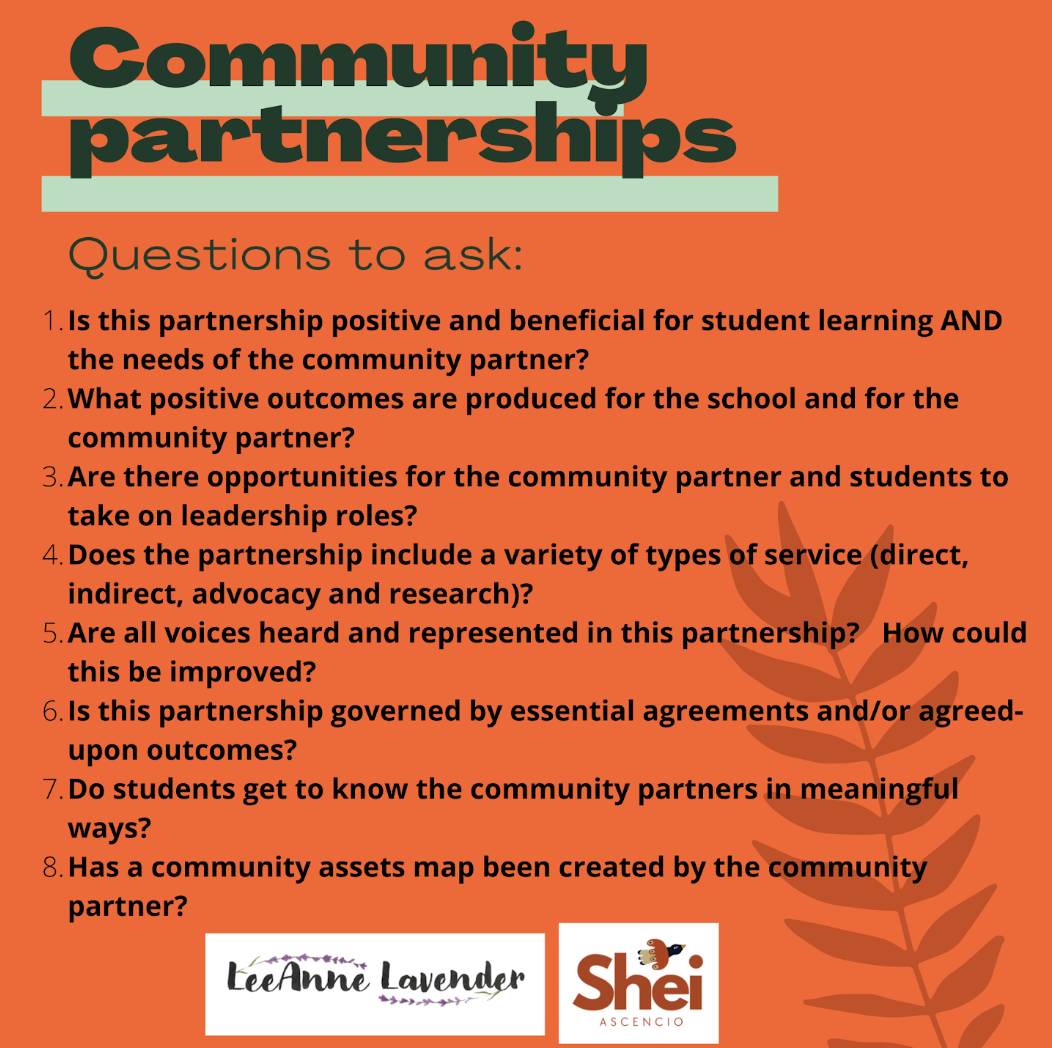
Questions to Ask Potential, New, or Existing Community Partners
These questions provide a starting point for designing new or existing partnerships with authentic reciprocity in mind. Consider how students will learn from and with your partners, and use these questions to guide all interactions, outcomes, and impacts.
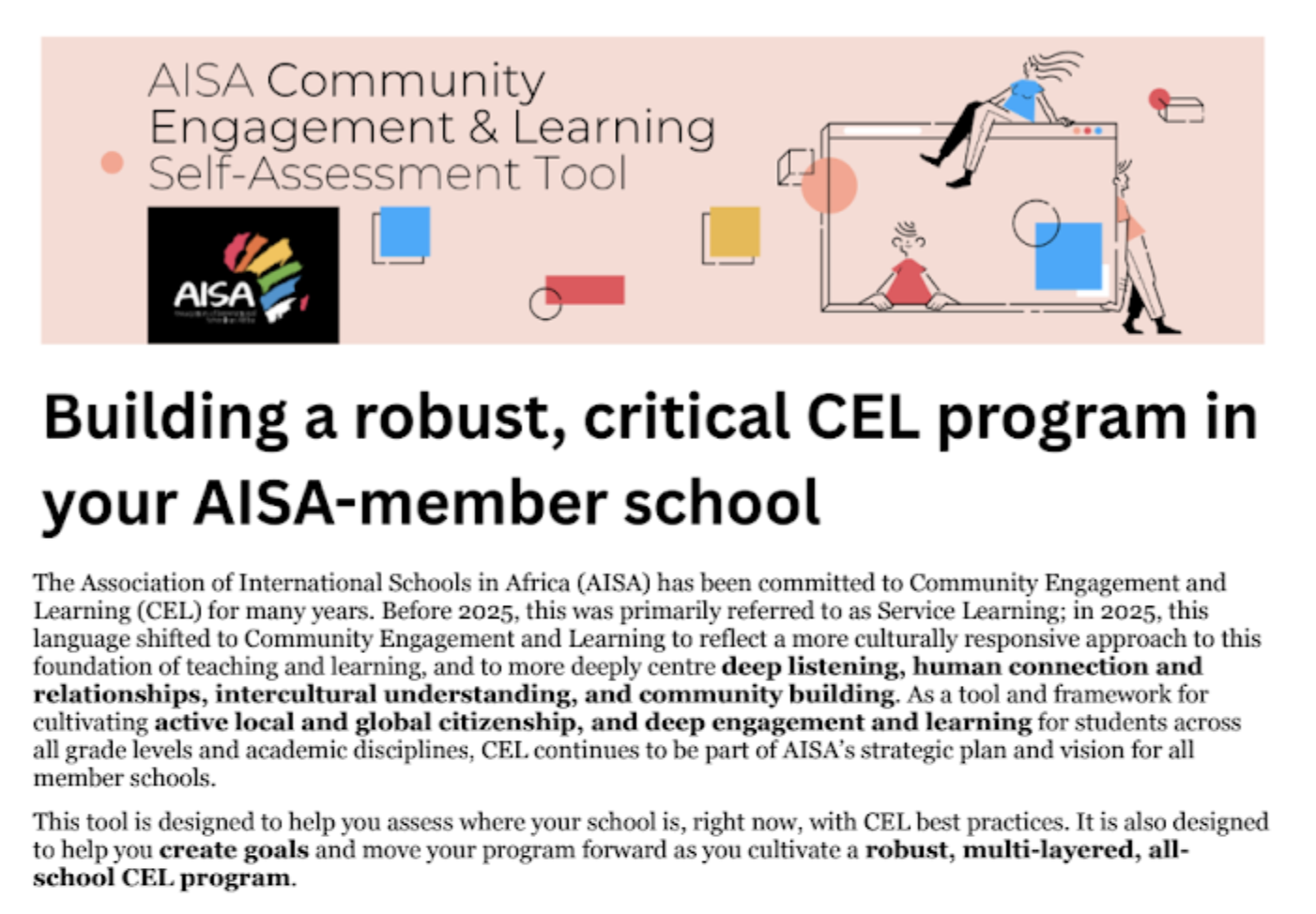
An AISA Self-Assessment Tool for your Community Engagement Program
The Community Engagement and Learning Design Team in the AISA (Association of International Schools in Africa) region has designed this valuable tool to help you evaluate your school’s approach to community engagement and learning, and to set goals that more purposefully align your work with your school’s mission and vision, and with best practices for critical and reciprocal work with a variety of communities and groups of stakeholders.
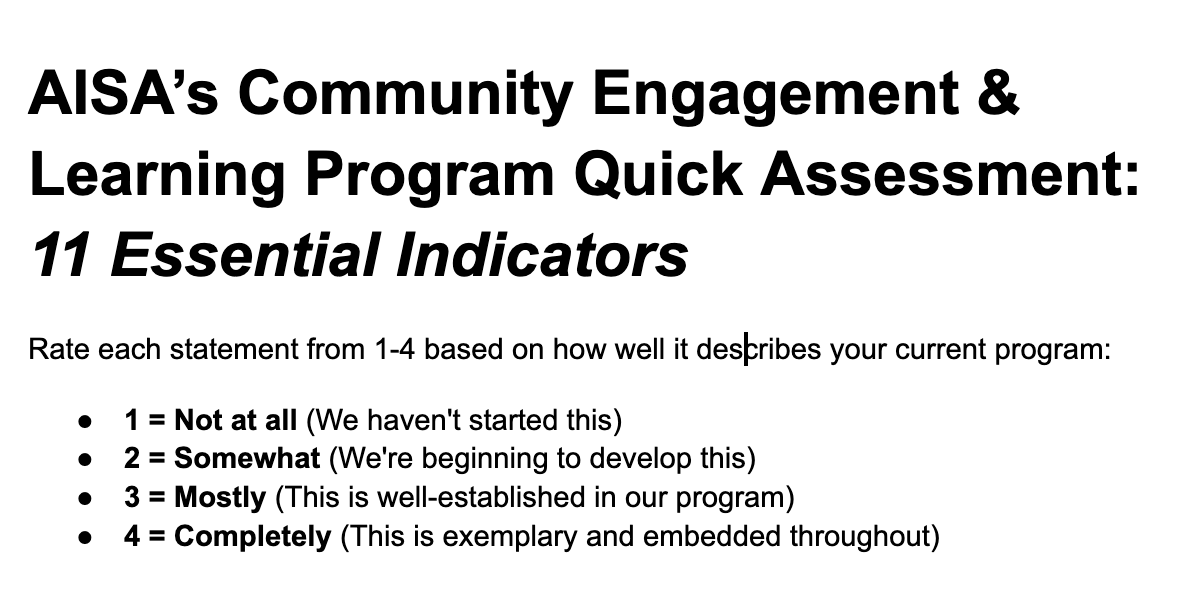
The Quick Version
This handy quick assessment version of the full AISA Community Engagement and Learning Self-Assessment Tool can be used individually or with your team to evaluate how you can cultivate more depth and impact in your community engagement program and practice.
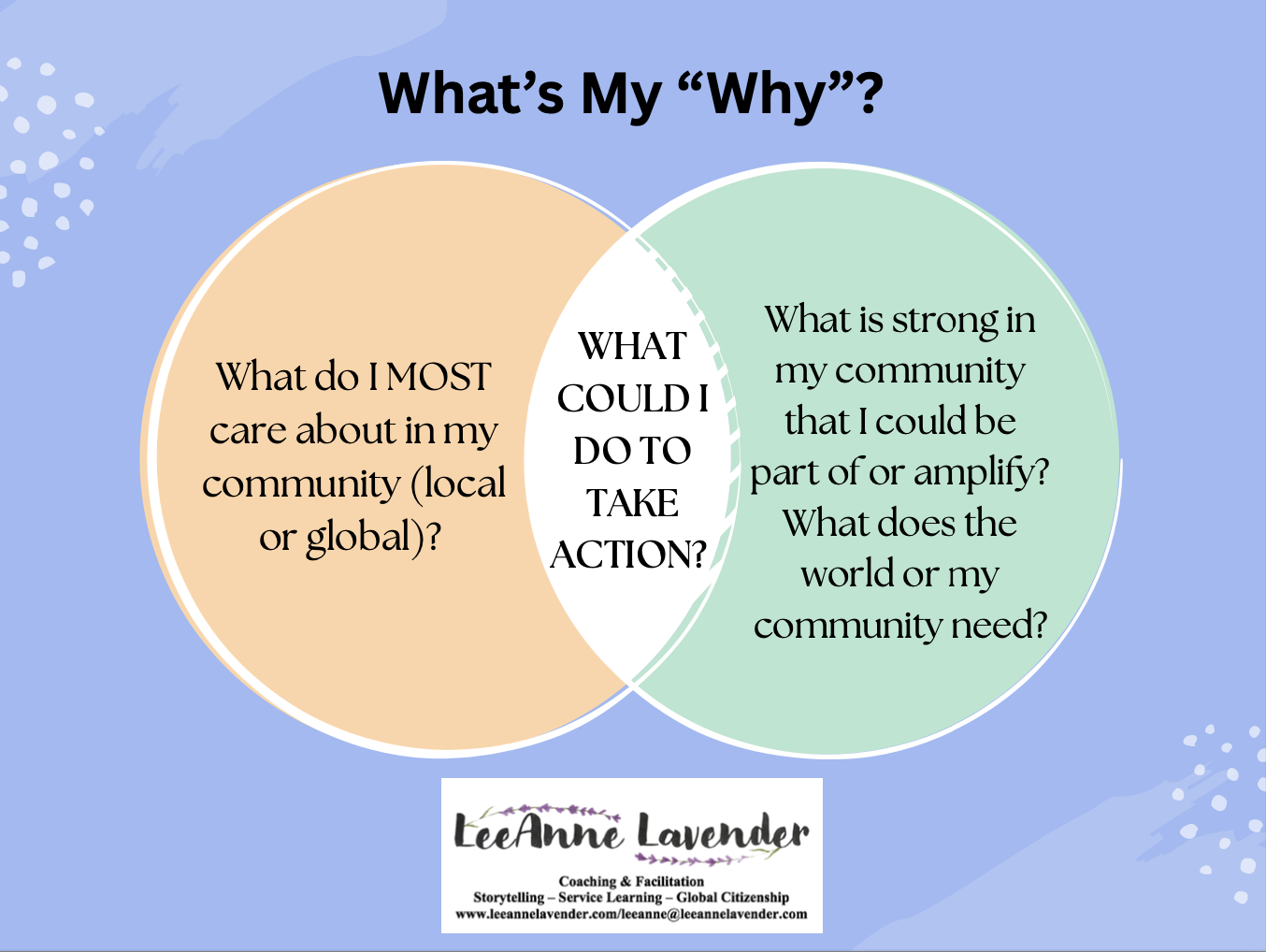
What’s My Why?
This Venn Diagram can be used with students to help them identify what they care about, assets and needs in their communities, and ways they might take action to connect these two spheres. Let me know if you would like a sample Venn diagram to use with your students! :)