What Is Power For? The Impact of a Unit Redesign
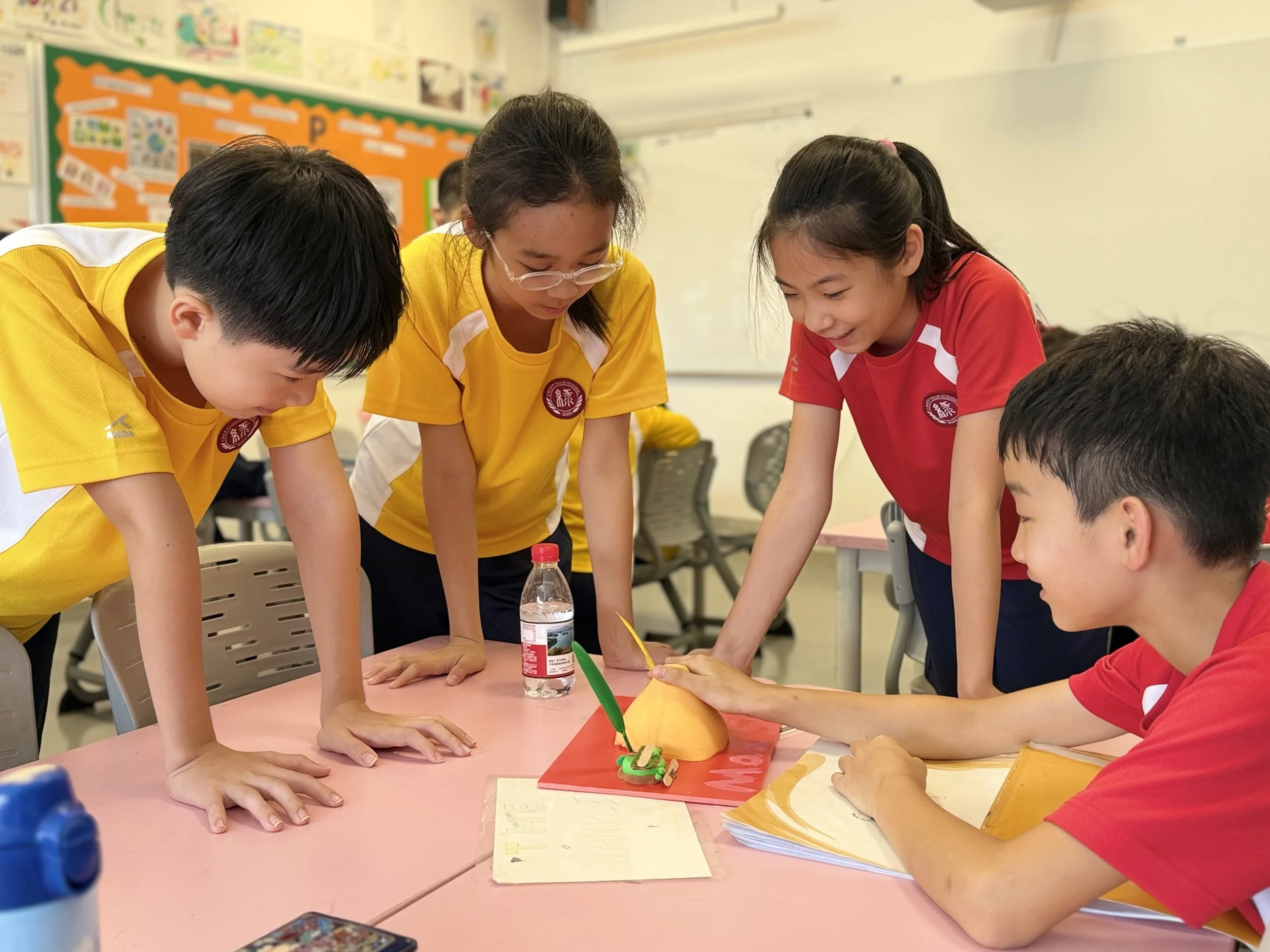
Year 5 (grade 4) students ideate ways of transferring their ideas about power and leadership in Ancient Egypt to their own school context in Shenzhen.
Somewhere in a Year 5 (grade 4) classroom in Shenzhen last spring, a student had a small revelation about a tap.
Not the tap itself, but the fact that someone, somewhere, is in charge of it. Someone decides whether or not water runs from that tap.
When Dan Lyons, a Year 5 teacher and the Global Citizenship Coordinator at Green Oasis School (GOS), described the moment to me, I could feel the student’s thought landing: "the tap in my house turns on, but someone somewhere is in charge of the tap, and I've never thought about that."
This kind of connection (AKA light bulb moment) is what happens when you stop teaching Ancient Egypt as a parade of pharaohs and structures like pyramids, and start teaching it as an inquiry into the dynamics of power and leadership.
Before the unit redesign
Most elementary programs have an Ancient Egypt unit somewhere in the curriculum, and Dan is refreshingly honest about the former Year 5 GOS unit. "It was very, very classic," he says. "Week by week, students learned about pharaohs, then about pyramids, and then about innovations such as water machines like the shaduf." The weeks of learning were held together by chronological and factual themes.
There is nothing wrong with knowing about the shaduf or being able to name five pharaohs. But a unit built that way generally asks students to collect facts, examine them, and put them down again. It rarely asks students to carry anything like key ideas or concepts forward, and it rarely sparks them to look up from their study of the past to make connections with the present day.
A new guiding question
I was lucky to work with Dan’s team to redesign this unit with active citizenship in mind. After mapping what was most important for students to know in this unit, what they wanted students to care most about, and potential types of action that might support students in applying their knowledge and skills in a genuine context, a powerful guiding question for the unit emerged: How does power shape the world?
This question does a lot. It holds the historical content (the pharaohs, the Nile, the artistry and belief systems of Ancient Egypt). It reflects the citizenship heart (responsibility, privilege, legacy, and the quiet, radical idea that anyone can lead in their own sphere of influence). And it opens up space for action (in this case, of students making their own leadership mark on the school community). During the unit that unfolded in Year 5, students could explore the central guiding question at any point in their inquiry cycle, and the question became foundational for reflection in the summative assessment.
Dan felt the difference that this core shift created immediately, and so did his students. "There was a continuous theme of power and legacy riding through every week," he said. "It felt as though we were building towards something." Week two built on week one. Week four leaned on everything before it. The scaffolding was deliberate as a way of making key patterns visible in the curriculum, rather than a series of unrelated topics vaguely linked by geography or historical time period.
With every part of the unit rooted in the same question, students started experiencing their learning as a coherent investigation. The teaching got more accessible, too. As Dan puts it, teachers no longer said things like: "This is what pharaohs did; they controlled everything." Rather, dialogue and connections opened with alternative comments such as: "This is what pharaohs did, and there are parallels today; look at what happens today."
Reflection as the through-line
The biggest change in this unit redesign is how the team approached reflection and how they used reflection as a primary driver in the unit for action and reflexivity.
In the previous iteration of the unit, reflection occurred at the very end of the unit. In the redesign, it became the through-line: weekly reflections gathered into a personal Leadership Journal that students curated. The goal was consistent reflection over time, not a heavy writing task at the end of the learning journey.
"It was tricky at first," Dan admits. "The kids thought, okay, we're just ticking a box." So the team leaned into this space. They kept encouraging students by coaching ideas like: “This is not about right or wrong”, and “I want your opinion”. Once students believed they could share honest and open reflections, two things happened at once. They looked back over the week's material and reinforced their learning, and they put a new idea or a new opinion into words. That second part mattered most for the more introverted students. Some of them were not ready to speak up in class, Dan noticed, but they were willing to write something down. Reflection gave them an entry point into some meaningful reflexivity.
Then, at the end of the unit, students read back across their own entries in their journals. "We looked back at all the reflections," Dan notes, "and students noticed it was okay to change your mind, or even good to change your mind. We could ask, ‘What about the learning experience prompted you to change your mind?’"
When students trace how their own thinking shifted, and what changed it, they have an opportunity to assess their own assumptions and notice patterns. This is flexing a citizenship muscle, as well as a metacognitive one. In a unit about power, that capacity for reflexivity and potential ethical considerations is the whole point.
From analysis to action
The plan was for students to carry all of this new inquiry, connection-making, and reflection into a summative task that turned analysis into action: connecting what students had learned about power in Ancient Egypt to their own school community, and then sharing their learning with a real audience through Leadership Proposals for people who could act on them and Legacy Displays for community members to engage with.
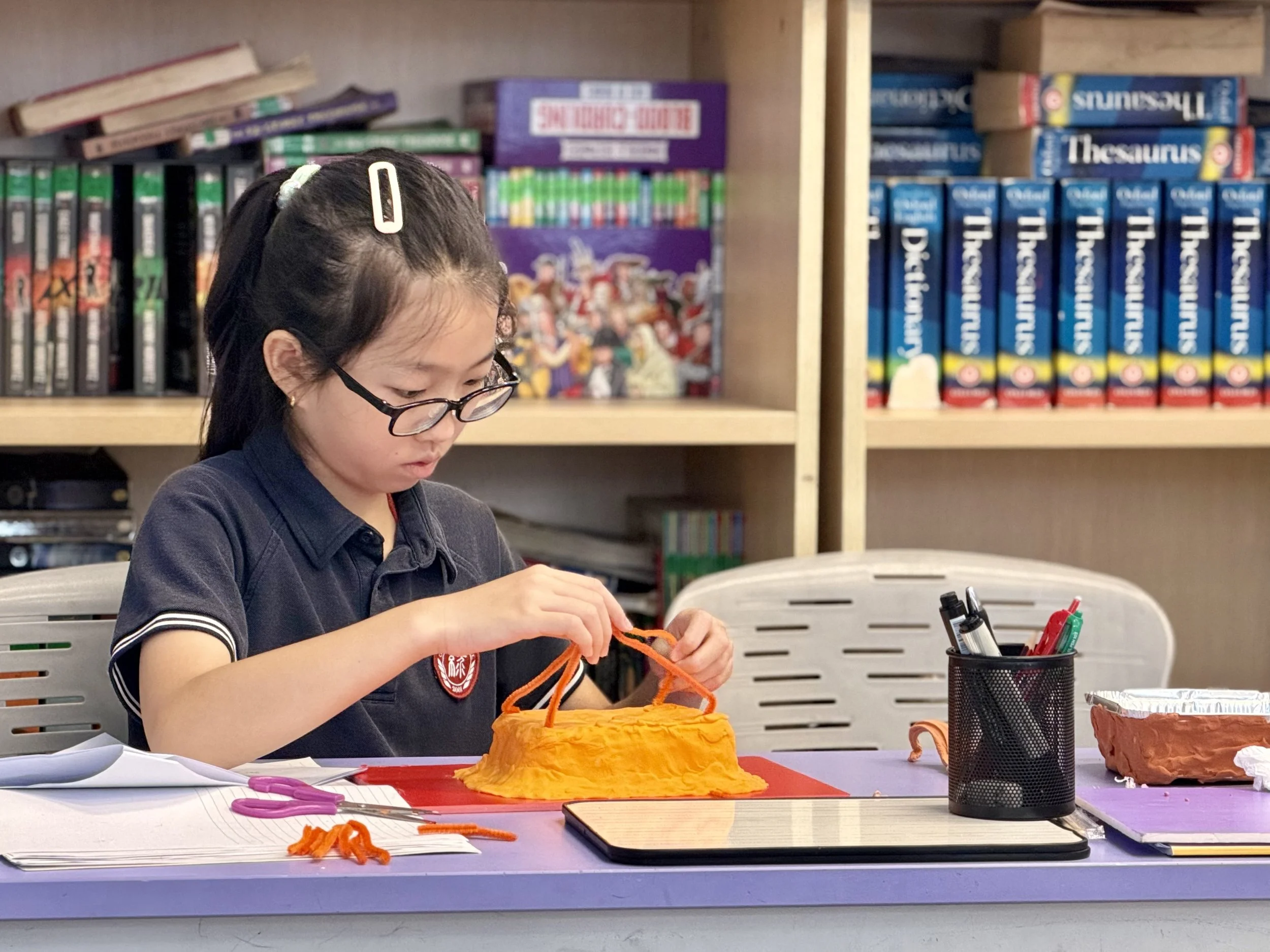
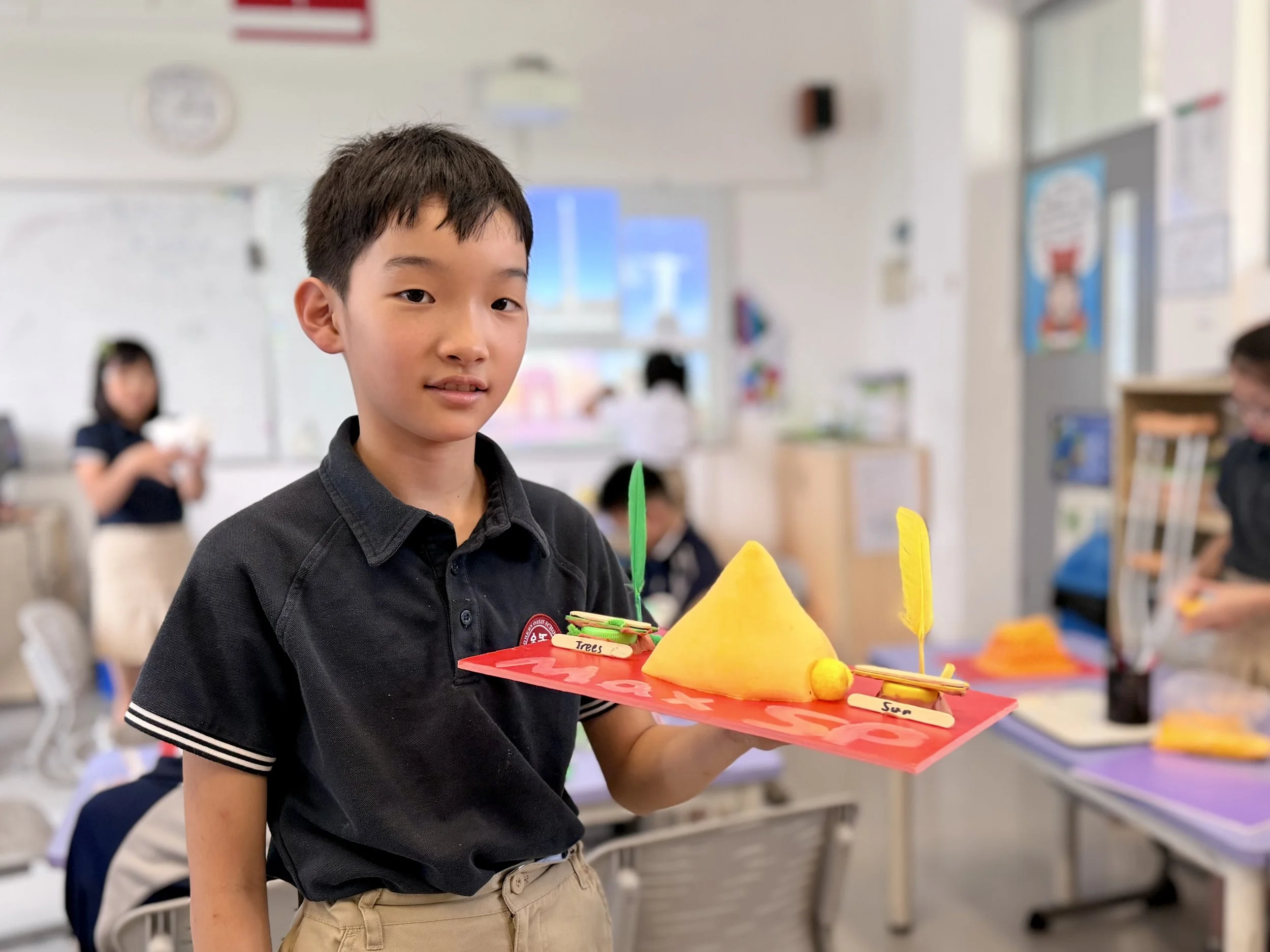
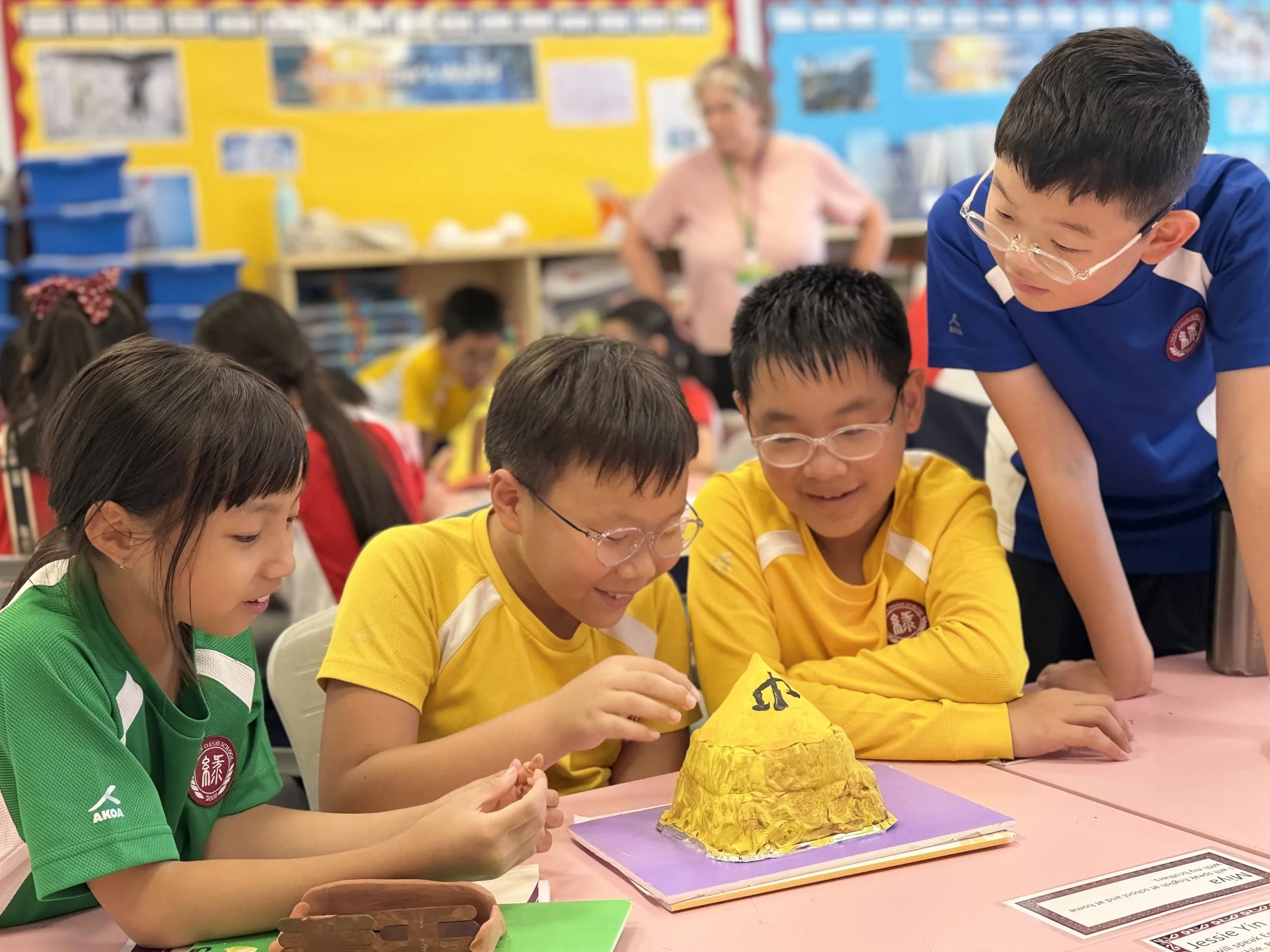
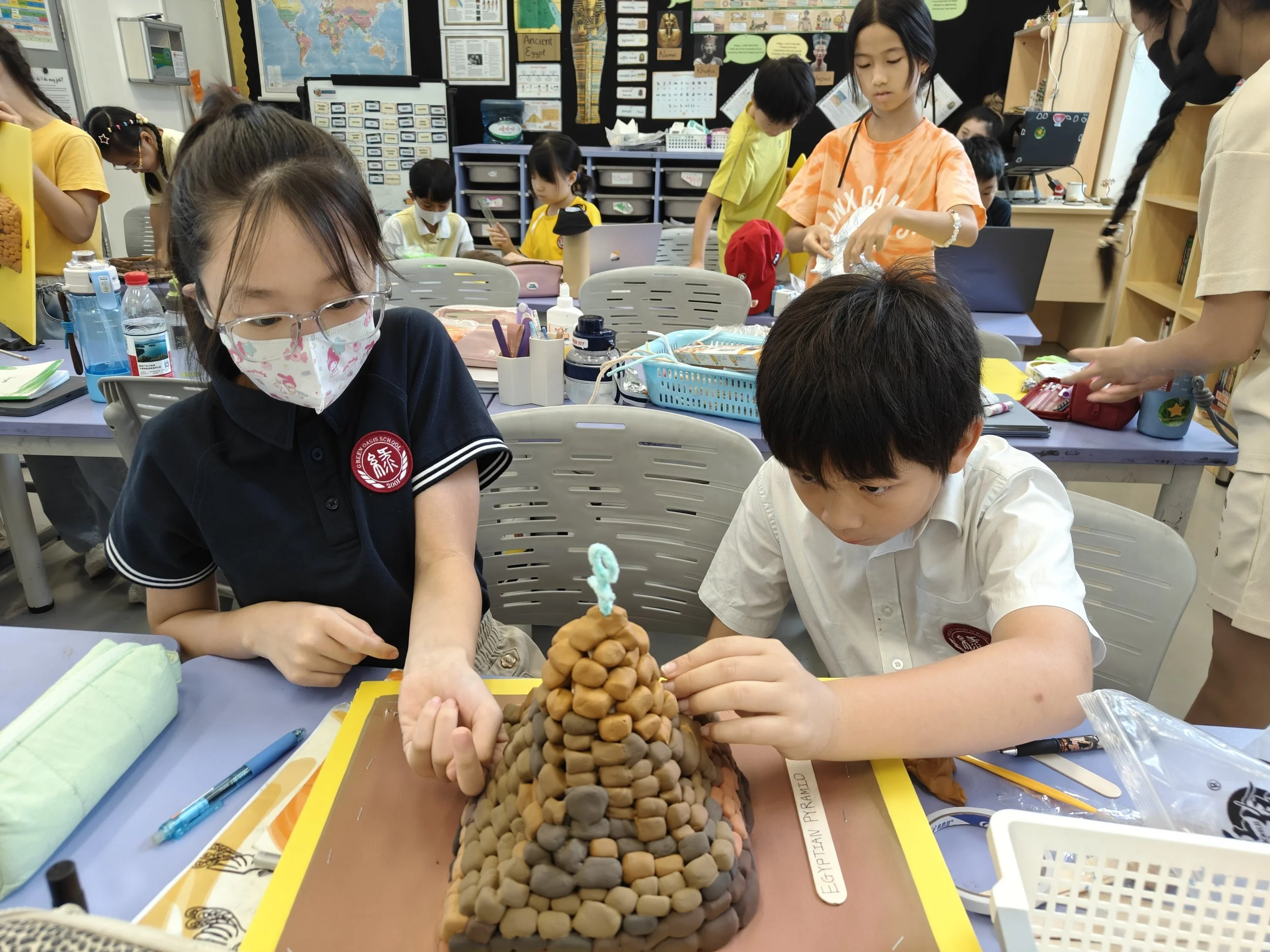
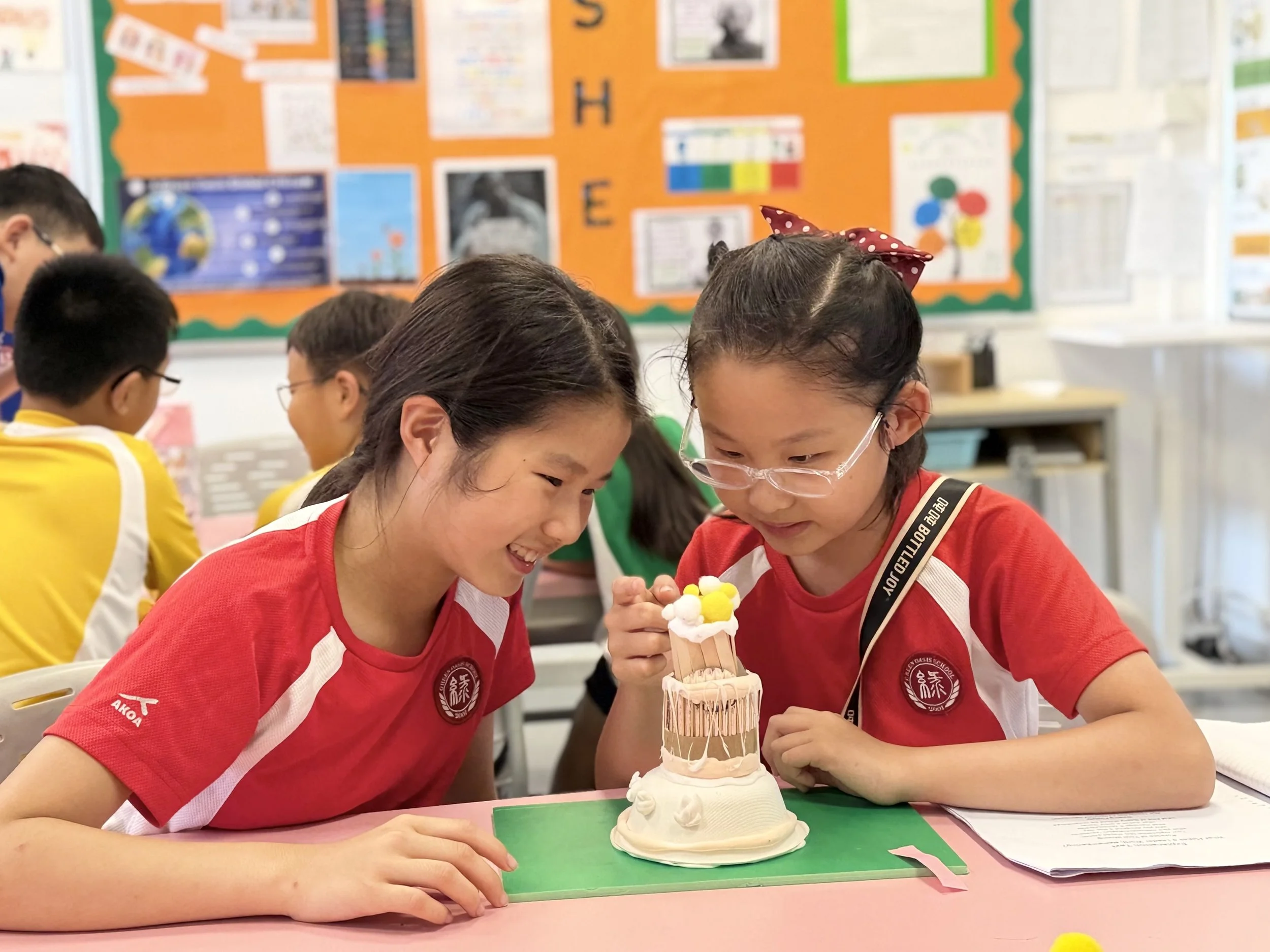
The end of the school year, however, slipped into a familiar, busy pattern. Instructional days were allocated to other commitments and events; everyone (teachers and students) was tired, and the summative assessment had to be reshaped on the move. The shape that took form involved students building a structure, such as an obelisk or a tower, that expressed something about power and how resources are shared, showing both Egyptian design and the students’ own connections and reasoning: "I've made this obelisk to show this and that about power. I think a leader should be this and that. And I've shown that by including this or that aspect." Students shared their final work in a showcase across the grade level, seeing and celebrating what their peers had done.
"I wouldn't say it was only surface level, but the assessment didn't go as deep as we wanted it to,” Dan reflects. “It was a step in the right direction, and when we do this unit again, we can rethink this piece."
I think it is worth sitting with the challenges of the summative assessment, rather than smoothing them over. The team had an ambitious plan that was pared back in the end; however, in the final version of the assessment, students were able to demonstrate their historical knowledge, and reflection was threaded all the way through. Students reasoned publicly about what a good leader does with power, and stood behind their choices. The design already points toward the fuller version, one where students share their thoughts about power with the student council and the school leadership team, and where the legacy displays live in school hallways for the whole community to encounter. These are layers of design for the next iteration of this unit. The first redesign in the spring of 2026 was a prototype, with a team willing to take some risks and adjust as needed. What they learned will inform the shape of the unit and its assessment in the spring of 2027.
There is also a quiet paradigm shift buried in Dan's reflection that I don’t want to lose: When reflection runs through the whole unit, the final assessment stops carrying all the weight. "It's much more ongoing," he said. "You're much more able to assess in an ongoing manner because you have the end goal." The goal shifts from "can the student name five pharaohs," to "we've learned about a certain aspect of power this week; can the student build on that as we continue our inquiry next week?"
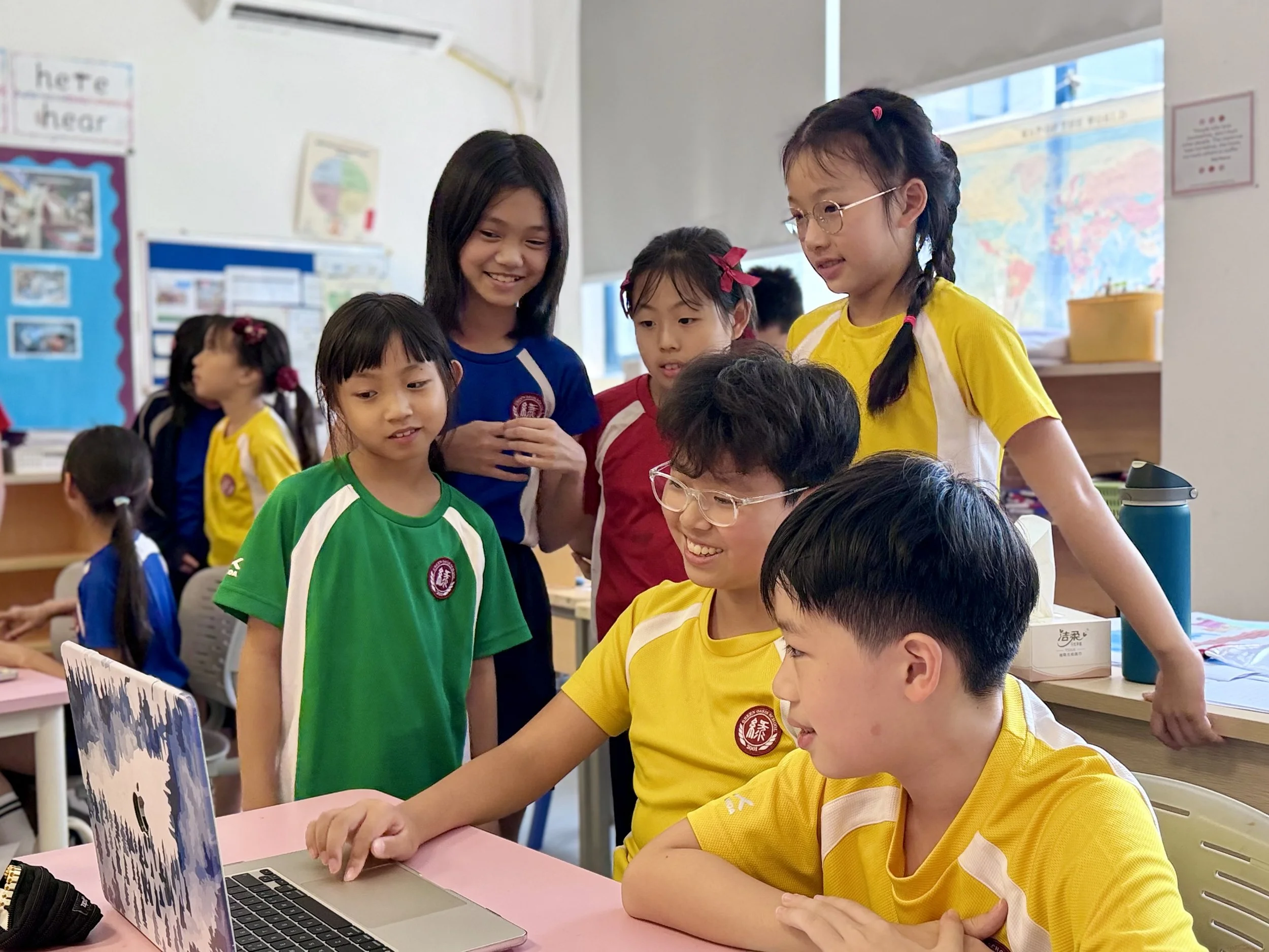
Below: Students working on their models for the summative assessment. The models, along with the students’ reflections, became the synthesis of all of the learning and reflection throughout the unit about the nature of power and leadership.
What has grown
So what does a redesign like this actually yield for learners, teachers, and community members?
For students in Dan’s class and additional Year 5 classes at GOS, the most visible thing that surfaced was curiosity, the kind that emerges from making authentic connections.
"The students were just so curious this year," Dan smiles. "They wanted to know things, and they asked questions that they've never asked before."
The unit gave the children a natural bridge to the world around them, such as the tap, the light switch, and the question of who holds power in their own lives. These connections can create impactful sparks in how students see themselves as changeseekers interested in equity, hope, and regeneration.
Action, for grade 4 students, does not have to mean “fixing” something, but becoming aware of issues and contexts rooted in self-care, people-care, and planet-care. In the Middle Ages unit that came just before the Ancient Egypt unit, Dan's team encouraged students to investigate who influences change, who is affected, and how change actually happens. Then they invited students to identify a community or school need and plan a response.
“We are building capacity here, and capacity is what makes ethical, least-harm, most-good action possible as students continue to figure out what it means to be an active citizen,” Dan reflects, adding that approaching teaching and learning with a community engagement lens transforms the practice of the educators involved, as well as students engaged in authentic inquiry.
For Dan himself, this shift has been personal. He traces it back to his dissertation on social constructivism, an instinct he had years ago for designing meaningful structures for learning. Now that he is designing curriculum with a citizenship foundation, he is teaching in one long arc, where core themes from units tie content together, and students are more free to steer their learning.
"I can't do it the old way anymore," he says. Once you have taught this way, and watched the students come alive with intrinsic motivation and engagement, going back to content for its own sake feels like a loss.
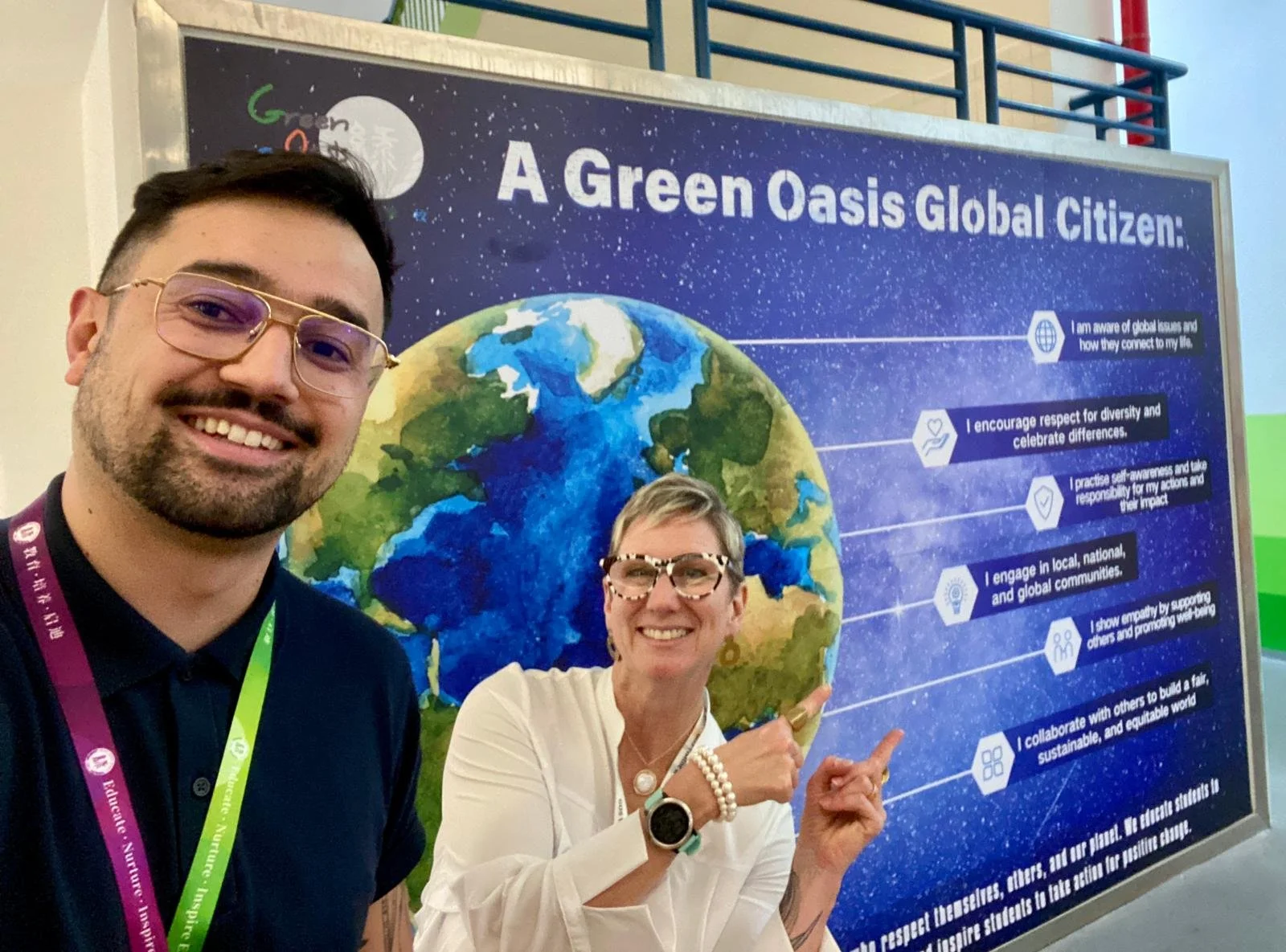
Dan is the Global Citizenship Coordinator at Green Oasis School, and their six tenets of what that means are displayed right at the entrance of the main building to keep these values visible. This is one way of building a culture of citizenship at the school, combined with a purposeful approach to professional learning, coaching for grade-level and subject-specific teaching teams, and strong leadership support for the mission and vision.
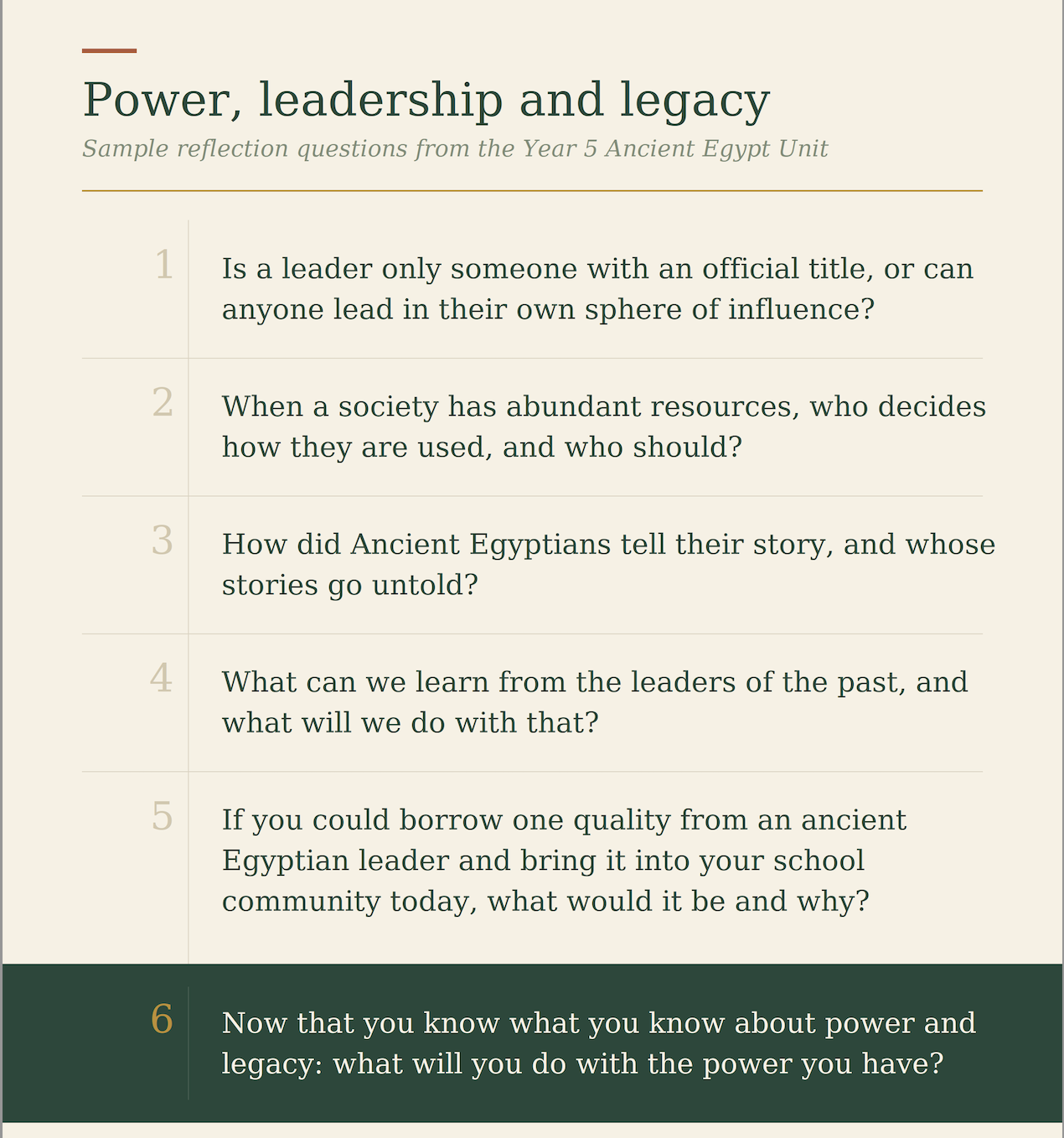
What will you do with the power you have?
The Year 5 Ancient Egypt unit ended where it began, with students returning to their very first reflection and writing a final one:
When I started this unit, I thought a good leader...
Now I think...
One thing I want to carry forward as a leader in my own sphere is...
The last embedded question in the unit plan is the one I keep coming back to, because it is really a question for all of us who redesign our practice with authentic citizenship in mind: Now that you know what you know about power and legacy, what will you do with the power you have?
Dan and his team took a very ordinary unit, one nearly every school has tucked away in the curriculum, and used it to help a cohort of students start answering that powerful question for themselves.
This story is part of a growing collection of practitioner stories showing what active local and global citizenship looks like in real classrooms. Tanks to Dan Lyons and the Year 5 team at Green Oasis School, Shenzhen, for sharing their story.